 By Ester Bovard
© 2020-2025. UniversalCinema Mag.


History, as common wisdom would have it, is written by the victors. Unsatisfied with the determinism of this adage, however, scholars and storytellers alike have increasingly sought to redress the biases and omissions of the colonial archival record through the creation of speculative histories and imaginative documentary work – a practice that cultural historian Saidiya Hartman has dubbed “critical fabulation.” The Memory of Butterflies (La Memoria de las Mariposas) serves as a powerful exemplar of the genre, with Peruvian director Tatiana Fuentes Sadowski (The Imprint) seamlessly melding archival footage with newly manipulated footage to create a dreamlike reconstruction of the essence of historical truth.
Sadowski’s inspiration for this piece was sparked when she happened upon a century old photograph of two Indigenous boys in London, transported far from their homes to illustrate the crimes of the infamous Casa Arana, the infamously brutal company at the centre of the rubber boom in the Amazonian Putumayo. Their names were Omarino and Anderomi, and their unknown fate would plague the filmmaker for years to come as she combed through archives across the globe searching for any clue as to what became of them.
Outlining the atrocities committed in the Putumayo by the Casa Arana, Sadowski lays out – in no uncertain terms – the nightmarish reality of the Peruvian rubber boom for the Indigenous population. Horrific in nature, the company’s crimes ranged from robbery and rape to torture, mutilation, and homicide. However, despite the existence of an official investigative record of their crimes, the only visual evidence of the company’s existence that remains is the propagandistic footage they themselves commissioned. As Sadowski puts it, “images of the unimaginable – those were never permitted to exist.” Taking on the task of dismantling the persistent power of the colonial images and archives created by the Casa Arana (and others) the filmmaker reappropriates and manipulates the company’s own propagandistic footage to great effect.
In her quest to ascertain the fates of the boys in the mysterious photograph, Sadowski (out of necessity) relies heavily on the letters and journals of Roger Casement, the British consul who came to the Putumayo to investigate the Casa Arana and took it upon himself to squire Omarino and Anderomi to London as living evidence of their crimes. Foregrounding the inherent bias of his singular point of view, she projects his words onto the screen in his own handwriting, describing them as offering an opaque doorway not only to what he decided to let us know, but also to what he decided to forget. Ironically, after they had served his purpose in London, Casement sends Omarino and Anderomi first to be “educated” in Ireland, and then returns them not to their home in the Putumayo, but to Iquitos, where they are to work as servants for a wealthy liberal family. As we learn from his correspondence, the boys yearn for their home, and eventually flee, presumably headed to the Putumayo.
With scant records to work with, Sadowski searches for the truth of Omarino and Anderomi’s experience in the subtext of peripheral histories, and in her attempt to ascertain their ultimate fate, connects with the communities they would have encountered on their final journey from Iquitos to the Putumayo. In truly collaborative fashion, she invites the members of these communities to create speculative fabulations based in their lived experience and knowledge of the land and its histories, reclaiming Omarino and Amerindo’s stories from the colonial annals of history in the process. Concluding in a peaceful and hopeful imagining of their successful return to their homeland, the film starts and ends with the unsullied sounds of the jungle.
It is telling that in the closing credits of the film, Sadowski names first the community members she worked with, before citing her official archival sources. In prioritizing their lived experience, she has meticulously and transparently built a counter archival work of tremendous power. By seeking to illuminate an alternative, speculative history informed by a multiplicity of perspectives, she crafts a commanding response to the legacy of colonialism in Peru, and confronts the fiction that documentary works are inherently objective.
The Memory of Butterflies premiered in the Forum programme of the 75th Berlin International Film Festival.
© 2020-2025. UniversalCinema Mag.

Change is a part of life and growing up happens. It happens even in the face of traditions and, at times, it can be very rapid. Writer and director Huo Meng’s Living the Land, which had its World Premiere at Berlinale, is a languid meditation set in 1991 in a small rural village in China as it and the people in it are changed by the socio-economic changes of the county at large. The film centers on Chuang (played by Wang Shang), a young boy who is living with relatives because the rest of his family went to the city to seek work.
Huo Meng’s film, despite being a scripted period piece, more often than not feels like he is just capturing moments of real people’s life as they navigate these changes. The way the characters, or the camera, move through the scenes, allows conversations to ebb and flow with natural rhythms and feel captured rather than staged, and speaks to the naturalism of the film. It’s also why the treatment of the Chuang’s cousin, who is not neurotypical and is constantly getting beaten by his parents and abused by other kids, becomes more and more uncomfortable to watch as the film progresses.
The film begins with preparations for attending a funeral. The actual funeral procession is met with lots of little firecrackers. Later in the film, there is a wedding, and once again, there are firecrackers, creating a symmetry linking weddings to funerals. The audience is aware that the bride does not want to get married, so while it is not an actual funeral, it is in the sense that she is being forced into something she does not wish.
The film lays out a series of events and lets you make your own conclusions, it neither advocates for nor against tradition. Huo Meng paints both in a negative light, as the aforementioned traditional wedding is not a happy occurrence and later the bride wishes she could get a divorce but is discouraged by her family, however, later there is a scene where they are making modern explosions (like the firecrackers) to reach oil in the town, resulting in a tragedy for the family. There is also a sequence where all the women are required to get checked for their childbearing capabilities, and bring their family planning material – as this was related to what people now commonly refer to as the “one-child policy.” The character shown is made to feel uncomfortable and sad, and the character shown to be very negatively affected by the whole experience. And yet, the film’s final moments have the family embracing and enjoying getting a tractor with the promise that it will ease their work in the future.
The film is slow, it doesn’t rush the story or its characters, its plot is more about the progression of the seasons and how they change the land and the people (the family) working it, and in this there are many rich moments captured. Even though at one point Chuang refers to their village as poor and them as the poorest people in their poor village, there are many beautiful shots of the land. However, it is the low shots from Chuang’s POV and those from his dreams that stood out and made me take notice while I was viewing the film.
Living the Land had its World Premiere at the 75th annual Berlin International Film Festival in the Main Competition.
© 2020-2025. UniversalCinema Mag.

The Portuguese director, Paula Tomás Marques, delves into the themes of time and space in her film as she unveils the tumultuous tale of a gender-nonconforming individual persecuted by the Inquisition. Through the character of João Liberada, whose existence is a labyrinth of struggles involving gender identity, love, and societal violence, Marques presents a narrative that resonates with contemporary echoes, bridging the gap between past and present. Described by Marques as a means of “writing history through cinema,” “Two Times João Liberada” serves as a poignant homage to the plight of marginalised individuals throughout history, shedding light on the enduring struggles faced by the LGBTQ+ community.
“Two Times João Liberada” delves into the life of João, a talented actress hailing from the streets of Lisbon who finds herself cast in the lead role of a biopic centred around Liberada, a historically significant figure known for defying conventional gender norms and subsequently facing persecution at the hands of the unforgiving Portuguese Inquisition during the 18th century. June João, with her deep acting, invites us to witness the enduring nature of humanity’s quest for acceptance and understanding.
Across four mesmerising chapters, Paula Tomás Marques unravels the cinematic tapestry of the film’s opening sequence, “Where Did You Come From?” Here, we witness João’s emergence from the depths of the woods, encountering curious villagers as she quenches her thirst with milk and recounts her harrowing tale of persecution during the Inquisition. The audience is seamlessly transported from the annals of history to the actor’s contemporary existence in a bustling city haunted by the spectral presence of Liberada, a spectral companion who extends her ethereal hand to lead João into the realm of dreams.
Among a swirling collage of documents and sketches, the narrative reveals the scandalous testimonies of neighbours and villagers regarding Liberada’s alleged liaison with shoemaker Franco. As the enigmatic figure grapples with questions of self-identity and societal perceptions, the director deftly employs cinematic nuances to evoke a palpable sense of the past brushing against the canvas of João’s subconscious. Within a compact runtime of an hour and ten minutes, a rich track of themes emerges, exploring the perennial concept of gender discord and the labyrinthine journey of self-discovery.
Under Edward Berger’s expert guidance in “Conclave,” the complex topic of transgender representation approaches the Vatican, a stronghold where traditionalists fervently uphold long-standing beliefs. Against this backdrop, a profound dialogue unfolds between João and two kindred sisters of the ecclesiastical flock, united in their shared voyage of self-discovery. As the trio embraces, a poignant tableau reminiscent of the divine Trinity emerges, inviting contemplation of higher truths. Can this cinematic opus wield its narrative alchemy to sway the mighty religious establishment towards an embrace of diversity and inclusivity, or is this mere wishful thinking in a realm resistant to change? Amidst the shadows of uncertainty and the suffocating cloak of anonymity, is there a whisper of liberation to be found—a pathway illuminated by the flickering flames of self-realisation and acceptance?
The film may intend to focus on violence and pain, but the subtle conflict between João and Franco in the heart of the woods draws our attention to something beyond—somewhere in the history of human creation and love and whether in the shape of sexual dedication or guilt. When the director succumbs to a mysterious paralysis, leaving the project in disarray, João finds herself adrift in a sea of chaos, grappling with unanswerable riddles that transcend the film’s uncertain future. In this whirlwind of uncertainty, João wrestles not only with the enigmatic narrative of Liberada but also with the profound ties binding her to the spirit of the enigmatic figure, unravelling a web of mysteries that defy easy explanation.
The film, as the director says, aims to grasp the complexity of representing bodies that never had agency throughout history. Marginalised people are only registered in history when they cross paths with power, as in the case of João Liberada, who crossed paths with the Inquisition. The film explores the representation of queer people in the film industry and the dynamics of production in the performing arts and cinema, particularly in the Portuguese socio-cultural context. “Two Times João Liberada” is based on the personal experiences of the director and main actor, as well as the team’s reflection on their work as crew members. “Two Times João Liberada” screens in the 2025 Berlinale Perspectives Program and will shed new light on the challenges queer people faced throughout history.
© 2020-2025. UniversalCinema Mag.

Richard Linklater returns to the Berlinale with Blue Moon, a film that marks another deep dive into the complex interiority of artists. Eleven years after winning the Silver Bear for Boyhood, Linklater delivers a wistful, chamber-like character study set on the opening night of Oklahoma! in 1943. But instead of celebrating Richard Rodgers and Oscar Hammerstein’s groundbreaking musical, the film focuses on Lorenz Hart, Rodgers’ former creative partner, played with remarkable fragility by Ethan Hawke.
The film’s narrative unfolds primarily in a bar at Sardi’s, where Rodgers (Andrew Scott) basks in the adulation of the Broadway crowd while Hart, dealing with alcoholism and insecurities, hovers on the periphery. The film also explores Hart’s troubled personal life with subtlety. Hart lived with his widowed mother, Frieda, and struggled with alcoholism, often disappearing for weeks on drinking binges. His erratic behavior created tension between him and Rodgers, ultimately leading to Rodgers’ decision to collaborate with Oscar Hammerstein II in 1942. Hart’s deep sadness and depression are palpable throughout the film, and his discreet homosexuality, though not explicitly addressed, is subtly woven into the narrative, adding layers to his complex character.
The film explores most of Hart’s troubled personal life, but these aspects are embedded beautifully in the script in very subtle ways. Through Hawke’s performance, we understand Hart’s deep longing for connection, yet his inability to sustain close relationships. His self-destructive tendencies manifest in his drinking, which isolates him from those who care about him. The film shows moments of Hart’s outward confidence masking inner vulnerability—whether in his witty, self-deprecating remarks or in his desperate attempts to regain Rodgers’ attention. His admiration for beauty, both in art and in people, is a key part of his character, but it is often tinged with sadness, as he recognizes the fleeting nature of what he cherishes most. In one scene, he wistfully watches Qualley’s character, captivated by her presence yet acutely aware of his own loneliness. In another, he delivers an impassioned critique of the commercial direction of Broadway, revealing his frustration with a world that no longer seems to have a place for him.
One of the most striking elements of Blue Moon is its intertextual dialogue with Casablanca. The film’s setting in a bar immediately evokes Rick’s Café Américain, and a pianist in the background playing melancholic tunes further cements this connection. Throughout the film, several references to Casablanca appear, including variations of its famous quotes that subtly comment on Hart’s own sense of loss and displacement. The film even begins with a quote from Casablancaand nearly concludes with an ending reminiscent of the iconic farewell scene. This interweaving of references adds a nostalgic, cinematic layer to Hart’s existential musings, reinforcing the film’s meditation on beauty, time, and longing.
This is a film that does not shy away from being controversial. Talking about human desire has become somewhat taboo in our time. Many male filmmakers show reservations about exploring male desire for a woman, but this is not the case here. There is a clear appreciation of physical beauty. The film’s exploration of beauty as something appreciated for its own sake, rather than for personal gratification, resonates deeply with the themes of Thomas Mann’s Death in Venice.
Like Gustav von Aschenbach, Hart is captivated by the pure essence of beauty, embodied in this case by Margaret Qualley’s character. Her performance adds another layer to the film, playing a bright-spirited yet melancholic muse reminiscent of a Jazz Age starlet. Just as Aschenbach is drawn to Tadzio in an almost reverential, aesthetic obsession, Hart’s admiration for Qualley’s character blends adoration with an aching sense of longing. It is beauty as a transcendent, unattainable ideal—something to be worshipped rather than possessed.
What makes Blue Moon exceptional is how seamlessly Linklater integrates character development with the film’s musical and narrative structure. Hawke’s performance is a masterclass in portraying internalized turmoil, with his Lorenz Hart exuding a combination of brilliance and self-destructive tendencies. His transformation into the five-foot-tall, sexually ambiguous, and emotionally volatile lyricist is both theatrical and deeply human. The echoes of Mickey Rooney’s exaggerated portrayal of Hart in Words and Music are replaced here with a much more nuanced and introspective performance. Scott, as Rodgers, plays the perfect foil—grounded and composed, yet subtly haunted by his former collaborator’s downfall. Meanwhile, Qualley delivers a standout monologue about an unrequited romantic encounter, a scene that encapsulates the film’s themes of yearning and missed connections.
At its core, Blue Moon is also a film about the collision of art and commerce. As Hart rails against the mainstream appeal of Oklahoma!, arguing that art should provoke rather than placate, the film draws a direct parallel to contemporary Hollywood’s struggle between artistic integrity and market demands. Ethan Hawke, in a Berlinale press conference, emphasized that truly “offensive” or challenging art requires an audience that values and demands it.
Linklater, whose own career has largely sidestepped Hollywood’s commercial pressures, reinforces this perspective, acknowledging that filmmaking remains a balancing act between artistic vision and financial viability.
Ultimately, Blue Moon is an exquisitely crafted meditation on artistic struggle, the pursuit of beauty, and the inevitable passage of time. The film, like a Rodgers and Hart song, is beautiful, melancholic, and bittersweet. With an awards campaign likely in the works, Blue Moon may well secure recognition not just for Hawke’s mesmerizing performance but also for Linklater’s ability to capture the fragile brilliance of a creative soul at odds with the world around him.
© 2020-2025. UniversalCinema Mag.

The world is huge with nearly 250 countries, states with full or partial UN recognition, and territories all combined. As a result, people often are woefully uninformed about countries outside of their own. In Canada, we joke about how little most Americans know about even the basics of our geography. But, while Canada itself is vast, our population is only about equal to their most populous state (California). Unless their field/interest is global politics or something similar, most people are not paying attention to what’s happening worldwide. Most people are only aware of the loud global politics, the stories that are getting enough coverage to be mainstream. It’s why, regardless of location, many have a decent grasp on US politics, are aware of Brexit, understand the term, and now if you combine something else with ‘exit,’ they get the reference. There’s a good chance audiences watching Juanjo Pereira’s “Under the Flags, the Sun,” may be unfamiliar with the events the archival footage documentary uses, which is supported by the opening reels that speak of Paraguay as a mysterious place. Especially as the film is created using archival footage and documents that had formally been classified surrounding the years of the country during the longest dictatorship in South America. And further with the mystery quality, much of the films from this period have not been preserved, leading Pereira to utilize not only footage from Paraguay itself, but its dictator, President Alfredo Stroessner, global trips abroad, which further help illustrate the isolationist image and contrast between perception and reality.
The film leans into the grain and distortion of some of the clips, further distorting them at the ends, which helps emphasize what you’ve already seen and the idea that the film is a look into the country we were not supposed to see. The use of juxtaposition is strong, especially the sequence after it did a big set up about how they were building a dam between Paraguay and Brazil, with limited effects on the environment. It then follows that up saying how people were flooded and animals were displaced. But then as a very propaganda-y song praising Alfredo Stroessner plays, it shows the grimy reality of the dam build.
As previously mentioned, despite a later reveal in the documentary that Stroessner rarely left the country, the film gets a lot from this footage, particularly you get a lot in contrast from how we see him received in the film in the reel on his U.S. trip vs when he arrives in Europe many years later. The U.S. trip happened in the late 60s, at this point one should have reasonably presumed he was likely a dictator as there had not been a free election since he took the presidency, but the reel plays as propaganda for Stroessner and his party. However, during the later European trip, you see protesters waiting outside.
The film makes you want to look into the details of things it brings up, it does not provide all the answers, but rather a starting point. It asks you to dive in and do more to become engaged. Particularly, the ending. While Alfredo Stroessner is deposed, his legacy lives on in the people disappeared and the lack of answers they still have. The film’s ending asks you to stay engaged, because while the country is longer a dictatorship, Paraguay has still been governed almost continuously by the same party as Stroessner to this day (and only a few years back they tried to remove the safeguards put in place after Stroessner keeping Presidents to one term).
Cinaphil acquired the worldwide sales rights to “Under the Flags, the Sun,” ahead of its World Premiere at the 75th annual Berlin International Film Festival.
© 2020-2025. UniversalCinema Mag.

In the ethereal dark, Where the Night Stands Still emerges as a captivating cinematic experience crafted by the visionary Liryc Dela Cruz. This debut feature delves into the profound depths of human emotions and the intricacies of our deeply held beliefs. While the film nestles in its monochrome context, the characters embark on a contemplative journey, delving into the intricacies of their deepest thoughts and desires. Dela Cruz navigates the tangled web of human relationships, unveiling the raw and vulnerable nature of sibling bonds reunited after a long separation. With a contemplative gaze on the human journey, Where the Night Stands Still invites us to ponder how echoes of past experiences reverberate through our future decisions.
Ate opens the film with her prayer while kneeling in front of the window “In the name of the father, of the son, of the holy spirit, Amen!” In the sombre aftermath of her demise, his thoughts and prayers drift towards Madame Patrizia, who in her final act bestowed her home upon Ate, the loyal maid whose faithful service spanned more than three decades, only to be untimely taken by the grip of Covid-19. Through these words, we come to understand that an unyielding force resides within Ate, akin to the night that eternally eludes the embrace of dawn’s first light.
Ate is waiting to welcome her sister and brother, Rosa and Kuya. These Filipino siblings have finally reunited after a long separation. Though they are miles away from their ancestral home, it feels as if that distant place in the Philippines continues to dwell within them, carrying its pain, even with Ate, who now inhabits this grand house. Their long-awaited reunion awakens old memories and unvoiced grievances. The distance that has developed between them becomes increasingly apparent, uncovering the subtle yet deep scars of absence, longing, and broken connections. Ate’s brother tries to convince her to sell the house and start a new life different from what has been experienced so far, but Ate is living as Madam Patrizia’s servant even after her death. Such an ironic analogy is perceivable between the film’s name and Ate’s mindset. It seems the night of destiny never draws back on behalf of the light.
The depth of agony weighed heavily in Kuya’s words as he spoke of their homeland. “In the Philippines and here in Italy, we are slaves!” His voice cracked with emotion, the pain of their separation and the struggles they faced etched into every syllable. Despite the physical distance that separated them, the bonds of their shared heritage and the memories of their homeland bound them together in a web of sorrow and longing. But Ate is nothing but a piece of holy verse that never changes, and for someone like her brother suffering from the hardships of life, believing and longing for it is a lunatic job.
Dela Cruz is an artist and filmmaker hailing from the Southern Philippines and Rome, Italy. In 2023, his exhibition “IL Mio Filipino: For Those Who Care to See” in Rome centred on his extensive research into themes of “exhaustion, slavery, care, hospitality, and the colonial history of the Philippines.” Tess Magallanes, Jenny Llanto Caringal, and Benjamin Vasquez Barcellano Jr. are the protagonists of Where the Night Stands Still. Pelircula, Ozono, and Il Mio Filipino Collective were the producers, with Reckless Natarajan Pictures serving as co-producer. Alpha Violet is responsible for international distribution.
The cinematography in Where the Night Stands Still is masterfully rendered in monochrome, heightening the film’s emotional resonance and contemplative narrative. Nestled within the sprawling villa inherited by Ate, the black-and-white palette vividly captures the interplay of light and shadow, reflecting the intricate dynamics of the siblings’ relationships. As three Filipino siblings—all domestic workers in Italy—reunite after years apart, the absence of colour evokes a poignant sense of nostalgia and longing, underscoring the weight of their intertwined past.
The environment is stripped of vibrant hues, reducing it to its essence and focusing the audience’s gaze solely on the siblings’ expressions and exchanges. Moments where light spills through the window onto their faces, capturing Rosa and Ate talking in the kitchen as they reminisce about their childhood, or slumbering in the darkened rooms, are beautifully illustrated in these black-and-white frames. Their interactions may carry a certain monotony in some scenes, yet the cinematography enriches these quiet moments, transforming them into poignant reflections of their shared journey and emotional landscapes.
Where the Night Stands Still, the debut feature film of Liryc Dela Cruz, has its world premiere in the Berlin Film Festival’s New Perspectives section, a competition program for first fiction features.
© 2020-2025. UniversalCinema Mag.
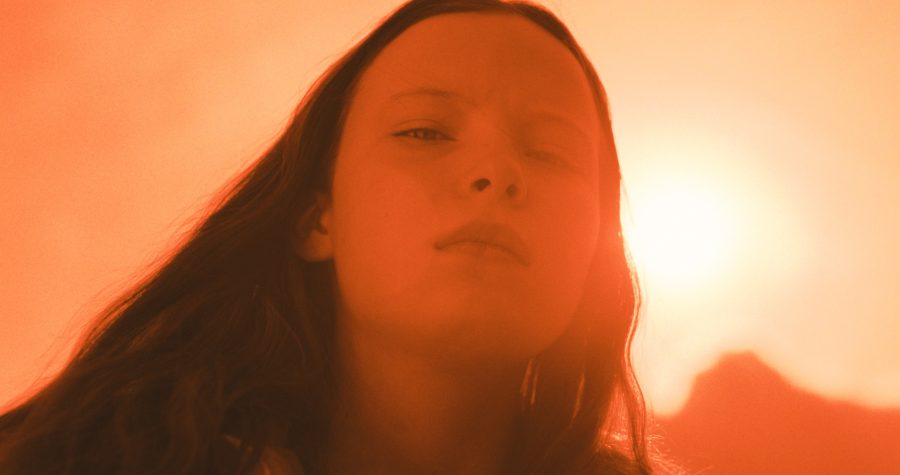
The Berlin competition film What Marielle Knows presents a compelling philosophical and psychological inquiry into the nature of truth and deception. The film follows Julia and Tobias, a seemingly perfect couple whose lives are upended when their daughter, Marielle, suddenly develops telepathic abilities, allowing her to perceive every thought and action of her parents. This newfound power disrupts the fragile balance of their relationship, revealing hidden secrets that threaten the cohesion of the family unit. The film raises profound ethical and existential questions about whether absolute truth is always desirable and whether deception can sometimes be a necessary component of social harmony.
I was once told a story about an elderly couple who had been married for over fifty years. One day, the husband found an old box hidden deep in the attic, containing letters his wife had written but never sent. Curious, he read through them, only to discover moments of doubt, hidden affections for another person, and worries she had kept secret to avoid hurting him. He was devastated but also understood that those secrets had allowed their marriage to endure. In What Marielle Knows, Marielle’s telepathic ability mirrors this dilemma—knowing everything about another and never telling lies might not always bring comfort; rather, it could unravel the relationships we hold dear.
This theme has a rich tradition in philosophy. Plato famously introduced the concept of the “noble lie” in The Republic, arguing that certain falsehoods, when strategically employed, can serve the greater good of societal order. Conversely, Immanuel Kant, in his deontological moral framework, vehemently opposed lying under any circumstance, asserting that truth-telling is a categorical imperative regardless of the consequences. Kant’s rigid stance, however, has been critiqued by later philosophers such as Friedrich Nietzsche, who viewed the very structure of human existence as one built on layers of deception and self-deception. Nietzsche argued that truth is often constructed rather than absolute and that illusions are sometimes necessary for human flourishing.
In fact, in every act, we engage in a selective forgetting of our true selves to conform to social norms. We shape our identities to fit the expectations of others, often presenting an idealized version of who we are. This performative nature of human existence necessitates occasional deception, as absolute honesty can sometimes lead to personal or social ruin. Throughout history, individuals have strategically withheld information or altered their narratives to avoid unnecessary conflict, embarrassment, or even harm. In personal relationships, complete transparency about past thoughts or fleeting desires could damage bonds that otherwise thrive on mutual understanding and selective ignorance. The tension between authenticity and the need for concealment is, therefore, not only a moral dilemma but an essential part of navigating human society.
What Marielle Knows effectively dramatizes these tensions. Marielle’s ability to perceive every hidden action and unspoken thought places her parents in a precarious position, where the very fabric of their relationship is at risk of unraveling. The film suggests that some secrets, while ethically questionable, are necessary for maintaining personal and social stability.
At the same time, What Marielle Knows is a surprisingly funny film, filled with moments of humor that had audiences in the theater laughing. The film skillfully balances philosophical depth with an honest and entertaining portrayal of human flaws. The humor does not dilute its message; rather, it enhances it, making the philosophical reflections more accessible. The actors’ performances contribute significantly to this, creating a believable and deeply human world.
The filmmakers have constructed a story that resonates because, as human beings, we all recognize that none of us are perfect—we are flawed, contradictory creatures, often concealing our real passions and emotions while presenting a curated version of ourselves to the world.
By weaving a gripping narrative with rich philosophical underpinnings, What Marielle Knows stands out as a thought-provoking and entertaining meditation on the nature of truth.
© 2020-2025. UniversalCinema Mag.
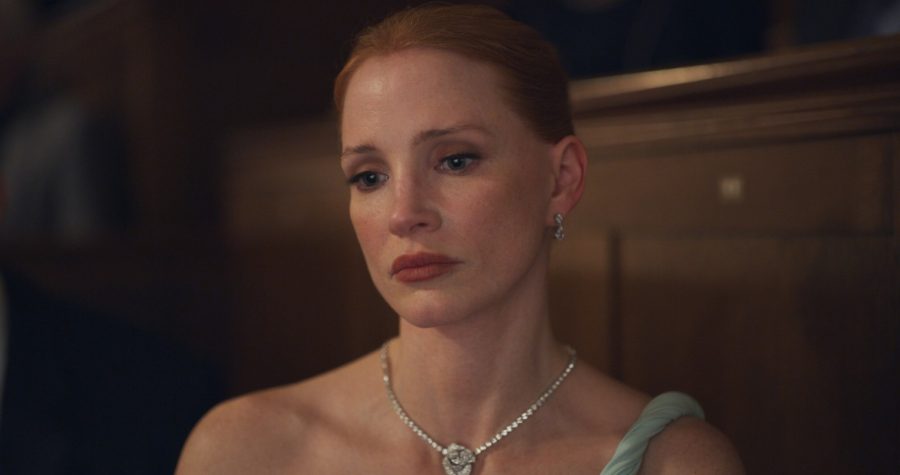
Being equal, isn’t it the most difficult thing for a couple to achieve, if at all possible? Isn’t love ultimately about balancing power and control, desire and trust, over someone else’s body and mind? And how can that get out of hand when different economic and legal statuses begin shedding feelings? Michel Franco’s Dreams premiered at the 75th Berlinale and competing for the Golden Bear, wrestles with these very questions. The Mexican director reunites with leading star, Jessica Chastain, after their collaboration on his previous tender film Memory (2023). In Dreams they deliver a fierce portrait of a neo-colonial love story, a Pocahontas of the Trump era.
It’s night, in the middle of nowhere. A truck is swaying as people scream for help from inside. The migrants are trying to survive with what little air and space they have. Suddenly, when most of them appear to be dead, the doors open and they emerge as cannon fodder from the bowels of this metal monster. A young man, whose physicality is immediately striking, separates from the group and staggers forward into the unknown. His first stop is a diner on the highway, where he searches for water. There, a Mexican waitress on shift kicks him out as if he were a dog, only to pick him up a short time later, take him home, and offer him a meal and a shower. His journey continues to San Francisco, to a chic neighborhood. Knowing where the spare keys to the house are hidden, he easily lets himself into a sterile yet luxurious apartment overlooking the valley. After raiding the fridge, he installs himself in the master bedroom. His naked, sculpted buttocks winking at the audience from between the expensive sheets. A woman comes home and slips on top of him. Two people in love, is the first impression. But reality is there to confront the romantics. The young man is Fernando (Isaac Hernández), a young ballet dancer from Mexico City. The older woman is Jennifer (Chastain), a wealthy philanthropist from San Francisco. So close but yet so distant. The two met in Mexico City, as Jessica is the financier of the art academy where Fernando used to work. There they bloomed. Now, in San Francisco they dry out.
The differences between Jessica and Fernando couldn’t be more obvious: age, class, race, gender. Yet they seem to love each other. Asymmetry is only a weak euphemism for the unequal power relations that bind them together. The inequalities between the two are exacerbated by family and social prejudices. “We were happy in Mexico”, Jessica says at one point, implicitly meaning “where I had everything under control”, keeping Fernando in a golden cage and coming and going as she pleased. This game of presence and absence, of appearing and disappearing, becomes a weapon that the two take up in turn. Fernando has his own dreams and desires, as we learn when he talks about his former life in New York. He left Mexico to be with Jessica and to fulfill her dreams, mainly erotic ones. But he is also eager to seize any professional opportunity, which, because of his status as an undocumented migrant, will lead to his ruin. Fernando’s body is symbolically his greatest asset, but also his greatest obstacle, and ultimately his downfall. The key to love and acceptance, with Jessica as well as with his fellow dancer and choreographer, but also the evidence of his “crime”. In today’s USA, just being an undocumented migrant makes you a criminal. Premiering just weeks after Trump’s re-election, Dreams invites the public to reflect on what the United States has become. The land of dreams and promise, founded on the melting pot of migrants from all over the world, is now all about “America first” and “Make America great again”. Yes, but what “America”? White US.
Colonial history has never been more evident. Jessica’s extreme sexualization of Fernando’s racialized body is only the most obvious sign of a more complex relationship of subalternity between the two. How she provides him with money, shelter, clothes, and food on her terms emphasizes the dependency. When she asks him not to speak Spanish with his countrymen in her presence, the mission of civilization is in full swing. She is, after all, a philanthropist, full of love and good intentions, but very unidirectional. Even the obvious signs of loneliness and neurosis don’t make it easier to sympathize with such a manipulative egocentric character, incapable of empathy. When Fernando shows any desire, it is immediately suppressed or ignored. He is here to please, as a pet, and Mexico is the ultimate place for that. In Jessica’s imagination, as in that of the US people, it is the place of good food, sun, color, and desire. There, Jessica suddenly wears airy, embellished dresses instead of monochrome, geometric ones. The house is full of colors and plants, very different from the ascetic one in San Francisco. Sometimes music plays in the background and friends come over to visit. Director Franco manages to convey the overarching dichotomy that dominates the protagonists’ lives through small, piercing details, in which the senses also play an important role. DoP Yves Cape provides the images for this detailed investigation of the development of this historical, anthropological, and sociological relation between the US and its closest neighbor, Mexico, at a time when reflection on power relations among the two is much needed.
© 2020-2025. UniversalCinema Mag.
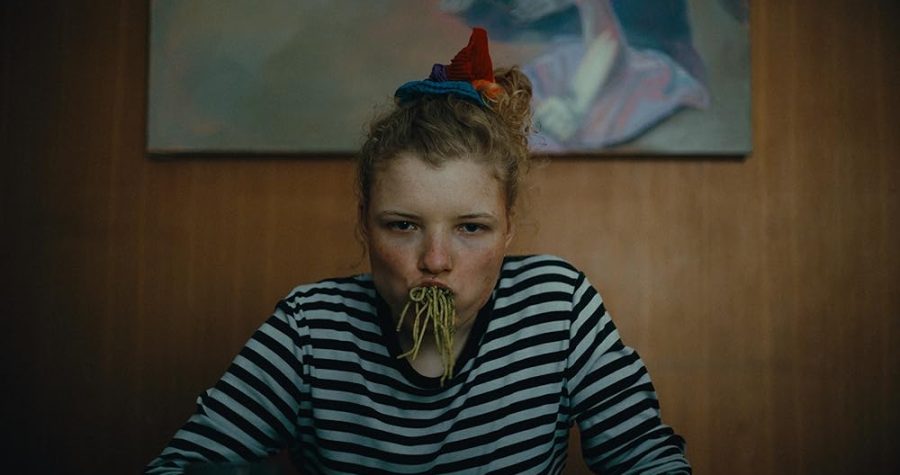
Festival programmers work hard to build lineups that fit their sections. It’s part of the trust they build with audiences who come with expectations of what to expect from a particular festival or section. Attending a new festival, part of the experience is figuring out what to expect and the promise of the sections. Perspectives is a section at Berlinale that you can get a sense of from its name, but more precisely it is for exceptional emerging filmmakers from around the world who have bold and fluent cinematic language and offer arresting perspectives and new ways of seeing the world. Writer and director Florian Pochlatko’s How to Be Normal and the Oddness of the Other, which ask the questions, “What is normal? Who gets to decide who is normal?” as Pia (played by Luisa-Céline Gaffron), a 26-year-old freshly released from a psychiatric hospital, struggles with identity as she struggles to try to hold onto to who she was as she and world have changed. The film is centered in perspective. While Pia is the main perspective, the film does a good job of weaving in other perspectives of those in Pia’s orbit, particularly her parents. These additional perspectives are an important layer because in a film that asks questions rooted in “Who gets to decide what is normal?,” it’s important to see that characters without diagnosis also struggle, can get anxiety, or fail to react appropriately.
The aspects of the film that captured me the most were the editing and composition. Early in the film, unprompted or revealed until much later, you are dropped into a scene from a TV drama, creating a stark contrast from the previous shots. This early use of different looking works, paired with a monologue centered on the world ending and how Pia slips through time, does a good job of setting up a visual sense for the film. However, it is in the sequence after Pia sees her ex with his new girlfriend (who looks a lot like her), where the shots cut back and forth between locations with sounds as she spirals and even as a viewer you feel like you are slipping through time with her until her mom wakes her and it’s the following evening. This reminded me of the TV series Big Mood (recently renewed for a second season), where Maggie, who is bipolar, lost time at an important time for her friend Maggie.
For a good portion of the film, Pia is going through crisis. Her parents don’t realize she’s going through crisis and someone will be quick to condemn them as bad parents, but charitably I think what so often happens is people hope their loved ones are doing better than they are until they can’t deny it. Pia’s young neighbour is the only one that seems to be able to get through to her when she’s in crisis because he still treats her like she’s normal. This is what she’s been seeking and hasn’t been able to feel on or off her medication.
The film also touches on the tragic reality that people with mental health issues often face police whose training has in documented cases resulted in injury or death. SPOILER: While the film briefly makes it look like the latter, it is thankfully the former and ties it back to slipping through time.
The film also features an impromptu tap dance scene, keeping you on your toes.
How to Be Normal and the Oddness of the Other World had its World Premiere at the 75th annual Berlin International Film Festival in the Perspectives section. Paris-based sales company Alpha Violet has acquired the international sales rights for the film.
© 2020-2025. UniversalCinema Mag.
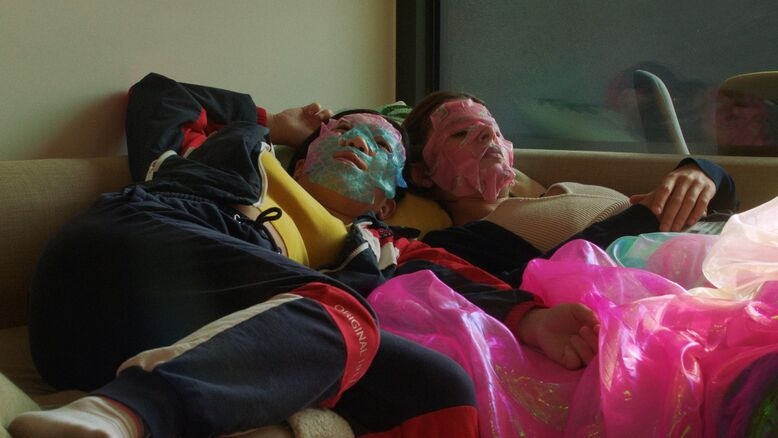
Fwends, the debut feature from Australian director Sophie Somerville, takes a meandering look at the complexities of friendship and the existential struggle that so often defines the transition from adolescence to adult life. Taking a largely improvisational approach (the film’s leads are credited as co-writers), Somerville paints a loving portrait of the city of Melbourne as two old friends banter and bicker their way to a better understanding of each other, and themselves.
When Em (playwright Emmanuelle Mattana), arrives in Melbourne for a spontaneous weekend trip to visit her childhood friend Jessie (Melissa Gan), they seem an unlikely pair. Em, a lawyer based in Sydney, is rigid, uncomfortable in her own skin, and driven to monologue incessantly about the toxic work culture at her firm. Jessie, on the other hand, is the kind of girl who earnestly hugs trees in the park. Or maybe more accurately: the kind of girl who wants you to believe that she’s the kind of girl who earnestly hugs trees in the park.
Chattering away in a familiar shorthand, their conversation is tinged with that affectionate but awkward quality typical of old friends who have grown apart and, in many ways, become strangers to one another. As the gentle and flighty Jessie does her best to play tour guide and show her friend a good time even as she copes with the fallout of a recent breakup, Em seems frustratingly determined to lose herself in a litany of complaints. When Jessie finally tires of the attitude and confronts her, Em reveals the real (and maddeningly predictable) reason for her unexpected visit. Her boss made a pass at her, and rather than offering support, her female mentor simply laid into her for failing to stand up for herself. Conflicted and feeling trapped in a life she’s worked incredibly hard to build, she felt compelled to run to the embrace of a friendship that existed long before she had to deal with any of these complicated grown-up dilemmas.
To be sure, an interesting (if occasionally grating) aspect of the film is the way that these two grown women seem to revert somewhat to their childhood personas, nattering away in high pitched babygirl voices, building forts and playing with toy microphones like they’re at an overgrown adolescent slumber party. At one point, as they stand draped in luminescent chiffon fabric on Jessie’s balcony, their conversation turns once again to serious matters. For a moment feeling safe in this makeshift facsimile of childhood innocence, Em and Jessie trade revelations and deeply held insecurities about their very adult lives.
Shortly thereafter, the narrative takes a sharp turn when Jessie gets them locked out and the pair makes the interesting choice to score some MDMA and stay out all night rather than simply book a hotel room. Taking advantage of their drug-fueled adventure to indulge in a veritable smorgasbord of mishmashed cinematic motifs, Somerville’s film loses some cohesiveness, but gains momentum. As the girls careen about the city and their inhibitions melt away, Jessie reveals herself to be far darker, more complicated, and far less empathetic than she pretends to be. Perhaps it’s no surprise they drifted apart after all.
In the morning, when the pair finally manage to sneak back into the apartment, Em reads aloud as Jessie snoozes peacefully next to her. The passage she reads is about love, friendship and the complex but ultimately redeeming nature of humanity. The scene appears intended to impart a more profound meaning to the events of the film, but feels slightly contrived and far less authentic than its actual conclusion.
In the film’s final moments, Jessie walks Em to the metro and they part awkwardly, in an exchange that will feel genuinely familiar to most of us. There is no dramatic moment of rapprochement to be witnessed, nor do we sense that the relationship between them has been forever changed. It seems unlikely that they as individuals are going to change anything about their lives or how they move about the world. It feels incredibly true to life, and serves as a fitting capstone to Somerville’s minor mumblecore opus.
Fwends premiered in the Forum programme of the 75th Berlin International Film Festival.
© 2020-2025. UniversalCinema Mag.

 By Cara-Lynn Branch
 By Bita Habibi
 By Amir Ganjavie
 By Giulia Dickmans
Recent Comments