 By Cara-Lynn Branch
 By Arash Azizi
© 2020-2025. UniversalCinema Mag.


Leading up to this week, Sebastian Stan seemed like a shoo-in to get nominated for his first Academy Award for A Different Man, as it was getting significant award buzz and critical reception. However, he was nominated for his other project last year, The Apprentice. Perhaps this was a result of the recent election or Sebastian Stan being excluded from Variety’s Actors on Actors because other actors didn’t want to talk about Trump, either way, A Different Man left the Academy Awards nominations receiving only a nomination for Best Makeup and Hairstyling. However, anyone who has seen the film knows the layered performance Sebastian Stan gave as Edward Adam Pearson as his well-meaning antagonist Oswald.
A Different Man, written and directed by Aaron Schimberg, centers Stan’s Edward, who is a struggling actor with neurofibromatosis who undergoes a painful experiment treatment that promises to cure him and give him a new face. His desire for this treatment is predicated by his insecurity about how others perceive him. This is exasperated by the only role he was able to book was in an instructional video that was about teaching people to treat people like him like people, which is dehumanizing in itself, and his inability to get close with his neighbour Ingrid (played by Renate Reinsve). So, when the surgery is a success, he kills Edward and takes on the identity of Guy believing that everything will work now.
He finds success in work, getting his face on the billboards and cardboard cutouts, and having casual relationships with women in his new, cold apartment. It’s everything he wanted, except that while playing the role of Guy, he is still not living his dream of acting, and then he discovers that Ingrid lived up to her promise and wrote a play with a role for him. Well, for Edward. Guy eventually convinces her to hire him to play Edward (wearing a mask) as she can’t find anyone else who fills her vision of Edward that came in – but then in walks Oswald, who has neurofibromatosis like Edward had before his surgery.
What makes Oswald a great antagonist is you can read his character in two ways. The first is genuine, that he genuinely likes Guy and his acting and is just hanging around because he’s excited and invited. The other, is that he is manipulating the situation from the start to push Guy out. Regardless of your read of the character his presence and confidence in life drive Guy insane because Oswald is getting all the attention, love, and opportunities Edward/Guy felt he couldn’t achieve without the surgery and now is losing again despite his transformation.
What’s interesting about the film is that the characters are all messy. It leans into the concept that the grass is always greener on the other side; Edward sees Oswald living the life he only dreamed of before his surgery and getting everything he wanted, including Ingrid’s love. But you can’t discount the events that transpired to lead to this, going back to before Edward chose to “kill” Edward and become Guy. Ingrid pulled away and fled Edward’s apartment when he grabbed her hand, the closest he got to showing his affection was more than friendly. She was not present during his painful transformation. It was perhaps only because of his “death” that she was driven to revise their relationship in the play. Paving the way for Oswald, who greets the world with confidence to let her tread those paths not traveled, and he has the confidence to pursue.
The film’s message is clearly about self-acceptance. Edward’s transformation was only skin-deep; Oswald embraced who he was, while Edward never found comfort in his skin.
A Different Man is available on Max in the US and Digital Rental in Canada.
© 2020-2025. UniversalCinema Mag.
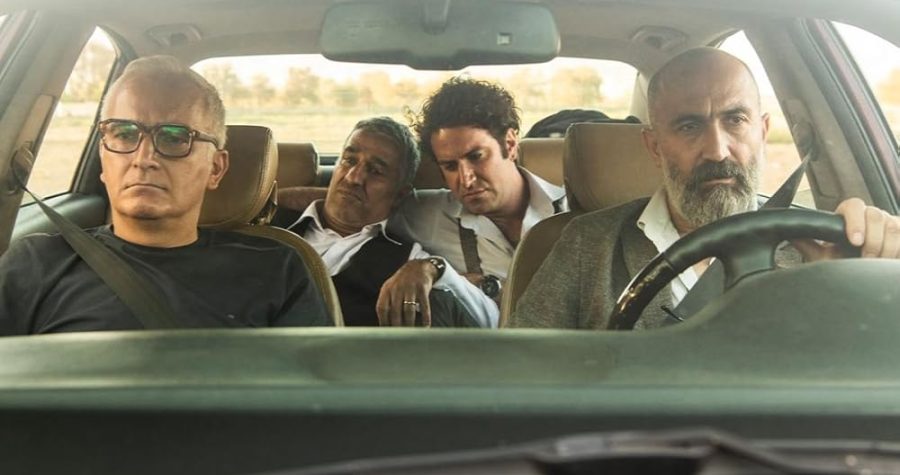
Iranian cinema has long been known for its poetic films and, more recently, for its intense dramas. But one oft-ignored Iranian genre is comedy, a rarity on the festival circuit.
In the Iranian box-office, however, comedies often do well. Soroush Sehhat’s Breakfast with Giraffes is one example. Although it hasn’t been shown in festivals, American audiences recently had a chance to see it in a series of special screenings in Boston, Washington and New York, where it was a special screening prelude to the 3rd Iranian Film Festival New York. It will also soon be screened in Germany.
Being a comedy doesn’t always make a film less intense or even less forlorn. The Iranian films have a reputation of leaving you a little depressed and Breakfast with Giraffes doesn’t break from that tradition. But it’s nevertheless a bona fide comedy: it makes you laugh just before you notice how hard it hit you.
The film revolves around a wedding party. Pooya (Hootan Shakiba) and Shahin (Bijan Banafshehkhah) are all dressed up to go. The groom, Reza (Pejman Jamshidi) is a cousin of their good friend Mojtaba (Bahram Radan.) It is a traditional wedding where guests are segregated by gender and have to sit around round tables, busying themselves with fruits and sweets. It is an alien environment for Pooya and Shahin who come from a different milieu and a different world. They are way over-dressed, complete with bowties, and have little in common with the stout men in worn-out suits, quietly peeling tangerines and passing them around the table. Reza is stuck between wanting to entertain his friends and his hard-ass soon-to-be brother-in-law Saeed (Majid Yousefi) who follows him like a shadow and bans him from such mundane activities as eating a nectarine (he suggests something less splash-probe like a banana.)
This clash of worlds, between the hip friends and the simpler guests, between the two sides of Reza’s life, sets the tone for the film. If social dramas try to capture the brutalities of daily life in Iran, Breakfast with Giraffe uses a comical portray of contradictions to show how absurd life in today’s Iran can be.
Pooya and Shahin manage to get Mojtaba and Reza away from the eagle-eyed Saeed and into a utilities room where they can let loose some steam, primarily by consuming copious amounts of cocaine. How else to sit through this tedious wedding? Now, the very Reza who was banned from a nectarine can’t get enough of the coke lines. He ends up losing consciousness and the rest of the film tells the adventurous story of how his friends try to save his life and maybe his marriage.
Sehhat’s adoption of an absurdist style is both apt and done in a particular way. Like most absurdist or surreal works, the basic rational logic is suspended in some of the film’s elements. We see a man fall from a few floors without breaking a bone. In a memorable scene, we see two groups of characters inexplicably break into a pretend Italian to flirt with each other. But the film doesn’t go far in this direction. It never quite becomes nihilist or fully abstract. It keeps the fundamentals of a narrative. This way, it remains watchable and compelling.
The film artfully weaves absurdism into another sub-genre: buddy movies. This is a story of a few buddies engaged in activities that are typical, perhaps even stereotypical, of Iranian men: getting high together, going together to a villa outside town, putting some kebab on the grill. Iranian women, who play a heroic role in all spheres of life, have often been portrayed in Iranian cinema. But Breakfast with Giraffes is a study in Iranian masculinity and all its pitfalls. The men of the film each suffer from their own relationship crises. Shahin is a divorcee. Pooya finds out his girlfriend is cheating on him. Whenever the group meets a group of women, a game of flirtations begin, like the notable scene with the make-believe Italian. The film’s success is rooted in how it balances out these genre sensibilities, different as they are.
The very title of the film gives out a surreal flavor. The title drop occurs in the utilities room when Reza muses about going to a resort in Langata, a suburb of Kenya’s capital Nairobi, where guests mingle with giraffes and even have breakfast with them. This hotel exists in real life but the absurdism here is contextual. Reza repeatedly reminds us that he has worked several years to be able to afford a very modest wedding party. In what world could a middle-class Iranian like him afford a trip to Kenya and a stay at the Giraffe Manor? (I checked and it costs anywhere between 1200 to 2500 US dollars a night.) In another absurdist event, as soon as Mojtaba hears the name Langata, he says he knows where it is since “I am a taxi driver, I know all addresses.” As if, one could get a Snap (Iran’s version of Uber) all the way to Nairobi.
Sehhat thus weaves together absurdist elements into a compelling story line, delivering a film that is just like the Iran of today: getting by but surreally. This is a world in which men and women resort to a made-up language to flirt; one in which even relatively well-to-do folks have to resort to cocaine to get through a night; one in which having breakfast with giraffes is both an implausible dream and one that seems to be just about possible.
© 2020-2025. UniversalCinema Mag.

In her debut feature, experimental film director Seayoon Jeong takes a deep dive into the mind of one woman suffering the debilitating effects of nyctophobia – fear of the dark. Deftly making creative use of animation and visual effects to enhance the fantastical and at times harrowing dreamscape of her central character’s mind, Jeong proves herself an original and innovative filmmaker adding an excitingly fresh perspective to the cinematic landscape.
Based loosely on her own experiences, Jeong adopts an experimental, non-linear framework in an attempt to communicate the irrational and illogical reality of being afflicted with these types of debilitating anxiety disorders. Opening with a series of unsettling animations, she immediately drops the viewer into the swirling vortex of fear and anxiety inside her protagonist’s mind. Deftly expressing the dichotomy between perception and fact fostered by irrational anxiety, she then abruptly cuts to the objectively peaceful reality of her actual surroundings.
Liz (Olivia Clari Nice) lies in a brightly lit bedroom, attempting to will herself to sleep. Clearly fearful of some unseen dark force, she talks herself down in a familiar ritual, coercing herself to sink into a tenuous unconsciousness. Meandering about the eerily desaturated dreamscape of her own mind, Liz encounters a number of unsettling images: bleeding flowers, abandoned carousels, labyrinthine hallways full of locked doors – the kinds of familiar yet illogical images that populate so many of our dreams, begging for deeper interpretation. She soon finds herself strolling along a beach peppered with bright blue sparkling gems. Modestly evoking the wild hallucinatory landscapes of films like The Fall, sequences such as these beg the viewer to wonder what a fertile mind like Jeong’s could achieve with even greater resources at her fingertips.
In much the same way as our own minds work, grasping subconsciously at the cultural touchstones ingrained in our individual experience, the film is rife with pointed cinematic references. From It to Wayne’s World to Sucker Punch, Jeong wears her influences on her sleeve. The first and most pervasive of these references is to Stephen King’s murderous clown Pennywise, with Liz stalked by not one, but several masked figures throughout her journey. At first subtle shadows lurking in the darkness, the threat they pose soon becomes more and more overt as they multiply, representations of the intensifying fears manifested from within herself.
The film kicks into high gear as Liz finds herself drawn further into the maze of a crumbling and labyrinthine industrial space. Considering her scant resources and experimental approach, Jeong is impressively targeted in her creative choices, making deft use of mannequins to up the creep factor, and utilizing a wall of analog television screens to great effect. Rather than simply relegate the device to the status of static set piece, she makes clever use of visual effects to coax the snow on the screens beyond their frames, infecting doorways, walls, and even – at times – Liz herself. The device is dynamic and evocative, indicative of Jeong’s confident grasp of the visual world at the centre of the film.
As she sinks deeper into her own subconscious, Liz takes on a series of alter egos: jazz singer, schoolgirl, disco diva, flashing in and out of self-awareness throughout. To be sure, Nice does some impressively heavy lifting here, effortlessly telegraphing her ever-changing internal states and convincingly delivering on a series of varied dance performances. Following along the natural ebbs and flows of peace and distress familiar to so many who suffer from debilitating anxiety, Jeong’s narrative (such as it is) eventually leads the viewer through her protagonist’s inevitably dramatic confrontation with the demons of her own making, seeing them vanquished just in time for her to drift off into a deep and relatively peaceful sleep.
Visualizing this moment as Liz sinking slowly into a vast sea, bathed in cool sunlight, the mood of the film slowly quiets along with her mind as she slips deeper into peaceful slumber. It is an arresting image (and the most beautiful moment contained in the film), but the tranquility it evokes is all too brief as morning soon arrives to rouse our heroine from her hard-earned idyll.
Nyctophobia premiered at the 2024 San Francisco Independent Film Festival.
© 2020-2025. UniversalCinema Mag.

The 50th anniversary of Jeanne Dielman, 23 Quai du Commerce, 1080 Brussels by Chantal Akerman is being celebrated with screenings by the British Film Institute. This film ranked first in the latest Sight & Sound magazine poll for the greatest films in cinema history. Remarkably, in the previous poll—or indeed in any similar poll worldwide—it had never been among the top ten films. Now, however, it has suddenly not only entered the list of selected films but claimed the top spot. This raises countless questions: how is it that a film, that appears to pale in comparison to the masterpieces of this art form—whether it’s Hitchcock’s Vertigo, Bergman’s Persona, Fellini’s 8½, or Orson Welles’s Citizen Kane—can be considered superior? Not only does it seem absurd to compare their artistic values, but such comparisons often feel like a joke. So how has Jeanne Dielman, based on ideological waves, reached this bizarre conclusion in the Sight & Sound poll?
Both the voters—myself included, as I participated without foreseeing the final results—and the organizers seem to have unwittingly succumbed to the current trend of elevating a female filmmaker. This effort ultimately led to a peculiar list of selections that reflects not so much “cinema” and its artistic merits, but rather a journalistic response to contemporary feminist trends and a deliberate push to highlight works by women or people of color. However, I believe it is self-evident that a film being made by a woman or a Black person is not, in itself, a “value.” A film is either good or bad, and it fundamentally should not matter whether its creator is male or female, white or Black. The current emphasis on such ideological evaluations in some global festivals and mainstream criticism—such as mandates for festivals to select 50% of their films from female directors—seems to aim at eradicating discrimination against women. However, it blatantly creates a reverse form of injustice, depriving deserving male filmmakers of recognition simply because they are not women. This prioritization of ideology over cinema is not only unappealing but potentially alarming.
The elevation of Jeanne Dielman seems more an act of homage to these transient ideologies than an acknowledgment of the film’s cinematic merits. I eagerly read Laura Mulvey’s extensive article on this film, featured in the same poll issue to analyse its merits. However, the multi-page essay—though written by an important critic—is nothing more than a detailed summary of the plot, interspersed with admiring remarks. There isn’t a single line of cinematic analysis to be found.
While books can be written about the complex world and cinematic language of Vertigo, Jeanne Dielman’s advocates resort to clichéd praise about its documentation of reality and the filmmaker’s neutral and observational camera. They fail to acknowledge the undeniable fact that the film is unbearably boring and tedious. One could easily discard half of it without affecting its function. In the first 35 minutes, a woman cooks in her home, performs her job as a sex worker, dotes on her son, and eventually leaves the house. For the next two and a half hours (until the final few minutes), essentially nothing else happens: the woman repeatedly turns lights on and off in the room and hallway, makes beds, cooks meals, brews coffee, checks her mailbox, and takes the elevator. Are we seriously not supposed to ask why all this repetition and wasted time is necessary? Of course, one could write that “the filmmaker masterfully observes and portrays the monotony of life and its cycles,” but what about brevity in cinema? Many great filmmakers in history have conveyed the tedium of life in a few simple shots lasting less than a minute. So why should we endure this endless depiction of schnitzel preparation? If these scenes were shortened (or removed entirely), what would the film lose? Whereas in Vertigo or even 8½—a modern, anti-narrative film—removing a single scene collapses the entire structure, in Jeanne Dielman, cutting or removing the first dishwashing scene (where the character is shown from behind) or the post office scene (where she fills out a form, again from behind) changes nothing. Nor does the overly long coffee-making scene. If anything, trimming these scenes would make the film more bearable.
In Béla Tarr’s seven-hour Sátántangó, despite the absence of conventional excitement, the film’s brilliance ensures the viewer remains captivated and engaged throughout its entire duration. Yet Jeanne Dielman’s 200 minutes are maddeningly frustrating due to their aimless repetition and unnecessarily long scenes. Compare it with Sohrab Shahid Saless’s Time of Maturity (Reifezeit), which shares the common theme of a sex worker and her child. Shahid Saless’s concise masterpiece in narrative and mise-en-scène is far superior to Akerman’s work. However, conformist critics neither feel the need to watch Shahid Saless’s film nor are given the opportunity to do so due to the constraints of the pre-defined system. As a result, Akerman’s film is hailed as the greatest in cinema history, while 90% of voters have likely never even heard of Shahid Saless.
The film is lauded for its stark realism, but it ironically suffers because of it: the realism is flawed because the characters are not real. They resemble machines performing predetermined actions and reciting scripted dialogue, only to disappear from the scene, lacking any life beyond the frame. A clear example is the son’s sudden bedtime question about how his father met his mother. Why hasn’t he asked this in all these years? The mother robotically recites lines as though reading from a script, and the scene ends.
One of the film’s potentially remarkable scenes could have occurred when the woman babysits her neighbour’s child. In this situation, the entry of a client and the child crying in the adjacent room during the act could have created an unforgettable moment, vividly depicting the woman’s conflict between her job and motherhood. Instead, the filmmaker bypasses this opportunity: when the doorbell rings, it’s not a client but the child’s mother, who mutters trivial comments about food. Instead, the filmmaker resorts to “potato suspense.” After sleeping with a client, the woman realizes her potatoes have burned, which leads to a series of nonsensical, lengthy scenes: she discovers she has no more potatoes, goes out to buy some (the camera lingers inexplicably as the shopkeeper goes into another room and sit there again and we don’t know why), and then returns home to peel and cook them. Later, when her son returns, we’re forced to wait again for the potatoes to cook. (The filmmaker repeats this purposeless suspense with a button at the end as well.)
Labelling Jeanne Dielman the greatest film in cinema history is so absurd to me that I believe even Chantal Akerman herself, if she were alive, would have considered it a joke. When we set aside ideological biases, this film—amidst countless masterpieces of cinema history, from Kaneto Shindo’s Onibaba to Dreyer’s Ordet, from Mizoguchi’s magnificent works to the enigmatic brilliance of Welles’s The Trial (none of which are ‘trendy’)—is not the greatest, nor even among the top 100.
© 2020-2025. UniversalCinema Mag.
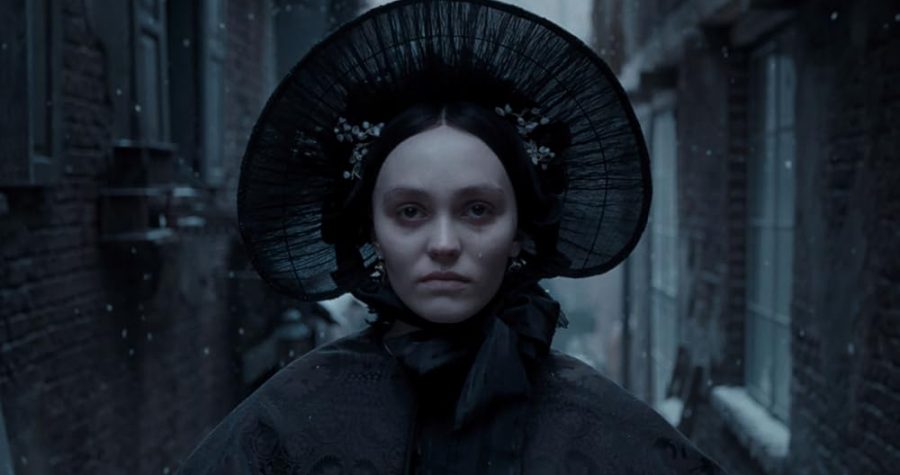
Genre films often are often relegated to the margins, ill-considered by many critics favouring more “serious” cinema. But as Robert Eggers demonstrates in Nosferatu, in the hands of a truly skilled filmmaker, genre has the potential to provide the entry point to something truly astounding. A modern take on the classic 1922 silent film by F.W. Murnau, the director’s most recent work serves as a remarkable culmination of the talent he has honed over his already impressive filmography.
With Nosferatu, Eggers once again demonstrates himself to be an impressive builder of worlds, building on the scope of films like The Witch and The Lighthouse to take the audience on a journey through nineteenth century Germany, the snowy mountains of Transylvania, and into the heart of darkness itself. Having worked as a production designer for many years, he brings a painterly sensibility to his films, and seems determined to push the boundaries of practical filmmaking in an age of overreliance on digital trickery. Having long felt that a lazy dependence on computer generated imagery has drained so much of the magic from the viewing experience today, it is a pleasure to behold the modern possibilities still afforded by good old fashioned analog craftsmanship.
Shot on 35mm, the film is sublimely beautiful, and rendered in an astonishingly layered palette of black and gray. Building on the aesthetic of their previous work, Eggers and cinematographer Jarin Blaschke have developed a collective visual style which, while always distinctive, has matured into something truly artful to behold. Their treatment of darkness and shadow is something richer and more beautiful than one might imagine, and vital in a film that takes place nearly entirely within it. To be sure, it is a challenge to maintain visual interest in a film that is plunged into darkness for such a significant portion of its running time, but the pair are more than up to the task.
It is interesting to note that in modernizing this classic film, Eggers chose to return to more traditional technical practices, with his performers going much the same route. As Ellen Hutter, a young newlywed with a mystical link to the vampiric Count Orlok (Bill Skarsgard), Lily Rose Depp turns in an absolutely astounding physical performance that needs to be seen to be believed. Foregoing any kind of digital enhancement, Depp worked with a movement coach and immersed herself in the traditional Japanese dance style of Butoh in order to affectingly depict her character’s demonic possession. Skarsgard, for his part, though rendered physically unrecognizable with the help of prosthetics, manages to modulate his voice into something totally otherworldly, completely under his own power. I was shocked to learn that the sound emanating the actor was achieved by working with an operatic voice coach, and free of any digital enhancement. Thoroughly committed to their craft, Depp and Skarsgard remind us of the power of a truly gifted performer to bring even the most unearthly character to life.
So impressive are Depp and Skarsgard in the film that it would be easy to overlook the work of the supremely talented supporting cast. Admittedly, Aaron Taylor-Johnson and Emma Corrin sputter about with little to do, but as Hutter’s devoted husband Thomas, Nicholas Hoult is an always welcome presence, and his hallucination-laden journey into the deep Transylvanian woods is a wild and terrifying ride laced through with genuine pathos. Simon McBurney turns in a brief but wildly memorable performance as Thomas’ duplicitous boss Herr Knock, and by the time Willem Dafoe turns up as eccentric professor Albin Eberhart von Franz, we know we’re in excellent hands for the remainder of Eggers dark adventure. As the film catapults itself to its supremely satisfying conclusion, every element, every beat feels meticulously and seamlessly realized, confidently transporting the audience to its final resting place.
With this splendidly executed work, Eggers and his performers lean into traditional artistic practice to deliver a confident and impressive contemporary interpretation of a legend already indelibly imprinted on the popular imagination, and in doing so, prove that it is not necessary to use every newfangled tool in the box to produce something that feels thoroughly modern.
Nosferatu is currently screening in cinemas across North America.
© 2020-2025. UniversalCinema Mag.

Director James Mangold is no stranger to the prestige biopic. Cutting his teeth on Girl, Interrupted (about author Susanna Kaysen’s extended stay in a psychiatric hospital) and Walk the Line (his acclaimed exploration of the lives of legendary country superstars Johnny and June Carter Cash), the famed director brings a great depth of experience to his latest look at the early years of Bob Dylan’s astronomically successful career. Sadly, despite benefiting from a subject who chafed at convention and pushed boundaries throughout his artistic career, Mangold has simply churned out yet another meticulously realized but ultimately uninspiring musical biopic.
The film covers only a very small portion of Dylan’s life and career, though admittedly a significant one, opening when he first meets Pete Seeger and Woody Guthrie in 1961, and wrapping up with his infamous performance at the Newport Folk Music Festival in 1965. Charting his meteoric rise from talented but unknown folk singer to irreverent international superstar, the film is clearly aimed at Dylan true believers, never missing an opportunity for its supporting characters to express their awe at his preternatural musical genius.
Reverent hero worship is characteristic of so many musical biopics, and this one is no different. Sure, the film gestures at Dylan’s philandering, his arrogance, and his perhaps selfish abandonment of those who helped him rise to the top, but shoves down the audience’s throat – time and time again – just what an unparalleled genius he’s meant to be. While this may be true, and Dylan is undoubtedly an unparalleled talent, it makes for uninspired viewing, and at times I felt like I was listening to a sermon in the Church of Bob Dylan, entreating me to bow down at the altar of his artistic genius.
Luckily, the film is gorgeous to look at, and even more beautiful to listen to. I could pontificate at length about the accomplished work of François Audouy and Regina Graves in recreating the Greenwich Village as Dylan would have experienced it in the 1960s, but the musical performances in the film are absolutely astonishing, eclipsing nearly any other element of the film. Timothée Chalamet, unsurprisingly, does fine work channeling Dylan, and is especially impressive at expressing his moments of musical inspiration, casually tinkering at creating now legendary songs like The Times They Are a’ Changin’ and Blowin’ in the Wind. Less expectedly, Monica Barbaro is magnetic as folk music icon Joan Baez, skillfully embodying her unique voice and performance style despite lacking any previous musical experience.
Indeed, the film is full of great supporting performances, led by a warm and paternal Ed Norton as folk music purist Pete Seeger. Scoot McNairy is similarly affecting as the ailing Woody Guthrie, projecting a great complexity of emotion despite having lost the ability to speak thank to advanced stage Huntington’s disease. The weak link among the supporting cast is Boyd Holbrook as Johnny Cash, who feels here more like a caricature or plot device than a fully realized character, in disappointing contrast to the fully inhabited performance of Joaquin Phoenix in Walk the Line.
One of the most interesting elements of the film is that its central conflict is an artistic one. Despite spending ample time on the dramas of Dylan’s personal relationships, particularly with Baez and his girlfriend Sylvie (Elle Fanning), Mangold is far more interested in Dylan’s musical journey, and his abandonment of folk music in favour of unhindered musical experimentation. As Dylan, much to the chagrin of the purists who helped drive him to the top, begins to experiment with electric guitar and unconventional instrumentation, the same audience that once revered him turns, enraged by the audacity of his musical evolution. The battle comes to a head at the aforementioned Newport Folk Music Festival, and I had to chuckle at the absurdity of a folk music riot, but it really did happen.
There is a more interesting version of this film, and perhaps it’s already been made. Todd Haynes’ experimental biography I’m Not There goes so much further in matching the complexity of its subject, featuring performances from six different actors as Dylan. Perhaps it’s time for a rewatch.
A Complete Unknown is currently screening in cinemas across North America.
© 2020-2025. UniversalCinema Mag.

For many years, turning forty sounded something of a death knell for the careers of many actresses in Hollywood. Often relegated to the background as sexless and thinly sketched archetypes of motherhood, few could hope to sink their teeth into the same kind of meaty, complex parts as their male peers. Recently, however, the tide seems to have turned in their favour, treating audiences to a panoply of incredible performances from the likes of Demi Moore (The Substance), Pamela Anderson (The Last Showgirl), and Amy Adams (Nightbitch). It is a joy to see Nicole Kidman join their ranks in this sophomore effort from director Halina Reijn (Bodies, Bodies, Bodies), channeling the same fearlessness and audacious talent that first propelled her stardom.
Romy Mathis (Kidman), the CEO of a somewhat vaguely realized robotics company, appears to possess all the outward trappings of modern-day success: a handsome theatre director husband (Antonio Banderas), two lovely and self-possessed daughters (Esther Rose McGregor and Vaughan Reilly), and well-appointed homes in both the city and the country. She is respected in the workplace, loved at home, and predictably – as the cinematic trope must go – desperately dissatisfied and simmering with unrealized desire.
Enter Samuel (Harris Dickinson). Romy first spots him as he confidently calms a violent dog in the street outside her office, and is immediately intrigued by his calm bravado. Unexpectedly, he shows up again amongst the fresh crop of interns touring her office, and upon their introduction surprises her with his uncowed assertiveness, skeptically confronting her about the company mission statement she’s been parroting as they prepare for an important new launch. Romy is rattled, but finds herself increasingly drawn to him, and reading her desire, he quickly pushes the boundaries of their relationship further and further.
Where most films about dominant/submissive dynamics tend to cast the dominant party as suave and unfailingly in control of a wilting and instantly yielding submissive, Babygirl takes a more nuanced view of the power dynamics between two characters completely unsure of how to navigate a kind of relationship they both desire, but have never before explored. It is fascinating (and often funny) to watch the pair make things up as they go along, clumsily navigating how to wield and yield the power each holds over the other, and many of their most intimate scenes are punctuated with uncomfortable, incredulous laughter.
Dickinson is an interesting choice of leading man, and holds his own against the more experienced Kidman, ably projecting Samuel’s easy confidence, but also the ghostly bemusement simmering beneath the surface. While Romy, through this liaison, seems to be allowing herself access to her true nature for the first time, at times it seems Samuel may simply be trying on this persona for a brief time, and ready to let it go once the relationship runs its course.
Unfortunately, the inevitable unraveling of their relationship is less interesting than its inception, and full of predictable revelations and manipulations that do little to deepen the emotional truth of the film. Less developed characters, such as Romy’s husband Jacob (Banderas) and her ambitious young assistant Esme (Sophie Wilde), sweep dramatically into the film’s final act in an attempt to stitch the events of the film into a tidy package of sentiments about marriage, morality, and ambition, but it all feels an unfittingly sterile ending for a story that promised such tantalizing emotional complexity. It is somewhat puzzling to consider Romy’s breakdown of the true nature of her darkest desire – her need to be risking the loss of something truly important – because in the end, nothing much seems to have been risked at all.
Perhaps the film’s greatest flaw is that it fails to develop its central characters more deeply. We learn next to nothing about Samuel, and as for Romy, despite a casual mention of her being raised in a cult (!) and periodic flashes of EMDR therapy, Reijn declines to dig any further into the surely fascinating backstory of a woman who somehow went on to graduate from Yale with distinction despite such traumatic beginnings. Alas, we shall all have to live with the enduring mystery.
Babygirl is currently screening in cinemas across North America.
© 2020-2025. UniversalCinema Mag.
Heretic: I was glad the trailer for the latest Scott Beck and Bryan Woods only gave you a little Red Riding Hood/Big Bad Wolf idea while concealing some of the greater twists in a film where Hugh Grant delivers a career-standout performance.
Jane Austin Wrecked My Life: This was the TIFF film that I told everyone about who asked what I loved there. It’s a great rom-com as it builds on a love of the history of rom-coms.

Twisters: This was probably the most fun I had in a cinema this year, and I’m still upset I could not take advantage of a 4DX screening even when they brought it back. Even in a regular cinema, the sound mix was so effective it felt like you were in the storm that I was shocked when the Oscar shortlists came out and it missed in the sound category.

The Beast: This near-fi feature surprised me, partially because I went in blind like I often do if it’s not a film I’m bombarded with trailers for at the AMC, but also because I don’t even know if a trailer could have properly prepared me for this film that now having sat on it for almost a year reminds me of some of my favourite Black Mirror episodes, which is probably why I was so drawn to it.

Wicked: I’ve been a fan of the show for most of my life. It was my first Broadway musical; I have a poster signed by the Original Broadway Cast. I have been skeptical about the film existing since forever as its release date got pushed and pushed again with no casting announced, and then it’s split into two parts. I went into the film unsure if I would leave wanting to see part two, the fact that I’m waiting for November to come around again to see the finale means they were making good.

Universal Language: I am still thinking about the set design in this film, of the Kleenex Repository, and of the Tim Horton’s made up as Tehran Tea House. Others are taken with the film too as it made the Oscar shortlist for International Feature Film.

Conclave: Good actors, good dialogue, and a lot of backstabbing by people who claim to be pious, what’s not to enjoy?

Thelma: This is such a funny movie full of heart, and while Thelma may not always be tech-savvy, she’s not shown to be incapable, which is why you are more than ready to ride with her as she goes to get back the money that was conned from her.
Dìdi: I love coming-of-age films, and while I think every narrative can be looked through the lens of coming-of-age because characters transform/evolve, the genre is more defined by films like Dìdi, but within that landscape, you rarely get films centering the male experience or the Asian-American one making Dìdi unique as it deals with themes universally relatable in the awkwardness of growing up.
Nickel Boys: I have never seen another film like it. I think we’ll see other filmmakers try the same or similar style with similarly interior/internal characters, and they say imitation is the sincerest form of flattery, but I hope RaMell Ross is flattered in other ways this award season.

© 2020-2025. UniversalCinema Mag.
As one year gives way the next, cinephiles of all stripes play that familiar game of identifying the cream of the crop. From quiet film festival gems to sprawling effects-laden extravaganzas, this year was chock full of memorable cinematic moments, and it is with pleasure that I bring you this unapologetically subjective selection for the best of 2024:
PERFECT DAYS (Wim Wenders)

Without reservation, Perfect Days was my favourite film of the year. Koji Yakusho is flawless as Hirayama, a toilet cleaner in Central Tokyo living a modest life full of quiet joys and punctuated with oddly joyful surprises. Deceptively simple in its construction, the film gently implores you to contemplate the deeper meaning of each of life’s precious moments.
LA CHIMERA (Alice Rohrwacher)

This lyrical tale from Italian director Alice Rohrwacher builds a layered and beautiful world in which to lose yourself. The grieving Arthur (Josh O’Connor, heartbreaking), a British archaeologist, takes up with a colourful group of grave-robbers stealing ancient Etruscan artifacts in 1980s Tuscany as he attempts, in vain, to come to terms with the loss of his beloved Beniamina.
CHALLENGERS (Luca Guadagnino)

Not everyone will agree, but for pure pulpy pleasure, no other film this year tickled me quite the same way. From the pulsating score to the sizzling chemistry of its central love triangle (okay… mainly Josh O’Connor and Mike Faist, though Zendaya is pitch perfect as the ice queen torn between them), you’ll never watch tennis the same way again.
THE SUBSTANCE (Coralie Fargeat)

Starring Demi Moore in a career-best performance opposite the consistently impressive Margaret Qualley, this sophomore effort from up-and-coming director Coralie Fargeat plumbs the depths of the feminine psyche to deliver a twistedly entertaining fable on the fine line between self-obsession and self-hatred.
POOR THINGS (Yorgos Lanthimos)

While admittedly divisive – and about thirty minutes too long – Poor Things is a wildly innovative visual spectacle, and quite honestly deserves a spot on this list for Emma Stone’s performance alone. Impressively committed to her portrayal of a young woman resurrected by unorthodox means, she is unforgettable as the anchor of this post-modern take on the legend of Frankenstein.
DAHOMEY (Mati Diop)

With her first documentary feature, Diop proves herself a cinematic force to be reckoned with, taking home the Golden Bear at this year’s Berlinale. Documenting the repatriation of twenty-six royal treasures from the Kingdom of Dahomey, Diop reckons with the persisting legacy of colonialism in Africa, interrogating the very meaning of cultural heritage and restorative justice with poetry and grace.
SUPERBOYS OF MALEGAON (Reema Kagti)
While Bollywood dominates the popular imagination when it comes to Indian cinema, the subcontinent is home to a rich tapestry of cinematic traditions largely unknown outside its borders. Shining a light into one tiny corner of that universe, Kagti puts the delightfully quirky Mollywood on the map with this uplifting tale about the joys of filmmaking and the enduring bonds of friendship.
ONE OF THOSE DAYS WHEN HEMME DIES (Murat Firatoğlu)
One of the greatest experiences for the avid film festival goer is to see a film with absolutely no expectations, and to be blown away by the results. Delivering one of the most engaging films I had the pleasure of viewing at the Venice Film Festival this year, Firatoğlu has crafted a politically layered and tragicomic look at one man’s very bad day.
BESTIARI, ERBARI, LAPIDARI (Martina Parenti & Massimo D’Anolfi)
This supersized documentary, clocking in at an impressive 206 minutes, requires a serious commitment from its viewers but has ample rewards in store for those who stick it out. Dividing itself into three meticulously realized sections (Animals, Plants, and Stones), the film aims a microscopic lens at a macroscopic subject: the insignificance of humanity in the grand scheme of terrestrial history.
DO NOT EXPECT TOO MUCH FROM THE END OF THE WORLD (Radu Jude)
One of the most unique and fascinating films released this year, this latest effort from bad boy Romanian director Radu Jude defies description. Following overworked production assistant Angela on a fascinating and profane existential road trip through modern day Bucharest, the film takes on everyone from Prince Charles to Nicolae Ceausescu in its sprawling takedown of late-stage global capitalism.
© 2020-2025. UniversalCinema Mag.
It is time to contemplate the cinematic gems that defined the past year as we send farewell to 2024 and embrace the exciting possibilities of the new year. The passing year provided us with an extraordinary selection of films that have captivated our hearts and ignited our imaginations, demonstrating the extraordinary talent and creativity of filmmakers from around the globe. The top 10 films of 2024 not only entertained us but also offered new perspectives and shared unforgettable experiences, thanks to their stunning visuals and compelling storytelling. Celebrate these exceptional films that have significantly influenced the cinematic landscape and influenced the year in cinema. Join us in this celebration.
German director and screenwriter Nora Fingscheidt brings out the narrative of Rona’s life in which she suffers from alcohol addiction. Saoirse Ronan’s brilliant performance and the excellent cinematography take us on a journey into the heart of trouble, nestled in the wild beauty of Scotland’s Orkney Islands. The film premiered at the Sundance Film Festival on 19 January 2024.
Claire Keegan’s 2021 novel served as the inspiration for Tim Mielants’ 2024 historical drama. The film gradually develops, showcasing breathtaking scenes of life in Ireland during the late 1970s. Meanwhile, the Magdalene Laundries controversy, where women suffered abuse in the name of redemption, confronts the audience. Cillian Murphy, with his masterclass performance, turns a slow-paced narration into an impressive cinematic experience.
Seventy-year-old Mahin, who has been living alone until now, has decided to revive her romantic life. A fortuitous encounter transforms into an unforgettable evening. Maryam Moghadam and Behtash Sanaeiha, the film’s writers and directors, reveal the repressed love and regret that underpin Iranian society. The international co-production between Iran, France, Sweden, and Germany had its world premiere on 16 February 2024 at the main competition for the Golden Bear at the 74th Berlin International Film Festival.
Yorgos Lanthimos, the Greek director, offers a feminist reinterpretation of the creation narrative, with Willem Dafoe as the creator of Bella Baxter (Emma Stone). Released on 12 January 2024, the film captivates audiences with its lavish cinematography and exceptional performances that seamlessly blend visual forms with their associated meanings. The National Board of Review and the American Film Institute named Poor Things among the top ten films of 2023, and it garnered various accolades, such as four wins at the 96th Academy Award, two at the 81st Golden Globe Awards, and five at the 77th British Academy Film Awards, with Stone winning best actress at each ceremony.
Green Border is a 2023 drama that portrays a family of Syrian refugees, an English instructor from Afghanistan, and a border guard who converge at the Polish-Belarusian border amid the latest humanitarian crisis in Belarus. Directed by Agnieszka Holland, the film portrays the harrowing existence of refugees stuck between the borderlines without any future. The film competed for the Golden Lion at the 80th Venice International Film Festival, where it won the special jury prize.
Upon his release from incarceration, Lang returns to his village in Northwest China. While participating in a canine patrol assigned to eliminate stray dogs before the 2008 Olympics, he forms a connection with a black stray. The two solitary individuals begin a fresh expedition together. Guan Hu, the director of the Chinese film, presents an unconventional plot rarely seen in film storytelling. Starring Eddie Peng and Tong Liya, the film had its world premiere at the 77th Cannes Film Festival on 18 May 2024, where it won the Un Certain Regard prize.
Levan Akin, a Swedish director, depicts Lia, a retired teacher who has cast her vote to locate her long-lost niece, Telka. He escorts her to Istanbul, where she encounters the lawyer Evrim. Akin’s most recent play is a magnificent tribute to human goodness, with a nuanced message of acceptance. The film leaves an exquisite impression thanks to its outstanding cinematography, brilliant performances, and solid narrative. The 74th Berlin International Film Festival selected Crossing for the Panorama section, where it made its world premiere on 15 February 2024.
Andrea Arnold portrays Bailey, a 12-year-old girl grappling with her single father Bug, performed by Barry Keoghan, in a poignant drama that captivates the audience by revealing the harsh realities of life within a fascinating cinematic framework. Franz Rogowski’s exceptional performance reminds us to look to the sky when life becomes entrenched in desolation. Andrea Arnold, the English filmmaker and former actress, crafts a radiant moment amidst gloom. Bird debuted internationally at the 77th Cannes Film Festival on May 16, 2024, and premiered in cinemas in the United States and the United Kingdom by Mubi on November 8, 2024.

Jonathan Glazer authored and directed The Zone of Interest, a 2023 historical drama film that the United Kingdom, the United States, and Poland co-produced. The film, a loose adaptation of Martin Amis’s 2014 novel, revolves around the lives of German Auschwitz commandant Rudolf Höss and his wife Hedwig, who live with their family in a house near the “Zone of Interest” concentration camp. Jonathan Glazer, drawing on his theatrical experience, illustrates the intricacies of human nature, showcasing both cruelty and charity within the same context. On 19 May 2023, The Zone of Interest made its premiere at the 76th Cannes, followed by its theatrical release in the United States on 15 December 2023.
German filmmaker, writer, author, and photographer Wim Wenders takes viewers on an existential odyssey in Perfect Days by tracing the feelings of freedom, loneliness, death, and emptiness that accompany our highs and lows in life. Hirayama, a lavatory sanitation worker residing in Tokyo, expresses satisfaction with his life. Satisfaction is a sentiment that humanity has lost in the hectic pace of life’s competitive struggles. The film encourages you to halt your actions and reflect on life’s tranquillity, appreciate existence as it is, and navigate the passage of time, as illustrated in Zen philosophy. Perfect Days debuted on 23 May 2023 at the 76th Cannes Film Festival, competing for the Palme d’Or and securing the Prize of the Ecumenical Jury as well as the Best Actor Award for Koji Yakusho. The 96th Academy Awards nominated Perfect Days for Best International Feature Film, making it the first time Japan’s submission by a non-Japanese director received such a nomination.
© 2020-2025. UniversalCinema Mag.

 By Ester Bovard
 By Mo Abdi
 By Bita Habibi
Recent Comments