

Review: F1 — A High-Speed Fantasy Where Nothing’s Really at Stake
 By Patrick Roy
There’s something almost poetic about F1’s opening shots: sleek machines gliding over sunlit asphalt, like mythic beasts, and Brad Pitt
Continue Reading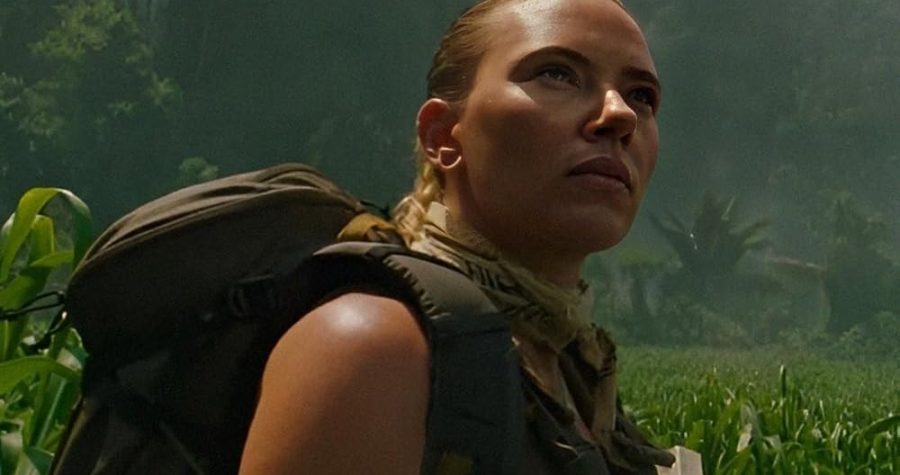
Jurassic World: Rebirth is Jurassic Park Reborn
 By Cara-Lynn Branch
Jurassic Park has always been one of my favorite movies. The original film is pure dino magic, as my hometown, Toronto, clearly recognized with the naming of our NBA team. The combination of Steven Spielberg’s masterful direction and his expert use of animatronics (in collaboration with VFX), a majestic score by John Williams, and a script by David Koepp that balanced humour and tension created a captivating experience. There was a compelling conflict in the original films between the wonder of “dinosaurs are cool” and the people seeking to profit from them. Hammond was somewhat mysterious because he clearly fell into both camps; his main motivation for creating Jurassic Park was his fascination with dinosaurs, but he was also a capitalist. Based on the main interaction scene with Nedry, Hammond entered into a contract he knew was underbid, setting the stage for the film’s main disasters. However, after the events of Jurassic Park, Hammond is persuaded to abandon his plan to open the dinosaur theme park. It wouldn’t be until Jurassic World that a park would open, though that film felt quite different from the Jurassic Park movies of the 1990s and early 2000s. While every Jurassic film has explored capitalism versus altruism with the dinosaurs, Jurassic World: Rebirth feels like a return to the roots of the Jurassic Park trilogy, fittingly as David Koepp returned to write the script.
Right from the start, after we meet the D-Rex and are introduced to the site we know we’ll return to by the climax, the film shows where the world currently stands with dinosaurs and possibly where the franchise sees itself. It’s no longer the major blockbuster that has NBA teams named after it, but more like something people are waiting to go extinct again. In North America, theater chains have Secret Movie Mondays, which are usually reserved for smaller indie films aimed at generating positive word-of-mouth. On June 23rd, it was Jurassic World: Rebirth, signaling that they need word-of-mouth to boost ticket sales, and they trust the quality of the film to succeed on it. It’s a gamble, but I believe it could pay off because after the initial meta-introduction, it doesn’t take long to show what the stakes are and who we’ll be rooting for or against. The heroes: Zora (played by Scarlett Johansson) and Dr. Henry Loomis (played by Jonathan Bailey). The villains: Martin (played by Rupert Friend).
They set off on their adventure, where Zora meets another ally, Duncan (played by Mahershala Ali), who will captain their boat to the only area where dinosaurs still thrive and where humans are banned. Naturally, that is also where a family, including the older sister’s boyfriend (played by David Iacono), on a sailing trip, gets capsized by a Mosasaurus. Ignoring Martin’s order to stay the course, Duncan and Zora decide to rescue the family, only to bring them along on their journey to chase a Mosasaurus and two other giant dinosaurs to obtain their DNA. It wouldn’t be a Jurassic film without kids or young people in danger. That fear, along with the wonder at the dinosaurs, is essential. Iacono, as the laid-back boyfriend who steps up in a crisis, provides much of the humour in the film’s second act.
The film expects most audience members will have seen a previous installment, and it plays on that. Setting up moments that we’ve previously seen with dinosaurs and have expectations for how they play out, only to find ways to undercut them and surprise us. I was happy to have empty seats beside me when I was caught by surprise and jumped a little in my seat.
Gareth Edwards deftly helmed the behemoth that is a Jurassic film; his experience from Godzilla (2014) was apparent. Like with Jurassic World, Rebirth utilizes John Williams’ theme from Jurassic Park, and it’s as majestic as always when you hear it; however, Alexandre Desplat, score stands on its own, carrying epic adventure and heartfelt moments. When Dr. Henry Loomis finally got to touch a dinosaur, Desplat’s score swells around him, and my heart soared with the character. It was a moment very reminiscent of the “My Friend Brachiosaur” scene from the original film.
Jurassic World: Rebirth opens in theatres on July 2.
© 2020-2025. UniversalCinema Mag.
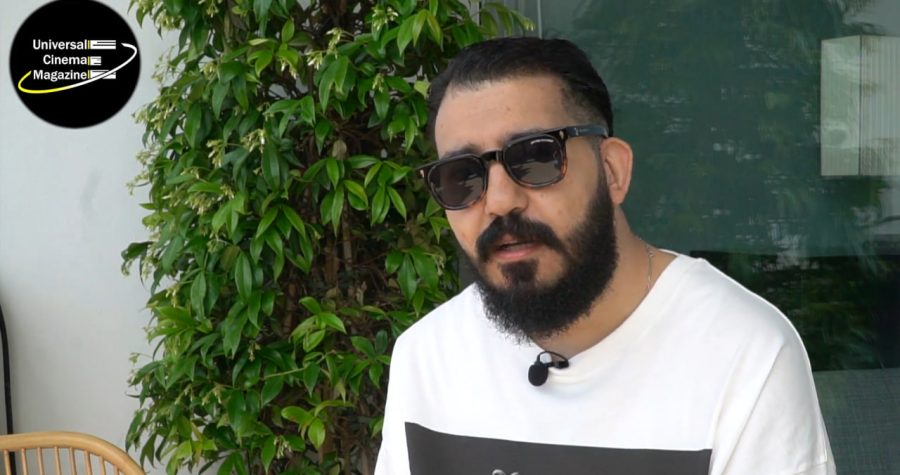
Aisha Can’t Fly Away: The Loneliness of a Migrant Woman
 By Mo Abdi
“Aisha Can’t Fly Anymore,” directed by Morad Mostafa, premiered in the Un Certain Regard section of the Cannes Film Festival
Continue Reading
How to (re)Train Your Dragon – A Review
Since the first How to Train Your Dragon film inspired audiences with its story of the would-be dragon rider, Hiccup
Continue Reading
Stick – A Review
Stick, created by Jason Keller, is set in the world of golf and makes its twist by revealing the reason the protagonist
Continue Reading
Materialists – Keeping the Rom-Com Tradition Alive and Well
Materialists opens with a wedding between a caveman and a cavewoman. You understand its connection in relation to the film
Continue Reading
“Miocard” at TIFF 2025: A Tale of Bitterness and Pain in Four Stories
Miocard (Miocardio), directed by José Manuel Carrasco, was screened in the competition section of the 24th Transilvania International Film Festival in Romania—a relatively compact film that recounts a single event four times, from different angles and in various forms: a simple event, the meeting of a man with a woman who separated from him fifteen years ago, and now, it seems, a romantic rekindling is about to occur. But the film veers away from this predictable path and reaches a point the audience does not expect.
Everything could have unfolded in a clichéd fashion, but the filmmaker skillfully weaves his story with numerous twists, embedded in carefully written dialogues that reveal different facets of the characters. At the same time, in the end, through its final twists, the viewer is drawn into a world that, in fact, never existed from the beginning—and the only reality is the bitter and cold hand of life, where even the relationship between a couple—or a simple conversation between a man and a woman—becomes a dilemma.
The film begins with a writer, one who speaks in front of the camera about his story. Soon we are pulled into the story itself: the story of a man named Pablo, who has written only one book and hasn’t been able to write anything for ten years. He is battling severe depression and medication. Suddenly, the doorbell rings, and standing there is none other than Ana, who separated from him fifteen years ago. The woman enters, and it seems they still care for each other, but their conversation leads to painful memories, and she leaves. The writer gives them another chance, and everything happens again in the next take. This happens four times, and finally, when we return to the writer, we realize that not everything we were watching was real.
The repetition of events each time reveals subtle, intriguing details about the characters. In fact, each character becomes more and more familiar to the audience with each iteration—and, in turn, each time, both characters become increasingly aware of one another’s emotional states until we arrive at their fourth encounter: a confrontation this time stripped of any pretences, bold and exposed, progressing through the tears of both characters, revealing bitter truths about them.

One striking point is that the film doesn’t intend to appease its audience or send them home with a happy ending. Everything unfolds in a somber atmosphere, growing more bitter as the film progresses. In the end, we realize that the omniscient narrator is not the writer in front of the camera but rather us—examining the writer’s life and his relationship with his own work, and uncovering its sadness. Thus, we are faced with an engaging interplay of literature/cinema/reality that unfolds in several layers and draws the viewer in.
However, near the end, we encounter a sentimental scene in which the writer cries, and the interviewer sympathizes with him. This scene illustrates the film’s departure from its straightforward and compelling narrative—now dipping into overt and superficial emotional display, something the film doesn’t need—which somewhat undermines it. It seems even the filmmaker is aware of this, as the main character says in this scene: “Critics don’t like endings like this.” Fortunately, the film doesn’t end there. With one final twist, we witness another phase of the writer’s life, continuing the story he has written—and the bitterness he has endured in real life through his solitude—thus saving the film from a clichéd conclusion.
© 2020-2025. UniversalCinema Mag.

The Accountant 2 – A Review
The Accountant 2, stylized as The Accountant2, is a sequel to the 2016 film that featured Ben Affleck, Anna Kendrick, J.K. Simmons
Continue Reading
Colours of Time: Cédric Klapisch, the Impressionists, and Today’s France
Cédric Klapisch’s latest film, The Colours of Time, which was screened out of competition at this year’s Cannes Film Festival
Continue Reading
“About Maya”: A Haunting Thriller of Identity, Exile, and Judgment | Screening at Mayfair Theatre, Ottawa – June 9–15, 2025
speak with co-director Nasim Naghavi about the creative journey behind the film, the challenges of telling a culturally rooted story
Continue Reading
Recent Comments