 By Cara-Lynn Branch
 By Arash Azizi
© 2020-2025. UniversalCinema Mag.


Sundance announced its Short Film Program Award winners on Tuesday, January 28th. If you’ve scrolled the IMDb pages of most feature directors, you would probably find they got their start cutting their teeth in short films. And if you are lucky enough to watch these early works, you will see the makings of the filmmakers they become. That is why the short programs at festivals are not something to dismiss and are a great way to spend your time. Especially as often there are a half dozen or more stories in any set. And, you can still choose between fiction, nonfiction, or even animation.
This year’s Sundance Short Film Grand Jury Prize went to Theo Panagopoulos for The Flowers Stand Silently, Witnessing (U.K.), an international nonfiction short film about a filmmaker of Palestinian descent based in Scotland who unearths a rarely seen film archive of Palestinian wildflowers and decides to reclaim the footage.
The Short Film Jury Award: U.S. Fiction was awarded to Jazmin Garcia for Trokas Duras, a film that goes into the world of the protagonist’s dreams and his waking reality in Los Angeles and what it looks like for those who serve others as they strive for their own elevation of body and spirit.
The Short Film Jury Award: International Fiction was awarded to Chheangkea for Grandma Nai Who Played Favorites (Cambodia, France), a film about where during her family’s Qingming visit, dead Grandma Nai sneaks away from her peaceful afterlife after overhearing that her Queer grandson is about to get engaged to a woman. The film uses humour to explore self and familial acceptance.
The Short Film Jury Award: Nonfiction was awarded to Christopher Radcliff for We Were the Scenery (USA), about how in 1975, Hoa Thi Le and Hue Nguyen Che fled from Vietnam by boat and docked in the Philippines, and then were utilized as background extras during the filming of Apocalypse Now.
The Short Film Jury Award: Animation was awarded to Natalia León for Como si la tierra se las hubiera tragado (France), about a young woman living abroad who returns home to Mexico hoping to reconnect with her past.
The Short Film Special Jury Award for Animation Directing was awarded to May Kindred-Boothby for The Eating of an Orange (U.K.). Fruit comes to the fore in this exploration of convention and sexuality.
And, the Short Film Special Jury Award for Directing was awarded to Loren Waters for Tiger (U.S.A.), a film about the award-winning, internationally acclaimed Indigenous artist and elder Dana Tiger, her family, and the resurgence of the iconic Tiger T-shirt company.
The jury only awarded seven of the 57 short films curated for the festival from over 11,000 submissions, here are a couple more of this year’s selected shorts.
Don Josephus Raphael Eblahan, the Sundance Short Film Grand Jury Prize winner in 2022 for The Headhunter’s Daughter, returned to the festival with Vox Humana. This short film, set shortly after a natural disaster against the stunning backdrop of the Cordilleran mountains in the Philippines, imagines a human embodiment of the disaster that can be confronted if someone speaks his language to gain answers. Enter a zoologist. The disaster depicted is an earthquake, and one of the other characters is a sound recordist, who we meet lost in the sounds of nature, a potential message of the film becomes evident: to listen for the signs and turn the volume up to 11 if you hope to avoid or mitigate future disasters. An interesting metaphor about vinyl records about earthquakes in the film supports this. The cinematography is breathtaking, particularly the shots of nature and wildlife, from the opening view of a worm, which isn’t in nature but moves across what seems to be something rusty, to the saliva dripping from the close-up of a horse’s muzzle, to the final shots in the lush vegetation.
The Reality of Hope (United Kingdom/Sweden), a documentary short, was picked up by Asteria and Documentary+ before the festival began. The film follows a Stockholm-based virtual reality creator who needs a kidney transplant. He’s set to get a transplant from a New York-based friend, but the twist is, that they’ve only ever seen each other in an online VR community where they each have a “furry” avatar. The film is vibrant in a world of VR, in spaces partially created by the main protagonist of the project, Hiyu. The film showcases the meaningful relationships people make in these VR worlds, while also shedding awareness on dialysis and how it affects those across ages and globes, real and virtual.
The full list of the shorts selected this year can be found on Sundance.
© 2020-2025. UniversalCinema Mag.

Long before I watched My Favorite Cake, I was struck by the power of some of the scenes shown in its trailer. I wasn’t alone and this wonder was shared by thousands of Iranians who watched the viral trailer. In a particularly memorable scene, Mahin (Leyli Farhadpour) pours a glass of wine for Faramarz (Esmayil Mehrabi) as the two septuagenarians share a meal at her garden. “Has the wine made you a bit tipsy, too?” she asks in a neat Persian.
This is a rather ordinary event, a couple enjoying a drink at home. But none of it can be portrayed in Iranian films according to the rule imposed by the Ministry of Culture: Mahin appearing without her head covered, an unmarried couple hitting it off and, of course, the serving of alcohol. This why the film’s co-directors Maryam Moghaddam and Behtash Sanaeeha had to make the film in hiding. When the authorities found out, they were banned from leaving the country but still managed to smuggle a version out for it to be screened at the main competition at Berlinale last year. Although they’ve since received much accolades around the world, they are still unable to leave the country. The film has been doing well at the box-office in European countries such as Germany and recently also screened at the Third annual Iranian Film Festival in New York where Farhadpour received a special mention award for her acting.
The shocking fate of the film and its directors is a reminder of the bizarre rules that have hung over Iranian cinema since the 1979 revolution. There is censorship in many authoritarian states in the world but which other forbids the depiction of even a basic handshake between a man and a woman? Part of a burgeoning underground cinema, and alongside an Iranian diasporic cinema, My Favorite Cake is an attempt to break this bizarre chokehold not to show anything particularly racy or outrageous; but to depict the most basic elements of life which remain forbidden by an anti-life political regime. This gives the film so much power.
But My Favorite Cake does much more than simply transgressing a set of rules. Although it has clear politics, it doesn’t dissolve into didacticism. It is a deeply felt film with two convincing characters whose plights and desires are sui generis to Iran and at once universal. Mahin has been living alone since her husband passed away thirty years ago. Faramarz is a single taxi driver, a veteran of Iran’s pre-1979 army, just like Mahin’s late husband. They meet at a restaurant dedicated to veterans. This plot point is already political, making them both as representing a generation which remembers the pre-revolution Iran, linked to one of its most emblematic institutions, the military. The politics of the film is shown even more pointedly when Mahin confronts Tehran’s moral police as it tries to arrest a young woman who is not covering her hair up to their draconian standards. It is touching scene of intergenerational solidarity with Mahin and the young girl at awe of one another.
But this isn’t a sloganeering film (unlike Mohammad Rasoulof’s Oscars-nominated The Seed of the Sacred Fig which wears its politics on its sleeve and utterly fails as a movie.) This is because it works to build up its characters and give them a tangible, human quality. They are not there as mere symbols.
Mahin’s quest for a bit of joy and desire in life is particularly convincing. It is not just an Iranian story since she is hampered not just by the regime but by societal expectations of senior citizens known in most cultures around the world. She must overcome these boundaries and her attempt to do is depicted as joyful, funny, sometimes silly but ultimately admirable and touching.
The Iranian freedom struggles have recently adopted the slogan For a Normal Life. It is precisely what the Islamic Republic denies them: the basic pleasures of life. My Favorite Cake is an apt cinematic expression of the same spirit.
© 2020-2025. UniversalCinema Mag.
Three Kilometers to the End of the World by Emanuel Pârvu, began its festival journey in the competition section of the Cannes Film Festival. After traveling to various festivals, such as Thessaloniki, it has now reached the Göteborg Film Festival, where it will be screened in the international competition section. The film portrays the experiences of a gay individual in a remote Romanian village, exploring themes of homophobia.
In this exclusive interview with Mo Abdi, Pârvu delves into the nuances of the film and shares his thoughts on cinema.
© 2020-2025. UniversalCinema Mag.

At times, a subject can be so vast, so all-encompassing, that it would be challenging to contain it within the bounds of traditional narrative storytelling. In such cases, non-narrative filmmaking can offer a powerful vehicle by which to explore themes that feel too monumental to be absorbed in a linear intellectual fashion, relying more deeply on the viewer’s visceral emotional connection with the work. It can be a tricky form to master, but as filmmakers such as Godfrey Reggio (Koyaanisqatsi); Ron Fricke (Baraka); and Massimo D’Anolfi and Martina Parenti (Bestiari, Erbari, Lapidari) have demonstrated, the genre has the potential to communicate with the audience on a profoundly complex level difficult to attain from within the confines of more traditional documentary filmmaking.
Given the genre’s lack of reliance on familiar touchstones like plot or character, it is an extremely challenging form to master, rendering the achievement of large format photographer (now filmmaker) Leonard Alecu’s first foray into the moving image all the more impressive. Ice Breath, filmed between 2015 and 2023 off the eastern coast of Greenland, is a truly stunning addition to the field of experimental documentary, and more than deserving of the many accolades it has received over the past year.
Billed as “an existential journey from genesis to extinction,” the film documents the slow decay of the monumental icebergs that dominate the arctic landscape. Set to the hypnotic tune of John Luther Adams’ award-winning classical composition Become Ocean, it stands as a poetic mediation on the existential fragility of the human condition in the face of the majestic forces of nature. Recalling the artistic collaboration between Koyaanisqatsi director Godfrey Reggio and composer Philip Glass, Ice Breath draws power from its more singular focus. By compelling the audience into a deep consideration of the deceptively simple juxtaposition of sky, ice, and water, Alecu somehow evokes a feeling of eons passing in a matter of just a few scant minutes.
Putting his photographic background to excellent use, Alecu (choosing to shoot in black and white) paints his subjects in a stark palette of white tones that is shockingly rich and textured. His images are a pleasure to behold, transforming these natural formations into sculptural compositions recalling the works of Henry Moore, illuminated by otherworldly shafts of sunlight reminiscent of the arctic works of painter Lawren Harris.
As the film unfurls, the comfort of nature’s rhythms begins to dissipate, and the viewer somehow feels the temperature rising as the menacing black water lapping at the icebergs’ shores increasingly dominates the frame. What once appeared irrevocably connected breaks apart, scattering across the widening expanse of an increasingly choppy sea. As the icy meat drops from their surface, bony, skeletal formations emerge, and fissures appear like scars across their skins. All the while, a relentless and unsettling sun beats down, dissolving their cold sharpness and leaving only the softness of total devolution, and a feeling of palpable grief for what has been lost.
A worthy companion piece to the super-sized Bestiari, Erbari, Lapidari – also released in 2024 –Ice Breath similarly evokes the insignificance of humanity in the grander scheme of terrestrial history. And like D’Anolfi and Parenti, Alecu is preternaturally talented at presenting his natural subjects in all their deserved drama and grandeur. If nothing else, he has produced a set of breathtakingly primal images of icebergs that are now already likely gone forever. More than freezing a moment in time, he casts his gaze into an uncertain future, compelling the audience to contemplate the fate of our less considered terrestrial companions alongside our very own.
Luckily for us, this piece does not spell the end of Alecu’s audiovisual experimentation. Become Ocean, as it happens, forms just one part of a musical trilogy diving into the essential mysteries of nature (alongside companion works Become Desert and Become River). Taking these on as further inspiration, Alecu is currently at work on a companion piece set to John Luther Adams’ Become Desert, to be shot in the deserts of Namibia. If the work approaches the achievement of this first effort, we are surely in for something special. I can’t wait.
Ice Breath was awarded Best Documentary Feature at the 2024 New Renaissance Film Festival.
© 2020-2025. UniversalCinema Mag.

In its 19th edition, the Canadian Film Fest (CFF) has established itself as a vital platform for celebrating Canadian stories and filmmakers. At the heart of this endeavor is Ashleigh Rains, the festival director and a passionate advocate for Canadian cinema. In this insightful interview, Rains delves into the festival’s unique mandate, its unwavering focus on showcasing exclusively Canadian films, and the strategies it employs to elevate local talent. From navigating challenges posed by the pandemic to fostering a sense of community among filmmakers, Rains shares how CFF continues to thrive as Toronto’s largest festival dedicated to Canadian storytelling.
Amir Ganjavie, UniversalCinema Magazine (UM): Could you please introduce yourself and share a bit about your role in the organization?
Ashleigh Rains (AR): Yeah. Hi, my name is Ashleigh Rains. I am the festival director and head of Canadian Film Fest. I’ve been with the film festival in various capacities for 10 years now.
(UM): Could you tell us a bit more about your festival and what sets it apart from other Canadian film festivals?
(AR): Yeah. So, Canadian Film Fest, we are celebrating our 19th edition this year, and it was founded by our executive director, Bern Euler. It was born from the need to see more Canadian films on screen. So, Toronto is a great culturally diverse city, but in terms of having exclusive Canadian content, in a festival setting, Bern saw a need for that. So, he founded the festival. Our festival is different because we are Toronto’s largest film festival exclusively dedicated to screening Canadian films. We screen feature films and short films and recently, we started screening digital series as well. We also have an industry series, and this is headed by our director of Industry, Jen Pogue. It’s really such a wonderful resource for the filmmaking community in Canada. It’s five days where filmmakers get to learn from, interact with, and also do practical work in support of their careers. We cover everything from financing in Canada to distribution, to current trends, as well as last year, for example, we did the Canadian Comedy Film Igniter Challenge with the Firecracker Department, and we had filmmakers actually go and make short films. We have diverse offerings in programming or film programming, but also in terms of our industry.
(UM): Just to clarify, does your festival focus exclusively on curating Canadian films, without including international films?
(AR): Only Canadian films. We ask that the e-creatives and specifically the director of the project be Canadian. Sometimes we get questions where people are like, “My film stars 20 Canadians. Would you consider it?” No. Our mandate is to support and elevate Canadian filmmakers as well as connect audiences across the country with Canadian filmmakers.
(UM): What inspired you to create this film festival? Was there a specific gap or need you identified that prompted its creation?
(AR): Yeah, so it was Bern Euler. He was working as an editor in the industry, and he had so many friends who were creating amazing films playing in Toronto. So, it was hard to get those Canadian films up on screens. First for the community, but then also for the general public. He literally was like, “I’m going to start a film festival.” So, he started doing the screening at the Royal, and it was so successful that it grew year to year to year, and that was really the need. There was such a response within the community, where like, yes, we need a film festival that shows Canadian films and only Canadian films, and it engages the industry, but also platforms this content for the general public. I can’t speak specifically, I don’t know the exact numbers, but Bern really grew the festival over 19 years. There were some years when the festival had to go dark because of sponsorship reasons, recessions, et cetera. But this year, we are celebrating our 19th edition and it’s really a testament because Bern saw a need in the market for this type of festival and here we are 19 years later.
(UM): The concept of nation is often highly politicized, and its definition can be quite ambiguous. For example, in some countries, when supporting French films, there’s an emphasis on highlighting certain aspects that define them as distinctly “French.” I’m curious—how does this apply in your case? Do you and your team ever engage in debates about what constitutes a “Canadian” film?
(AR): I don’t think I caught the word that you said at the beginning, but when we try and define what a Canadian film is, we say, “Is the director Canadian? Is it in the creative control of a Canadian?” So, that’s how we look at defining that piece. In terms of value associated with that, we don’t come in with that. We don’t come in with a set idea of, like, “This is Canadian,” because we all have our own personal POVs and our own lived experiences, but that doesn’t apply to everyone. So, we really like our programming team. We really, I think, look at the films on an individual basis and again, go back to, is it a good story? Was it compelling? Did it make me laugh? Did it make me cry? Was I scared? Do I want to keep watching? That’s really how we do our assessment of the films.
(UM): How many films are typically submitted to your festival, and how many of those are ultimately selected?
(AR): Last year, we had over 500 submissions, and I say that’s a great number, and it’s an encouraging number to know that Canadians are making that much content every year.
(UM): Does that include both feature films and short films?
(AR): Yeah. It’s for features and shorts. Last year, we programmed 11 feature films and about 40 short films.
(UM): Could you elaborate on your selection process? How do you go about choosing the films for the festival?
(AR): Yeah, so I have a great programming team and we’ve been working together for a handful of years now. We do open calls for submissions. So, we open them after TIFF and we keep them open until the end of the year. We’re really looking for films that represent the Canadian landscape. So what does that mean? First of all, we like to consider geography. We are the Canadian Film Fest, so we want films from all regions across the country. We program films in English, in French, and in other languages. Canada has many languages, so we’re interested in films. In all languages, we do request English subtitles. Then we look at basically our mandate, and this really comes from the heart of Bern, the founder of the festival, and we just carried it through 19 editions. It’s a good story. So, we’re looking for compelling stories. In that way, we’re open to all genres. So, it can be horror, it can be drama, it can be comedy, it can be Sci-fi, it can be a period piece. We really consider all genres of films as long as it has a really good story.
(UM): Could you clarify what you mean by a “good story”?
(AR): Yeah. So, that’s a great question. I think good story, like, it’s open to that kind of interpretation in the sense that compelling, does it hook us? Are we interested? Do we want to keep watching the movie? Do we think it’s going to resonate with an audience? Sometimes, also we look at what’s going on in the world and whether it speaks to current issues. And is it of the time? Will that resonate? Does it further a conversation? Does it further ideas about an issue or a topic? I would say, like, first and foremost though, compelling in that sense, and then from there, it could be those kinds of considerations. Like, what is it talking about? What’s it saying? What’s the messaging? How is the story told? Is it told in an innovative and interesting way? Is it a theme that has been explored in film before but from a unique POV?
We love films that take chances and risks too. So, if stories are told innovatively, that’s awesome. Last year, in our programming, we had some interesting feature films that came through and we love stories told in really like cool, in a sci-fi format or a thriller that was told in a Western format. We’re really open to how the stories are told. And we’re looking for that kind of diversity of content too. We don’t program for a theme. We’re not saying this year, it’s an environmental theme, or this year we are leaning into the genre, we’re really open in those considerations.
(UM): Do you invite films to the festival, or do you select them solely from submissions?
(AR): We do invite films. Our programming team is really plugged into what’s going on in Canadian film. Most of our team, I’m going to say like 95% of the Canadian Film Fest team are filmmakers. So, we are all working in the industry and have backgrounds as producers, writers, directors, television creators, and on-camera talent. So, we’re plugged into the industry we’re following. When we see a film or hear about a film that’s in production or recently wrapped, we will approach filmmakers or distributors for that content. We also have distributors pitch us content as well. We have wonderful relationships with many of the other awesome film festivals in Toronto that will suggest content to us. So, it’s really kind of diverse. We get a lot of applications through just a call for submissions as well.
(UM): Do you tend to select films that have already been recognized at other major festivals, or do you prioritize premieres?
(AR): We’re looking for films. We want Toronto premieres and we’d love Canadian premiers for our film. So, at minimum, we’ll take a Toronto premiere, but we are looking for a Canadian premiere for our films too. Sometimes, we do screen films that have had successful runs at other festivals. It’s really kind of a case-by-case consideration looking at what our slate is this year and what we’re programming.

(UM): Do you follow any specific ratios or quotas during the film selection process?
(AR): Well, we do mandate gender parity in our programming. That’s something that I started when I joined the festival, but that’s not a difficult position for us to meet. Every year, we have an amazing amount of submissions from all genders. We look at representation too in terms of gender as well as BIPOC representation and equity-seeking communities. We want to make sure that our programming reflects the diversity of Canada. So, we do consider that when we program too.
(UM): I’m curious—how do you approach handling films that might spark political controversy?
(AR): Yeah. In Canadian Film Fest, we don’t take political positions, but we do believe in the freedom of expression and free speech. As filmmakers and as citizens of the world, we are very aware of all of the challenges going on globally and the devastation to various communities, so we do consider that in terms of our films. But our mandate first is to support our film filmmakers and to platform their work.
(UM): Regarding venues, I know some Toronto festivals face challenges in securing locations. How is the situation for your festival? Where do your events typically take place?
(AR): Historically, we’ve screened at the Scotiabank Theater. We used to screen at the Royal College, which is an amazing independent theater. Our festival grew, so we had to move to a bigger venue to accommodate our audiences. We hope to be back at Scotiabank this year. In terms of the logistics of the festival though, it’s year to year. We don’t have a permanent space as some other festivals do, so we’re always looking for our venues. But we do have a wonderful relationship with Scotiabank and we’ve been there for several years.
(UM): One common challenge for film festivals is the lack of a consistent, year-round staff, as many team members work only for a few months, leading to potential instability. How does your festival handle this issue?
(AR): Our festival director, Bern Euler, and I can speak to this specifically, running a film festival is not a secure job and it’s not a guaranteed year to year. We really are dependent on government support as well as sponsorship, as well as engagement from the filmmaking community and the general audience to make sure the festival can run year to year. Bern and I, typically, work year-round. We really believe in the need for the festival and the space for the festival to exist in Canada. So, we are working year-round on it. Whether that means, it’s not a full-time job as well, because we also do work in the industry in various roles. I also work as a producer and a creator, so I do have other jobs. But this is something that Bern and I work on year-round. As soon as the festival ends, we take a few days off and then we’re into planning for the following year.
(UM): You mentioned that the Canadian government is one of your major supporters. Are there any specific policies or requirements you need to adhere to as a result of working with them?
(AR): Are you asking if they have certain mandates for us to meet?
(UM): Yeah.
(AR): Yeah. I think different government funds have different mandates, and we see their funding used. So, for some funds, they really want to support B2B within the industry. So, it’s creating those opportunities for filmmakers to meet with other filmmakers. Other funds might want to see a lot of community engagement. So, everyone has, I think. They have specifications about how they would like to see their money spent, and then we review that of course at the application stage and make sure that our programming on the industry side and on the film side, meets those mandates.
(UM): You mentioned that the festival includes five days of networking and other industry opportunities. Could you elaborate on this aspect of the event?
(AR): Yeah. As I said, our director of industry, her name is Jen Pogue, and she’s done such a wonderful job of developing the industry side of the festival. I think it’s such a necessary component of the festival. I can’t imagine CFF without it. What we do is, historically, we always have a masterclass. It’s a hands-on practical learning opportunity for filmmakers. We’ve had directing master classes. We’ve had pitching master classes. Like last year, we did pitching with Lauren MacKinlay, who’s an incredible talent and resource. We had Jeremy Lalonde[?] come in and do a director’s workshop with our filmmakers. We’ll have something like that. We’ll have panel discussions. Usually, I’ll say, like, we’ll do something on financing. We’ll invite all of the funders in Canada to come in and speak about their funds, how to access them, and what you need to do as filmmakers to prepare yourself for that process. We’ll have conversations on festival programming.
Canadian Film Fest, we have our specific mandate, but we know that the success of a filmmaker in Canada relies on having a successful festival run with other festivals. So, we’ll talk about that and how that can leverage a festival run for the next steps. We have the Making a Canadian Classic Series, which we started a few years ago, and the objective of this is to meet with established Canadian directors who started working in independent film and their one independent film kind of launched their career. For example, we’ve had Sudz Sutherland come on, we had Jasmin Mozaffari come on. Last year, we had Vincenzo Natali. They came in and talked about their early work and how, Cube, for example, helped launch Vincenzo’s career. And that’s hosted by Warren P. Sonoda, who’s the President Directors Guild in Canada. He’s a masterful moderator. So, they are really valuable, unique conversations.
Then we have our Cheers and Chats Series where we get filmmakers to come in and informally talk about their careers, in a really practical and candid way about how to be a writer in the industry, how to develop comedy in Canada, et cetera. Then we have networking opportunities as well. We have pitch competitions. Every day we have networking socials. So, filmmakers get together, they can meet other filmmakers, they can meet decision-makers, financiers. It’s really a comprehensive week. It’s fully packed, but it’s a great opportunity for filmmakers. And, I also like to participate because I’m always learning something in this series too.
(UM): One of the biggest challenges for Canadian filmmakers is distribution, as the market is often dominated by American and Hollywood films. Even prominent Canadian films struggle in this regard. How does your festival support filmmakers in terms of distribution? Do you assist with securing distribution deals?
(AR): Yeah. So, at the festival, we’ve had films come in that we invite distributors to come to the festival. We’ve actually historically had distributors pick up films from seeing them at the festival, which is great. When we work with distributors, part of that conversation is what the release strategy looks like for the feature film. So, then it’s how we can position the feature with the festival and help leverage the festival for the release of the film. Then when our filmmakers do release films in theaters across Canada, we encourage our followers, our audience, and our community to go out and see them. However, we can support it, it’s always like a multifaceted approach, but we try to have those conversations up front and continue those conversations after filmmakers leave us so that we’re encouraging audiences to see the films.
(UM): I see a big disparity between the French and English sides of Canada in terms of film. The French side is more powerful and they have a strong system of starships and it seems that it works better. I’m just curious how you are trying to help the English side. Do you have any kind of preference or any agenda? I’m just curious to know more.
(AR): Yeah. I think generally, our mandate is to platform and elevate Canadian filmmakers. A big part of our marketing at the festival is directly promoting the individual filmmakers who are screening with us. So, that includes traditional media, like print interviews, it includes some of the entertainment shows, and radio appearances. We work with a team that helps elevate our filmmakers and make some noise about their films. That’s really important to us. We really try to make a lot of noise for our programs, films, and film filmmakers so that we do get eyes on them and hopefully that those experiences and opportunities can be leveraged for the next steps in the film’s life or in their careers.
(UM): One of the challenges I’ve noticed, especially post-COVID, is getting audiences back into theaters. Many festivals have adopted various strategies to address this. How has your festival managed this situation?
(AR): Well, I don’t know if you know this, but when COVID hit, we were two weeks away from opening our festival. And it was in that kind of gray area where the government was like, “Just don’t shake hands and keep safe distances and use hand sanitizer.” We’re like, “Okay, we’ll do that.” And then it like slowly, not slowly, it actually quickly escalated to the point of a lockdown, and we had to close. And Bern will say this, we had no contingency plan in place because nobody was expecting this, so we thought we were going to go under. And then Super Channel in Canada, a broadcaster in Canada came in and said, “We love the festival. They’re Canadian. We support this mandate.” So, they transitioned the entire festival into a virtual edition so that audiences across Canada could experience the festival on their channel. They actually formatted it like the in-person event with screenings, Q&As, introductions, networking events, and industry series. They were so generous and kind and we worked with them for, I believe, three years online.
Then when, in this kind of what we’re calling a post-pandemic world, theaters opened again and we went back to theaters and we weren’t sure, we had no idea. We’re like, “Will our community come? Will audiences come?” We had no expectations, only hope that we would be successful. The first year we were back, we had a great response, and the second year, like last year was just a banner year for the festival. We had the most people ever attend, sold-out screenings, and high engagement. It was really successful. So, I think that speaks to the needs of the festival and the legacy of the festival. We’re really pleased that we’re still engaging our community and also engaging audiences who want to come and see Canadian films.
© 2020-2025. UniversalCinema Mag.

Marianne Jean-Baptiste gave one of, if not the best performance, of the year that few people will see in Hard Truths as its current US theatrical count of 121 is likely the widest release it will receive having missed out on receiving any Academy Award nominations despite Jean-Baptiste amassing major critical Best Actress wins from NYFCC, LAFCA, and NSFC and nominations for BAFTA Film Awards and the Critics’ Choice Awards, both of whose results are still be determined. Academy Award nominations are critical for independent films to receive a wider audience, the so-called Oscar bump, so missing out on a nomination will most likely impact the film’s reach. But if you are reading this, do yourself a favour, and seek the film out.
Mike Leigh wrote and directed the film, reuniting with Jean-Baptiste and Michele Austin (who plays Chantelle), who also starred in his film Secrets & Lies, for which Leigh and Jean-Baptiste were nominated for Academy Awards in their respective categories. At the beginning of the film, after establishing the neighbourhood of identical townhouses where the rest of them have lush hedges/trees in the front, but the house where Pansy (played by Jean-Baptiste) and her family live only has a cold brick fence, we meet Pansy who has a similarly cold defense with barbed words flung about her son, her neighbours and everyone that crosses her path. She attacks first, as you are watching the film progress, you can see she is someone with a lot of anxiety and fear, and you can see that manifest through anger. In one scene at Chantelle’s salon, the Covid lockdowns are mentioned. Covid is so rarely addressed in films that its reference seems especially purposeful and as something that perhaps exasperated Pansy feelings, anxiety, and behaviour all before the film began, because of the prolonged isolation from her family and lack of interaction with people. However, the full root is revealed when the sisters visit their mother’s grave, and her unresolved grief is laid bare, stemming from the type of relationship she had with her mother and how it affected her life and the choices she made. Particularly staying with Curtley (played by David Webber), the father of her son. Not to mention finding her dead body.
If you’ve ever worked in customer service, you’ve probably encountered someone who reminds you of Pansy; someone who attacks first. But this film pushes the audience to look past the surface and deeper. It also doesn’t provide an easy ending. The ending is a little ambiguous and left for interpretation. I think the breath at the end was Pansy taking a step forward and healing a little, as someone who struggled to help herself throughout the film, she might not have been ready to help Curtley, but she was taking a breath – and that was a start.
I was captured by the film’s score, the lyricism that lifted and carried the quieter moments and emotions forward. However, the absence of the music was just as powerful, particularly the ending, which in some ways bookended the opening, re-establishing the house and the people in it with an exhale of breath in the silence.
While Jean-Baptiste, Austin, and Webber carry the bulk of the film’s emotional weight, it would be remiss to leave out the quiet but resonate performance of Tuwaine Barrett as Moses, Pansy and Curtley’s son. Rounding out the cast are Sophia Brown as Aleisha and Ani Nelson as Kayla, who play Chantelle’s daughters, their warm relationship with their mother provides further contrast for relationships fostered by Pansy due to her grief and pain.
Hard Truths is currently in theatres.
© 2020-2025. UniversalCinema Mag.

Leading up to this week, Sebastian Stan seemed like a shoo-in to get nominated for his first Academy Award for A Different Man, as it was getting significant award buzz and critical reception. However, he was nominated for his other project last year, The Apprentice. Perhaps this was a result of the recent election or Sebastian Stan being excluded from Variety’s Actors on Actors because other actors didn’t want to talk about Trump, either way, A Different Man left the Academy Awards nominations receiving only a nomination for Best Makeup and Hairstyling. However, anyone who has seen the film knows the layered performance Sebastian Stan gave as Edward Adam Pearson as his well-meaning antagonist Oswald.
A Different Man, written and directed by Aaron Schimberg, centers Stan’s Edward, who is a struggling actor with neurofibromatosis who undergoes a painful experiment treatment that promises to cure him and give him a new face. His desire for this treatment is predicated by his insecurity about how others perceive him. This is exasperated by the only role he was able to book was in an instructional video that was about teaching people to treat people like him like people, which is dehumanizing in itself, and his inability to get close with his neighbour Ingrid (played by Renate Reinsve). So, when the surgery is a success, he kills Edward and takes on the identity of Guy believing that everything will work now.
He finds success in work, getting his face on the billboards and cardboard cutouts, and having casual relationships with women in his new, cold apartment. It’s everything he wanted, except that while playing the role of Guy, he is still not living his dream of acting, and then he discovers that Ingrid lived up to her promise and wrote a play with a role for him. Well, for Edward. Guy eventually convinces her to hire him to play Edward (wearing a mask) as she can’t find anyone else who fills her vision of Edward that came in – but then in walks Oswald, who has neurofibromatosis like Edward had before his surgery.
What makes Oswald a great antagonist is you can read his character in two ways. The first is genuine, that he genuinely likes Guy and his acting and is just hanging around because he’s excited and invited. The other, is that he is manipulating the situation from the start to push Guy out. Regardless of your read of the character his presence and confidence in life drive Guy insane because Oswald is getting all the attention, love, and opportunities Edward/Guy felt he couldn’t achieve without the surgery and now is losing again despite his transformation.
What’s interesting about the film is that the characters are all messy. It leans into the concept that the grass is always greener on the other side; Edward sees Oswald living the life he only dreamed of before his surgery and getting everything he wanted, including Ingrid’s love. But you can’t discount the events that transpired to lead to this, going back to before Edward chose to “kill” Edward and become Guy. Ingrid pulled away and fled Edward’s apartment when he grabbed her hand, the closest he got to showing his affection was more than friendly. She was not present during his painful transformation. It was perhaps only because of his “death” that she was driven to revise their relationship in the play. Paving the way for Oswald, who greets the world with confidence to let her tread those paths not traveled, and he has the confidence to pursue.
The film’s message is clearly about self-acceptance. Edward’s transformation was only skin-deep; Oswald embraced who he was, while Edward never found comfort in his skin.
A Different Man is available on Max in the US and Digital Rental in Canada.
© 2020-2025. UniversalCinema Mag.
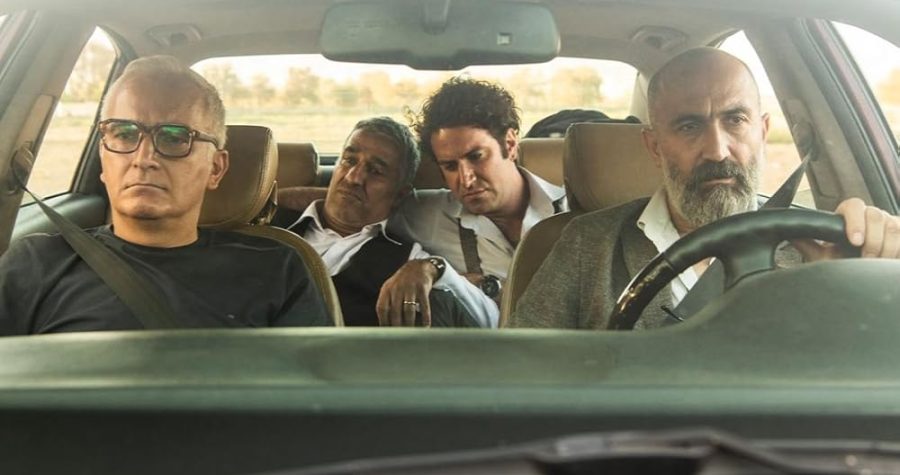
Iranian cinema has long been known for its poetic films and, more recently, for its intense dramas. But one oft-ignored Iranian genre is comedy, a rarity on the festival circuit.
In the Iranian box-office, however, comedies often do well. Soroush Sehhat’s Breakfast with Giraffes is one example. Although it hasn’t been shown in festivals, American audiences recently had a chance to see it in a series of special screenings in Boston, Washington and New York, where it was a special screening prelude to the 3rd Iranian Film Festival New York. It will also soon be screened in Germany.
Being a comedy doesn’t always make a film less intense or even less forlorn. The Iranian films have a reputation of leaving you a little depressed and Breakfast with Giraffes doesn’t break from that tradition. But it’s nevertheless a bona fide comedy: it makes you laugh just before you notice how hard it hit you.
The film revolves around a wedding party. Pooya (Hootan Shakiba) and Shahin (Bijan Banafshehkhah) are all dressed up to go. The groom, Reza (Pejman Jamshidi) is a cousin of their good friend Mojtaba (Bahram Radan.) It is a traditional wedding where guests are segregated by gender and have to sit around round tables, busying themselves with fruits and sweets. It is an alien environment for Pooya and Shahin who come from a different milieu and a different world. They are way over-dressed, complete with bowties, and have little in common with the stout men in worn-out suits, quietly peeling tangerines and passing them around the table. Reza is stuck between wanting to entertain his friends and his hard-ass soon-to-be brother-in-law Saeed (Majid Yousefi) who follows him like a shadow and bans him from such mundane activities as eating a nectarine (he suggests something less splash-probe like a banana.)
This clash of worlds, between the hip friends and the simpler guests, between the two sides of Reza’s life, sets the tone for the film. If social dramas try to capture the brutalities of daily life in Iran, Breakfast with Giraffe uses a comical portray of contradictions to show how absurd life in today’s Iran can be.
Pooya and Shahin manage to get Mojtaba and Reza away from the eagle-eyed Saeed and into a utilities room where they can let loose some steam, primarily by consuming copious amounts of cocaine. How else to sit through this tedious wedding? Now, the very Reza who was banned from a nectarine can’t get enough of the coke lines. He ends up losing consciousness and the rest of the film tells the adventurous story of how his friends try to save his life and maybe his marriage.
Sehhat’s adoption of an absurdist style is both apt and done in a particular way. Like most absurdist or surreal works, the basic rational logic is suspended in some of the film’s elements. We see a man fall from a few floors without breaking a bone. In a memorable scene, we see two groups of characters inexplicably break into a pretend Italian to flirt with each other. But the film doesn’t go far in this direction. It never quite becomes nihilist or fully abstract. It keeps the fundamentals of a narrative. This way, it remains watchable and compelling.
The film artfully weaves absurdism into another sub-genre: buddy movies. This is a story of a few buddies engaged in activities that are typical, perhaps even stereotypical, of Iranian men: getting high together, going together to a villa outside town, putting some kebab on the grill. Iranian women, who play a heroic role in all spheres of life, have often been portrayed in Iranian cinema. But Breakfast with Giraffes is a study in Iranian masculinity and all its pitfalls. The men of the film each suffer from their own relationship crises. Shahin is a divorcee. Pooya finds out his girlfriend is cheating on him. Whenever the group meets a group of women, a game of flirtations begin, like the notable scene with the make-believe Italian. The film’s success is rooted in how it balances out these genre sensibilities, different as they are.
The very title of the film gives out a surreal flavor. The title drop occurs in the utilities room when Reza muses about going to a resort in Langata, a suburb of Kenya’s capital Nairobi, where guests mingle with giraffes and even have breakfast with them. This hotel exists in real life but the absurdism here is contextual. Reza repeatedly reminds us that he has worked several years to be able to afford a very modest wedding party. In what world could a middle-class Iranian like him afford a trip to Kenya and a stay at the Giraffe Manor? (I checked and it costs anywhere between 1200 to 2500 US dollars a night.) In another absurdist event, as soon as Mojtaba hears the name Langata, he says he knows where it is since “I am a taxi driver, I know all addresses.” As if, one could get a Snap (Iran’s version of Uber) all the way to Nairobi.
Sehhat thus weaves together absurdist elements into a compelling story line, delivering a film that is just like the Iran of today: getting by but surreally. This is a world in which men and women resort to a made-up language to flirt; one in which even relatively well-to-do folks have to resort to cocaine to get through a night; one in which having breakfast with giraffes is both an implausible dream and one that seems to be just about possible.
© 2020-2025. UniversalCinema Mag.

In her debut feature, experimental film director Seayoon Jeong takes a deep dive into the mind of one woman suffering the debilitating effects of nyctophobia – fear of the dark. Deftly making creative use of animation and visual effects to enhance the fantastical and at times harrowing dreamscape of her central character’s mind, Jeong proves herself an original and innovative filmmaker adding an excitingly fresh perspective to the cinematic landscape.
Based loosely on her own experiences, Jeong adopts an experimental, non-linear framework in an attempt to communicate the irrational and illogical reality of being afflicted with these types of debilitating anxiety disorders. Opening with a series of unsettling animations, she immediately drops the viewer into the swirling vortex of fear and anxiety inside her protagonist’s mind. Deftly expressing the dichotomy between perception and fact fostered by irrational anxiety, she then abruptly cuts to the objectively peaceful reality of her actual surroundings.
Liz (Olivia Clari Nice) lies in a brightly lit bedroom, attempting to will herself to sleep. Clearly fearful of some unseen dark force, she talks herself down in a familiar ritual, coercing herself to sink into a tenuous unconsciousness. Meandering about the eerily desaturated dreamscape of her own mind, Liz encounters a number of unsettling images: bleeding flowers, abandoned carousels, labyrinthine hallways full of locked doors – the kinds of familiar yet illogical images that populate so many of our dreams, begging for deeper interpretation. She soon finds herself strolling along a beach peppered with bright blue sparkling gems. Modestly evoking the wild hallucinatory landscapes of films like The Fall, sequences such as these beg the viewer to wonder what a fertile mind like Jeong’s could achieve with even greater resources at her fingertips.
In much the same way as our own minds work, grasping subconsciously at the cultural touchstones ingrained in our individual experience, the film is rife with pointed cinematic references. From It to Wayne’s World to Sucker Punch, Jeong wears her influences on her sleeve. The first and most pervasive of these references is to Stephen King’s murderous clown Pennywise, with Liz stalked by not one, but several masked figures throughout her journey. At first subtle shadows lurking in the darkness, the threat they pose soon becomes more and more overt as they multiply, representations of the intensifying fears manifested from within herself.
The film kicks into high gear as Liz finds herself drawn further into the maze of a crumbling and labyrinthine industrial space. Considering her scant resources and experimental approach, Jeong is impressively targeted in her creative choices, making deft use of mannequins to up the creep factor, and utilizing a wall of analog television screens to great effect. Rather than simply relegate the device to the status of static set piece, she makes clever use of visual effects to coax the snow on the screens beyond their frames, infecting doorways, walls, and even – at times – Liz herself. The device is dynamic and evocative, indicative of Jeong’s confident grasp of the visual world at the centre of the film.
As she sinks deeper into her own subconscious, Liz takes on a series of alter egos: jazz singer, schoolgirl, disco diva, flashing in and out of self-awareness throughout. To be sure, Nice does some impressively heavy lifting here, effortlessly telegraphing her ever-changing internal states and convincingly delivering on a series of varied dance performances. Following along the natural ebbs and flows of peace and distress familiar to so many who suffer from debilitating anxiety, Jeong’s narrative (such as it is) eventually leads the viewer through her protagonist’s inevitably dramatic confrontation with the demons of her own making, seeing them vanquished just in time for her to drift off into a deep and relatively peaceful sleep.
Visualizing this moment as Liz sinking slowly into a vast sea, bathed in cool sunlight, the mood of the film slowly quiets along with her mind as she slips deeper into peaceful slumber. It is an arresting image (and the most beautiful moment contained in the film), but the tranquility it evokes is all too brief as morning soon arrives to rouse our heroine from her hard-earned idyll.
Nyctophobia premiered at the 2024 San Francisco Independent Film Festival.
© 2020-2025. UniversalCinema Mag.

The 50th anniversary of Jeanne Dielman, 23 Quai du Commerce, 1080 Brussels by Chantal Akerman is being celebrated with screenings by the British Film Institute. This film ranked first in the latest Sight & Sound magazine poll for the greatest films in cinema history. Remarkably, in the previous poll—or indeed in any similar poll worldwide—it had never been among the top ten films. Now, however, it has suddenly not only entered the list of selected films but claimed the top spot. This raises countless questions: how is it that a film, that appears to pale in comparison to the masterpieces of this art form—whether it’s Hitchcock’s Vertigo, Bergman’s Persona, Fellini’s 8½, or Orson Welles’s Citizen Kane—can be considered superior? Not only does it seem absurd to compare their artistic values, but such comparisons often feel like a joke. So how has Jeanne Dielman, based on ideological waves, reached this bizarre conclusion in the Sight & Sound poll?
Both the voters—myself included, as I participated without foreseeing the final results—and the organizers seem to have unwittingly succumbed to the current trend of elevating a female filmmaker. This effort ultimately led to a peculiar list of selections that reflects not so much “cinema” and its artistic merits, but rather a journalistic response to contemporary feminist trends and a deliberate push to highlight works by women or people of color. However, I believe it is self-evident that a film being made by a woman or a Black person is not, in itself, a “value.” A film is either good or bad, and it fundamentally should not matter whether its creator is male or female, white or Black. The current emphasis on such ideological evaluations in some global festivals and mainstream criticism—such as mandates for festivals to select 50% of their films from female directors—seems to aim at eradicating discrimination against women. However, it blatantly creates a reverse form of injustice, depriving deserving male filmmakers of recognition simply because they are not women. This prioritization of ideology over cinema is not only unappealing but potentially alarming.
The elevation of Jeanne Dielman seems more an act of homage to these transient ideologies than an acknowledgment of the film’s cinematic merits. I eagerly read Laura Mulvey’s extensive article on this film, featured in the same poll issue to analyse its merits. However, the multi-page essay—though written by an important critic—is nothing more than a detailed summary of the plot, interspersed with admiring remarks. There isn’t a single line of cinematic analysis to be found.
While books can be written about the complex world and cinematic language of Vertigo, Jeanne Dielman’s advocates resort to clichéd praise about its documentation of reality and the filmmaker’s neutral and observational camera. They fail to acknowledge the undeniable fact that the film is unbearably boring and tedious. One could easily discard half of it without affecting its function. In the first 35 minutes, a woman cooks in her home, performs her job as a sex worker, dotes on her son, and eventually leaves the house. For the next two and a half hours (until the final few minutes), essentially nothing else happens: the woman repeatedly turns lights on and off in the room and hallway, makes beds, cooks meals, brews coffee, checks her mailbox, and takes the elevator. Are we seriously not supposed to ask why all this repetition and wasted time is necessary? Of course, one could write that “the filmmaker masterfully observes and portrays the monotony of life and its cycles,” but what about brevity in cinema? Many great filmmakers in history have conveyed the tedium of life in a few simple shots lasting less than a minute. So why should we endure this endless depiction of schnitzel preparation? If these scenes were shortened (or removed entirely), what would the film lose? Whereas in Vertigo or even 8½—a modern, anti-narrative film—removing a single scene collapses the entire structure, in Jeanne Dielman, cutting or removing the first dishwashing scene (where the character is shown from behind) or the post office scene (where she fills out a form, again from behind) changes nothing. Nor does the overly long coffee-making scene. If anything, trimming these scenes would make the film more bearable.
In Béla Tarr’s seven-hour Sátántangó, despite the absence of conventional excitement, the film’s brilliance ensures the viewer remains captivated and engaged throughout its entire duration. Yet Jeanne Dielman’s 200 minutes are maddeningly frustrating due to their aimless repetition and unnecessarily long scenes. Compare it with Sohrab Shahid Saless’s Time of Maturity (Reifezeit), which shares the common theme of a sex worker and her child. Shahid Saless’s concise masterpiece in narrative and mise-en-scène is far superior to Akerman’s work. However, conformist critics neither feel the need to watch Shahid Saless’s film nor are given the opportunity to do so due to the constraints of the pre-defined system. As a result, Akerman’s film is hailed as the greatest in cinema history, while 90% of voters have likely never even heard of Shahid Saless.
The film is lauded for its stark realism, but it ironically suffers because of it: the realism is flawed because the characters are not real. They resemble machines performing predetermined actions and reciting scripted dialogue, only to disappear from the scene, lacking any life beyond the frame. A clear example is the son’s sudden bedtime question about how his father met his mother. Why hasn’t he asked this in all these years? The mother robotically recites lines as though reading from a script, and the scene ends.
One of the film’s potentially remarkable scenes could have occurred when the woman babysits her neighbour’s child. In this situation, the entry of a client and the child crying in the adjacent room during the act could have created an unforgettable moment, vividly depicting the woman’s conflict between her job and motherhood. Instead, the filmmaker bypasses this opportunity: when the doorbell rings, it’s not a client but the child’s mother, who mutters trivial comments about food. Instead, the filmmaker resorts to “potato suspense.” After sleeping with a client, the woman realizes her potatoes have burned, which leads to a series of nonsensical, lengthy scenes: she discovers she has no more potatoes, goes out to buy some (the camera lingers inexplicably as the shopkeeper goes into another room and sit there again and we don’t know why), and then returns home to peel and cook them. Later, when her son returns, we’re forced to wait again for the potatoes to cook. (The filmmaker repeats this purposeless suspense with a button at the end as well.)
Labelling Jeanne Dielman the greatest film in cinema history is so absurd to me that I believe even Chantal Akerman herself, if she were alive, would have considered it a joke. When we set aside ideological biases, this film—amidst countless masterpieces of cinema history, from Kaneto Shindo’s Onibaba to Dreyer’s Ordet, from Mizoguchi’s magnificent works to the enigmatic brilliance of Welles’s The Trial (none of which are ‘trendy’)—is not the greatest, nor even among the top 100.
© 2020-2025. UniversalCinema Mag.

 By Mo Abdi
 By Ester Bovard
 By Amir Ganjavie
Recent Comments