
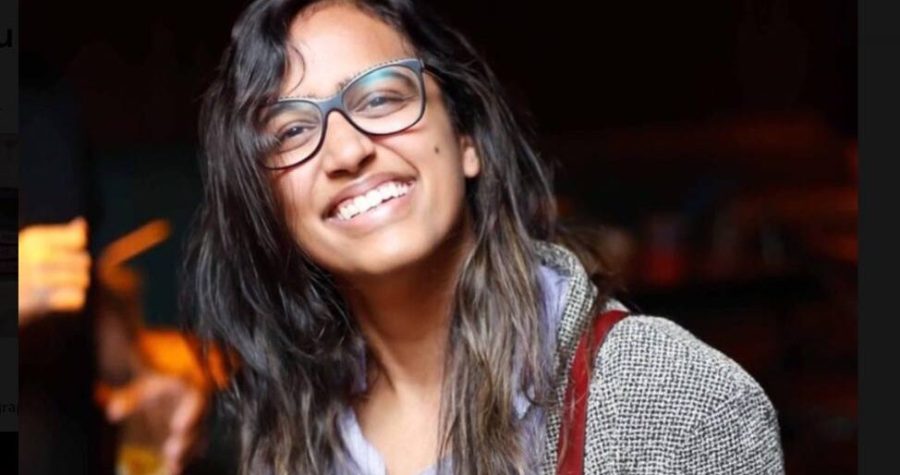
Exploring the Complexities of Growing Up: A Conversation with Riya Agarwal
 By Patrick Roy
In her captivating film If You Show Me Yours I’ll Show You Mine, screenwriter and filmmaker Riya Agarwal delves into the delicate interplay between innocence, curiosity, and cultural expectations. Drawing from her own adolescence and deeply personal reflections, Riya crafts a narrative that resonates with audiences navigating the blurred lines of family dynamics and self-discovery.
In this interview, Riya shares her creative journey, from the inspirations behind her screenplay to her meticulous approach to character development and visual storytelling. With influences ranging from Martin McDonagh’s morally complex narratives to Alfred Hitchcock’s layered characters, she weaves a unique tone of poignancy and tension into her storytelling. Through candid insights, Riya discusses the challenges of balancing realism with sensitivity, maintaining authenticity in dialogue, and keeping the creative spark alive amidst the demands of emotionally charged storytelling.
Join us as we dive into the heart of Riya Agarwal’s creative process and explore the themes and techniques that bring If You Show Me Yours I’ll Show You Mine to life.
Patrick Roy, UniversalCinema Magazine (UM): What was the initial inspiration or personal experience that led you to write If You Show Me Yours I’ll Show You Mine?
Riya Agarwal (RA): The story was inspired by my reflections on growing up in a sheltered environment and the ways misunderstandings shaped my understanding of the world. I drew on moments from my own adolescence—those confusing in-betweens where curiosity clashed with cultural expectations. Through conversations with friends and family, I also noticed how actions, when taken out of context, can lead to misjudgment. This led me to explore the tension between protection and over-protection and how it impacts a young person’s growth.
(UM): What message or central theme were you aiming to convey through the film’s narrative?
(RA): The central theme of the film is the delicate balance between innocence and maturity, particularly in the context of family dynamics. It’s about how well-meaning intentions can sometimes lead to unintended consequences, especially when communication is unclear. I wanted to explore the gray areas of trust, boundaries, and understanding, and to highlight how navigating these moments shapes a young person’s perception of themselves and the world.
(UM): How do you approach character development, especially when exploring complex, nuanced perspectives within young characters?
(RA): I approach character development by grounding each character in real people I’ve known or observed. For Niki, I drew from my own memories as a curious, naive child and combined that with traits I’ve seen in others. I also focus on their inner conflicts—what they want versus what they fear—and how their environment shapes those desires and anxieties. Writing young characters requires honesty; they’re complex and self-aware in ways adults often overlook, so I try to honor that complexity while keeping their voice authentic.
(UM): How did you balance the tension between innocence and maturity in a way that felt both realistic and respectful of the subject matter?
(RA): Balancing innocence and maturity required a lot of subtlety. I leaned into the idea that adolescence isn’t a straight line—it’s a messy mix of naivety, curiosity, and emotional depth. I focused on showing rather than telling, using small moments and gestures to convey Niki’s internal journey. For sensitive scenes, I made sure they were framed through Niki’s perspective, keeping the focus on her experience rather than making the moments overly explicit. This allowed the story to explore complex themes without losing respect for the subject matter.
(UM): Are there specific screenwriters or filmmakers whose approach to moral ambiguity and character complexity inspire your work?
(RA): Recently, Martin McDonagh’s work has been a huge inspiration. He has a remarkable ability to create a unique tone in his films, blending dark humor with complex, morally ambiguous characters. His no-nonsense dialogues are sharp and brutally honest, often filled with raw exchanges that feel both startling and deeply human. His characters are unapologetically flawed—the kind of ‘gray’ that fascinates me—and through his storytelling, we’re forced to confront the psychological and moral consequences of love, violence, hypocrisy, and the blurry lines between right and wrong.
Another significant influence is Hitchcock. His films have a timeless ability to reveal the duality and complexity within characters. Hitchcock was a master of exploring the hidden, darker sides of human nature, showing that no one is purely good or evil. Films like Psycho and Vertigo delve into characters’ secrets, flaws, and motivations, creating layers of tension and intrigue. His ability to craft suspense while peeling back the complexities of his characters has profoundly shaped how I approach storytelling.
Both McDonagh and Hitchcock remind me of the power of ambiguity in storytelling—not as a lack of clarity, but as a reflection of the complexities of human nature. Their work inspires me to dig deeper into the psyche of my characters, allowing their imperfections and contradictions to drive the narrative.

(UM): Can you share your process for structuring a screenplay, particularly when handling emotionally charged scenes?
(RA): For emotionally charged scenes, I start by understanding the emotional journey of the character. I map out what they feel at the start of the scene versus where they end up, and I build the structure around that shift. I also pay attention to pacing within the scene—allowing for moments of silence or hesitation to let the emotions breathe. Dialogue often comes last; I focus first on the physicality, subtext, and tone, which guide the words that eventually emerge.
(UM): How do you ensure authenticity in dialogue, especially when writing young or culturally diverse characters?
(RA): Authenticity in dialogue comes from listening. I pay attention to how people actually speak—their rhythms, their quirks, and how their background shapes their vocabulary and tone. For young characters, I focus on capturing their emotional honesty and their tendency to mix curiosity with bravado. For culturally diverse characters, I draw from my own experiences and those of people around me, always prioritizing specificity over stereotypes. Research and feedback from people with lived experiences are also key to keeping the dialogue grounded.
(UM): In writing scenes with sensitive topics, what strategies do you use to balance realism with sensitivity to the audience?
(RA): I approach sensitive topics with empathy and intent. It’s important to know why a scene exists and what it contributes to the story. I avoid sensationalism by focusing on the character’s perspective rather than the act or event itself. Collaborating with actors and crew is another critical step—they bring their insights to ensure the scene is handled thoughtfully. And I always consider how the audience might perceive the scene, aiming to evoke reflection rather than shock.
(UM): What techniques do you use to build tension and pacing within scenes to maintain audience engagement?
(RA): Tension comes from what’s unsaid as much as what’s shown. I build tension by layering subtext—letting the audience know more than the characters or creating situations where expectations don’t align with reality. Pacing is about knowing when to hold back and when to push forward. I use moments of stillness to let the audience absorb the stakes, then disrupt that with sudden action or dialogue to keep them engaged. Music, sound design, and editing also play huge roles in shaping the rhythm of a scene.
(UM): What is your process for developing a unique tone for a screenplay, and how does that influence your choices in storytelling?
(RA): Tone comes from the intersection of story, character, and visual style. For If You Show Me Yours I’ll Show You Mine, the tone needed to balance humor, discomfort, and poignancy. I leaned into contrasts—light-hearted moments like the egg-throwing scene juxtaposed with more introspective ones. The tone influences every choice, from how dialogue is written to how a scene is framed visually. I always ask: Does this moment fit the emotional palette of the story?
(UM): How do you incorporate visual storytelling, using setting or background details to reflect or enhance characters’ inner emotions?
(RA): Visual storytelling is a powerful way to externalize internal emotions. I use setting and props to reflect a character’s state of mind—like the idyllic beach town in If You Show Me Yours I’ll Show You Mine, which contrasts with Niki’s growing unease. Background details, like the cluttered family home, can hint at the dynamics within the household. I also think about color, light, and movement to create a mood that mirrors or contrasts with the character’s emotions.
(UM): What advice would you give to emerging screenwriters about keeping the creative flow going, especially during challenging projects?
(RA): The best advice I can give is to embrace the process rather than obsess over the outcome. Writing is messy, and it’s okay to have bad days. When I feel stuck, I step away—watch a film, read, or just go for a walk. Inspiration often comes when you’re not actively searching for it.
Also, don’t write in isolation. Share your work with trusted collaborators who can give honest feedback. Sometimes, a fresh perspective is all you need to break through a creative block. Most importantly, trust your voice and remember why you started writing in the first place—that passion will carry you through the challenges.
© 2020-2025. UniversalCinema Mag.
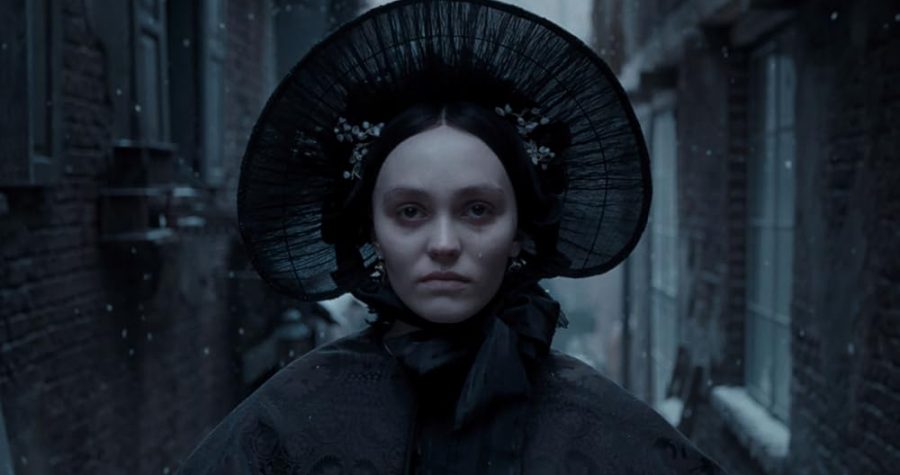
Nosferatu: A Remarkable Achievement of Genre Filmmaking
 By Ester Bovard
Genre films often are often relegated to the margins, ill-considered by many critics favouring more “serious” cinema. But as Robert Eggers demonstrates in Nosferatu, in the hands of a truly skilled filmmaker, genre has the potential to provide the entry point to something truly astounding. A modern take on the classic 1922 silent film by F.W. Murnau, the director’s most recent work serves as a remarkable culmination of the talent he has honed over his already impressive filmography.
With Nosferatu, Eggers once again demonstrates himself to be an impressive builder of worlds, building on the scope of films like The Witch and The Lighthouse to take the audience on a journey through nineteenth century Germany, the snowy mountains of Transylvania, and into the heart of darkness itself. Having worked as a production designer for many years, he brings a painterly sensibility to his films, and seems determined to push the boundaries of practical filmmaking in an age of overreliance on digital trickery. Having long felt that a lazy dependence on computer generated imagery has drained so much of the magic from the viewing experience today, it is a pleasure to behold the modern possibilities still afforded by good old fashioned analog craftsmanship.
Shot on 35mm, the film is sublimely beautiful, and rendered in an astonishingly layered palette of black and gray. Building on the aesthetic of their previous work, Eggers and cinematographer Jarin Blaschke have developed a collective visual style which, while always distinctive, has matured into something truly artful to behold. Their treatment of darkness and shadow is something richer and more beautiful than one might imagine, and vital in a film that takes place nearly entirely within it. To be sure, it is a challenge to maintain visual interest in a film that is plunged into darkness for such a significant portion of its running time, but the pair are more than up to the task.
It is interesting to note that in modernizing this classic film, Eggers chose to return to more traditional technical practices, with his performers going much the same route. As Ellen Hutter, a young newlywed with a mystical link to the vampiric Count Orlok (Bill Skarsgard), Lily Rose Depp turns in an absolutely astounding physical performance that needs to be seen to be believed. Foregoing any kind of digital enhancement, Depp worked with a movement coach and immersed herself in the traditional Japanese dance style of Butoh in order to affectingly depict her character’s demonic possession. Skarsgard, for his part, though rendered physically unrecognizable with the help of prosthetics, manages to modulate his voice into something totally otherworldly, completely under his own power. I was shocked to learn that the sound emanating the actor was achieved by working with an operatic voice coach, and free of any digital enhancement. Thoroughly committed to their craft, Depp and Skarsgard remind us of the power of a truly gifted performer to bring even the most unearthly character to life.
So impressive are Depp and Skarsgard in the film that it would be easy to overlook the work of the supremely talented supporting cast. Admittedly, Aaron Taylor-Johnson and Emma Corrin sputter about with little to do, but as Hutter’s devoted husband Thomas, Nicholas Hoult is an always welcome presence, and his hallucination-laden journey into the deep Transylvanian woods is a wild and terrifying ride laced through with genuine pathos. Simon McBurney turns in a brief but wildly memorable performance as Thomas’ duplicitous boss Herr Knock, and by the time Willem Dafoe turns up as eccentric professor Albin Eberhart von Franz, we know we’re in excellent hands for the remainder of Eggers dark adventure. As the film catapults itself to its supremely satisfying conclusion, every element, every beat feels meticulously and seamlessly realized, confidently transporting the audience to its final resting place.
With this splendidly executed work, Eggers and his performers lean into traditional artistic practice to deliver a confident and impressive contemporary interpretation of a legend already indelibly imprinted on the popular imagination, and in doing so, prove that it is not necessary to use every newfangled tool in the box to produce something that feels thoroughly modern.
Nosferatu is currently screening in cinemas across North America.
© 2020-2025. UniversalCinema Mag.
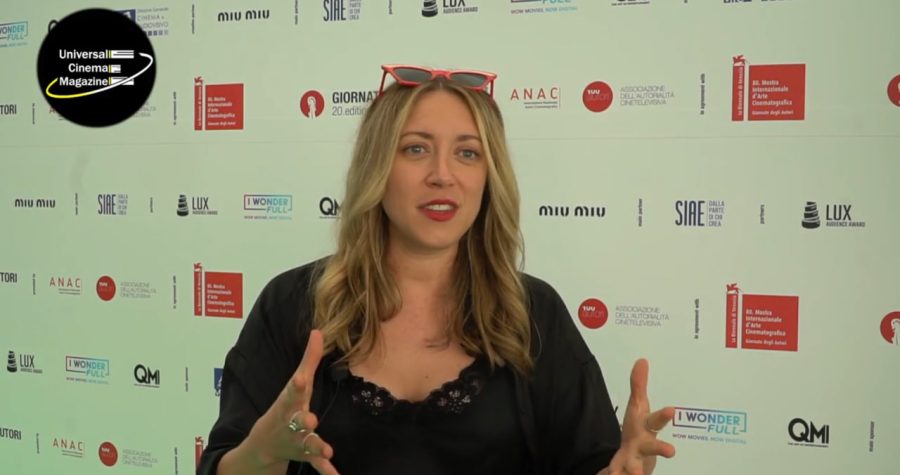
The Sensitive Vampire and the Blend of Horror and Comedy in “Humanist Vampire Seeking Consenting Suicidal Person”
 By Mo Abdi
An emotional vampire who doesn’t want to kill people; a peculiar combination of horror and comedy is showcased in Humanist Vampire Seeking Consenting Suicidal Person directed by Canadian filmmaker Ariane Louis-Seize, who considers tragedy and comedy as two sides of the same coin. In this exclusive interview with Mo Abdi, Louis-Seize discusses the intricacies of this film.
© 2020-2025. UniversalCinema Mag.

A Complete Unknown: A Conventional Biopic for an Unconventional Artist
Director James Mangold is no stranger to the prestige biopic. Cutting his teeth on Girl, Interrupted (about author Susanna Kaysen’s extended stay in a psychiatric hospital) and Walk the Line (his acclaimed exploration of the lives of legendary country superstars Johnny and June Carter Cash), the famed director brings a great depth of experience to his latest look at the early years of Bob Dylan’s astronomically successful career. Sadly, despite benefiting from a subject who chafed at convention and pushed boundaries throughout his artistic career, Mangold has simply churned out yet another meticulously realized but ultimately uninspiring musical biopic.
The film covers only a very small portion of Dylan’s life and career, though admittedly a significant one, opening when he first meets Pete Seeger and Woody Guthrie in 1961, and wrapping up with his infamous performance at the Newport Folk Music Festival in 1965. Charting his meteoric rise from talented but unknown folk singer to irreverent international superstar, the film is clearly aimed at Dylan true believers, never missing an opportunity for its supporting characters to express their awe at his preternatural musical genius.
Reverent hero worship is characteristic of so many musical biopics, and this one is no different. Sure, the film gestures at Dylan’s philandering, his arrogance, and his perhaps selfish abandonment of those who helped him rise to the top, but shoves down the audience’s throat – time and time again – just what an unparalleled genius he’s meant to be. While this may be true, and Dylan is undoubtedly an unparalleled talent, it makes for uninspired viewing, and at times I felt like I was listening to a sermon in the Church of Bob Dylan, entreating me to bow down at the altar of his artistic genius.
Luckily, the film is gorgeous to look at, and even more beautiful to listen to. I could pontificate at length about the accomplished work of François Audouy and Regina Graves in recreating the Greenwich Village as Dylan would have experienced it in the 1960s, but the musical performances in the film are absolutely astonishing, eclipsing nearly any other element of the film. Timothée Chalamet, unsurprisingly, does fine work channeling Dylan, and is especially impressive at expressing his moments of musical inspiration, casually tinkering at creating now legendary songs like The Times They Are a’ Changin’ and Blowin’ in the Wind. Less expectedly, Monica Barbaro is magnetic as folk music icon Joan Baez, skillfully embodying her unique voice and performance style despite lacking any previous musical experience.
Indeed, the film is full of great supporting performances, led by a warm and paternal Ed Norton as folk music purist Pete Seeger. Scoot McNairy is similarly affecting as the ailing Woody Guthrie, projecting a great complexity of emotion despite having lost the ability to speak thank to advanced stage Huntington’s disease. The weak link among the supporting cast is Boyd Holbrook as Johnny Cash, who feels here more like a caricature or plot device than a fully realized character, in disappointing contrast to the fully inhabited performance of Joaquin Phoenix in Walk the Line.
One of the most interesting elements of the film is that its central conflict is an artistic one. Despite spending ample time on the dramas of Dylan’s personal relationships, particularly with Baez and his girlfriend Sylvie (Elle Fanning), Mangold is far more interested in Dylan’s musical journey, and his abandonment of folk music in favour of unhindered musical experimentation. As Dylan, much to the chagrin of the purists who helped drive him to the top, begins to experiment with electric guitar and unconventional instrumentation, the same audience that once revered him turns, enraged by the audacity of his musical evolution. The battle comes to a head at the aforementioned Newport Folk Music Festival, and I had to chuckle at the absurdity of a folk music riot, but it really did happen.
There is a more interesting version of this film, and perhaps it’s already been made. Todd Haynes’ experimental biography I’m Not There goes so much further in matching the complexity of its subject, featuring performances from six different actors as Dylan. Perhaps it’s time for a rewatch.
A Complete Unknown is currently screening in cinemas across North America.
© 2020-2025. UniversalCinema Mag.

Babygirl: Bumbling Towards Ecstasy
For many years, turning forty sounded something of a death knell for the careers of many actresses in Hollywood. Often relegated to the background as sexless and thinly sketched archetypes of motherhood, few could hope to sink their teeth into the same kind of meaty, complex parts as their male peers. Recently, however, the tide seems to have turned in their favour, treating audiences to a panoply of incredible performances from the likes of Demi Moore (The Substance), Pamela Anderson (The Last Showgirl), and Amy Adams (Nightbitch). It is a joy to see Nicole Kidman join their ranks in this sophomore effort from director Halina Reijn (Bodies, Bodies, Bodies), channeling the same fearlessness and audacious talent that first propelled her stardom.
Romy Mathis (Kidman), the CEO of a somewhat vaguely realized robotics company, appears to possess all the outward trappings of modern-day success: a handsome theatre director husband (Antonio Banderas), two lovely and self-possessed daughters (Esther Rose McGregor and Vaughan Reilly), and well-appointed homes in both the city and the country. She is respected in the workplace, loved at home, and predictably – as the cinematic trope must go – desperately dissatisfied and simmering with unrealized desire.
Enter Samuel (Harris Dickinson). Romy first spots him as he confidently calms a violent dog in the street outside her office, and is immediately intrigued by his calm bravado. Unexpectedly, he shows up again amongst the fresh crop of interns touring her office, and upon their introduction surprises her with his uncowed assertiveness, skeptically confronting her about the company mission statement she’s been parroting as they prepare for an important new launch. Romy is rattled, but finds herself increasingly drawn to him, and reading her desire, he quickly pushes the boundaries of their relationship further and further.
Where most films about dominant/submissive dynamics tend to cast the dominant party as suave and unfailingly in control of a wilting and instantly yielding submissive, Babygirl takes a more nuanced view of the power dynamics between two characters completely unsure of how to navigate a kind of relationship they both desire, but have never before explored. It is fascinating (and often funny) to watch the pair make things up as they go along, clumsily navigating how to wield and yield the power each holds over the other, and many of their most intimate scenes are punctuated with uncomfortable, incredulous laughter.
Dickinson is an interesting choice of leading man, and holds his own against the more experienced Kidman, ably projecting Samuel’s easy confidence, but also the ghostly bemusement simmering beneath the surface. While Romy, through this liaison, seems to be allowing herself access to her true nature for the first time, at times it seems Samuel may simply be trying on this persona for a brief time, and ready to let it go once the relationship runs its course.
Unfortunately, the inevitable unraveling of their relationship is less interesting than its inception, and full of predictable revelations and manipulations that do little to deepen the emotional truth of the film. Less developed characters, such as Romy’s husband Jacob (Banderas) and her ambitious young assistant Esme (Sophie Wilde), sweep dramatically into the film’s final act in an attempt to stitch the events of the film into a tidy package of sentiments about marriage, morality, and ambition, but it all feels an unfittingly sterile ending for a story that promised such tantalizing emotional complexity. It is somewhat puzzling to consider Romy’s breakdown of the true nature of her darkest desire – her need to be risking the loss of something truly important – because in the end, nothing much seems to have been risked at all.
Perhaps the film’s greatest flaw is that it fails to develop its central characters more deeply. We learn next to nothing about Samuel, and as for Romy, despite a casual mention of her being raised in a cult (!) and periodic flashes of EMDR therapy, Reijn declines to dig any further into the surely fascinating backstory of a woman who somehow went on to graduate from Yale with distinction despite such traumatic beginnings. Alas, we shall all have to live with the enduring mystery.
Babygirl is currently screening in cinemas across North America.
© 2020-2025. UniversalCinema Mag.
Critics’ Choice: Best Films of the Year | Cara-Lynn Branch‘s Top 10 Picks
 By Cara-Lynn Branch
When I think of favourite films in any given year, it’s the films that I thought most about after seeing, the ones I would bring up in conversation to recommend to others, and those that pleasantly surprised me. So, in no particular order, here are 10 films from 2024 that did just that.
Heretic: I was glad the trailer for the latest Scott Beck and Bryan Woods only gave you a little Red Riding Hood/Big Bad Wolf idea while concealing some of the greater twists in a film where Hugh Grant delivers a career-standout performance.
Jane Austin Wrecked My Life: This was the TIFF film that I told everyone about who asked what I loved there. It’s a great rom-com as it builds on a love of the history of rom-coms.

Twisters: This was probably the most fun I had in a cinema this year, and I’m still upset I could not take advantage of a 4DX screening even when they brought it back. Even in a regular cinema, the sound mix was so effective it felt like you were in the storm that I was shocked when the Oscar shortlists came out and it missed in the sound category.

The Beast: This near-fi feature surprised me, partially because I went in blind like I often do if it’s not a film I’m bombarded with trailers for at the AMC, but also because I don’t even know if a trailer could have properly prepared me for this film that now having sat on it for almost a year reminds me of some of my favourite Black Mirror episodes, which is probably why I was so drawn to it.

Wicked: I’ve been a fan of the show for most of my life. It was my first Broadway musical; I have a poster signed by the Original Broadway Cast. I have been skeptical about the film existing since forever as its release date got pushed and pushed again with no casting announced, and then it’s split into two parts. I went into the film unsure if I would leave wanting to see part two, the fact that I’m waiting for November to come around again to see the finale means they were making good.

Universal Language: I am still thinking about the set design in this film, of the Kleenex Repository, and of the Tim Horton’s made up as Tehran Tea House. Others are taken with the film too as it made the Oscar shortlist for International Feature Film.

Conclave: Good actors, good dialogue, and a lot of backstabbing by people who claim to be pious, what’s not to enjoy?

Thelma: This is such a funny movie full of heart, and while Thelma may not always be tech-savvy, she’s not shown to be incapable, which is why you are more than ready to ride with her as she goes to get back the money that was conned from her.
Dìdi: I love coming-of-age films, and while I think every narrative can be looked through the lens of coming-of-age because characters transform/evolve, the genre is more defined by films like Dìdi, but within that landscape, you rarely get films centering the male experience or the Asian-American one making Dìdi unique as it deals with themes universally relatable in the awkwardness of growing up.
Nickel Boys: I have never seen another film like it. I think we’ll see other filmmakers try the same or similar style with similarly interior/internal characters, and they say imitation is the sincerest form of flattery, but I hope RaMell Ross is flattered in other ways this award season.

© 2020-2025. UniversalCinema Mag.
Critics’ Choice: Best Films of the Year | Ester Bovard‘s Top 10 Picks
As one year gives way the next, cinephiles of all stripes play that familiar game of identifying the cream of the crop. From quiet film festival gems to sprawling effects-laden extravaganzas, this year was chock full of memorable cinematic moments, and it is with pleasure that I bring you this unapologetically subjective selection for the best of 2024:
PERFECT DAYS (Wim Wenders)

Without reservation, Perfect Days was my favourite film of the year. Koji Yakusho is flawless as Hirayama, a toilet cleaner in Central Tokyo living a modest life full of quiet joys and punctuated with oddly joyful surprises. Deceptively simple in its construction, the film gently implores you to contemplate the deeper meaning of each of life’s precious moments.
LA CHIMERA (Alice Rohrwacher)

This lyrical tale from Italian director Alice Rohrwacher builds a layered and beautiful world in which to lose yourself. The grieving Arthur (Josh O’Connor, heartbreaking), a British archaeologist, takes up with a colourful group of grave-robbers stealing ancient Etruscan artifacts in 1980s Tuscany as he attempts, in vain, to come to terms with the loss of his beloved Beniamina.
CHALLENGERS (Luca Guadagnino)

Not everyone will agree, but for pure pulpy pleasure, no other film this year tickled me quite the same way. From the pulsating score to the sizzling chemistry of its central love triangle (okay… mainly Josh O’Connor and Mike Faist, though Zendaya is pitch perfect as the ice queen torn between them), you’ll never watch tennis the same way again.
THE SUBSTANCE (Coralie Fargeat)

Starring Demi Moore in a career-best performance opposite the consistently impressive Margaret Qualley, this sophomore effort from up-and-coming director Coralie Fargeat plumbs the depths of the feminine psyche to deliver a twistedly entertaining fable on the fine line between self-obsession and self-hatred.
POOR THINGS (Yorgos Lanthimos)

While admittedly divisive – and about thirty minutes too long – Poor Things is a wildly innovative visual spectacle, and quite honestly deserves a spot on this list for Emma Stone’s performance alone. Impressively committed to her portrayal of a young woman resurrected by unorthodox means, she is unforgettable as the anchor of this post-modern take on the legend of Frankenstein.
DAHOMEY (Mati Diop)

With her first documentary feature, Diop proves herself a cinematic force to be reckoned with, taking home the Golden Bear at this year’s Berlinale. Documenting the repatriation of twenty-six royal treasures from the Kingdom of Dahomey, Diop reckons with the persisting legacy of colonialism in Africa, interrogating the very meaning of cultural heritage and restorative justice with poetry and grace.
SUPERBOYS OF MALEGAON (Reema Kagti)
While Bollywood dominates the popular imagination when it comes to Indian cinema, the subcontinent is home to a rich tapestry of cinematic traditions largely unknown outside its borders. Shining a light into one tiny corner of that universe, Kagti puts the delightfully quirky Mollywood on the map with this uplifting tale about the joys of filmmaking and the enduring bonds of friendship.
ONE OF THOSE DAYS WHEN HEMME DIES (Murat Firatoğlu)
One of the greatest experiences for the avid film festival goer is to see a film with absolutely no expectations, and to be blown away by the results. Delivering one of the most engaging films I had the pleasure of viewing at the Venice Film Festival this year, Firatoğlu has crafted a politically layered and tragicomic look at one man’s very bad day.
BESTIARI, ERBARI, LAPIDARI (Martina Parenti & Massimo D’Anolfi)
This supersized documentary, clocking in at an impressive 206 minutes, requires a serious commitment from its viewers but has ample rewards in store for those who stick it out. Dividing itself into three meticulously realized sections (Animals, Plants, and Stones), the film aims a microscopic lens at a macroscopic subject: the insignificance of humanity in the grand scheme of terrestrial history.
DO NOT EXPECT TOO MUCH FROM THE END OF THE WORLD (Radu Jude)
One of the most unique and fascinating films released this year, this latest effort from bad boy Romanian director Radu Jude defies description. Following overworked production assistant Angela on a fascinating and profane existential road trip through modern day Bucharest, the film takes on everyone from Prince Charles to Nicolae Ceausescu in its sprawling takedown of late-stage global capitalism.
© 2020-2025. UniversalCinema Mag.
Critics’ Choice: Best Films of the Year | Bita Habibi‘s Top 10 Picks
 By Bita Habibi
It is time to contemplate the cinematic gems that defined the past year as we send farewell to 2024 and embrace the exciting possibilities of the new year. The passing year provided us with an extraordinary selection of films that have captivated our hearts and ignited our imaginations, demonstrating the extraordinary talent and creativity of filmmakers from around the globe. The top 10 films of 2024 not only entertained us but also offered new perspectives and shared unforgettable experiences, thanks to their stunning visuals and compelling storytelling. Celebrate these exceptional films that have significantly influenced the cinematic landscape and influenced the year in cinema. Join us in this celebration.
- Outrun
German director and screenwriter Nora Fingscheidt brings out the narrative of Rona’s life in which she suffers from alcohol addiction. Saoirse Ronan’s brilliant performance and the excellent cinematography take us on a journey into the heart of trouble, nestled in the wild beauty of Scotland’s Orkney Islands. The film premiered at the Sundance Film Festival on 19 January 2024.
Claire Keegan’s 2021 novel served as the inspiration for Tim Mielants’ 2024 historical drama. The film gradually develops, showcasing breathtaking scenes of life in Ireland during the late 1970s. Meanwhile, the Magdalene Laundries controversy, where women suffered abuse in the name of redemption, confronts the audience. Cillian Murphy, with his masterclass performance, turns a slow-paced narration into an impressive cinematic experience.
- My Favourite Cake
Seventy-year-old Mahin, who has been living alone until now, has decided to revive her romantic life. A fortuitous encounter transforms into an unforgettable evening. Maryam Moghadam and Behtash Sanaeiha, the film’s writers and directors, reveal the repressed love and regret that underpin Iranian society. The international co-production between Iran, France, Sweden, and Germany had its world premiere on 16 February 2024 at the main competition for the Golden Bear at the 74th Berlin International Film Festival.
Yorgos Lanthimos, the Greek director, offers a feminist reinterpretation of the creation narrative, with Willem Dafoe as the creator of Bella Baxter (Emma Stone). Released on 12 January 2024, the film captivates audiences with its lavish cinematography and exceptional performances that seamlessly blend visual forms with their associated meanings. The National Board of Review and the American Film Institute named Poor Things among the top ten films of 2023, and it garnered various accolades, such as four wins at the 96th Academy Award, two at the 81st Golden Globe Awards, and five at the 77th British Academy Film Awards, with Stone winning best actress at each ceremony.
- Green Border
Green Border is a 2023 drama that portrays a family of Syrian refugees, an English instructor from Afghanistan, and a border guard who converge at the Polish-Belarusian border amid the latest humanitarian crisis in Belarus. Directed by Agnieszka Holland, the film portrays the harrowing existence of refugees stuck between the borderlines without any future. The film competed for the Golden Lion at the 80th Venice International Film Festival, where it won the special jury prize.
- Black Dog
Upon his release from incarceration, Lang returns to his village in Northwest China. While participating in a canine patrol assigned to eliminate stray dogs before the 2008 Olympics, he forms a connection with a black stray. The two solitary individuals begin a fresh expedition together. Guan Hu, the director of the Chinese film, presents an unconventional plot rarely seen in film storytelling. Starring Eddie Peng and Tong Liya, the film had its world premiere at the 77th Cannes Film Festival on 18 May 2024, where it won the Un Certain Regard prize.
- Crossing
Levan Akin, a Swedish director, depicts Lia, a retired teacher who has cast her vote to locate her long-lost niece, Telka. He escorts her to Istanbul, where she encounters the lawyer Evrim. Akin’s most recent play is a magnificent tribute to human goodness, with a nuanced message of acceptance. The film leaves an exquisite impression thanks to its outstanding cinematography, brilliant performances, and solid narrative. The 74th Berlin International Film Festival selected Crossing for the Panorama section, where it made its world premiere on 15 February 2024.
- Bird
Andrea Arnold portrays Bailey, a 12-year-old girl grappling with her single father Bug, performed by Barry Keoghan, in a poignant drama that captivates the audience by revealing the harsh realities of life within a fascinating cinematic framework. Franz Rogowski’s exceptional performance reminds us to look to the sky when life becomes entrenched in desolation. Andrea Arnold, the English filmmaker and former actress, crafts a radiant moment amidst gloom. Bird debuted internationally at the 77th Cannes Film Festival on May 16, 2024, and premiered in cinemas in the United States and the United Kingdom by Mubi on November 8, 2024.

Jonathan Glazer authored and directed The Zone of Interest, a 2023 historical drama film that the United Kingdom, the United States, and Poland co-produced. The film, a loose adaptation of Martin Amis’s 2014 novel, revolves around the lives of German Auschwitz commandant Rudolf Höss and his wife Hedwig, who live with their family in a house near the “Zone of Interest” concentration camp. Jonathan Glazer, drawing on his theatrical experience, illustrates the intricacies of human nature, showcasing both cruelty and charity within the same context. On 19 May 2023, The Zone of Interest made its premiere at the 76th Cannes, followed by its theatrical release in the United States on 15 December 2023.
German filmmaker, writer, author, and photographer Wim Wenders takes viewers on an existential odyssey in Perfect Days by tracing the feelings of freedom, loneliness, death, and emptiness that accompany our highs and lows in life. Hirayama, a lavatory sanitation worker residing in Tokyo, expresses satisfaction with his life. Satisfaction is a sentiment that humanity has lost in the hectic pace of life’s competitive struggles. The film encourages you to halt your actions and reflect on life’s tranquillity, appreciate existence as it is, and navigate the passage of time, as illustrated in Zen philosophy. Perfect Days debuted on 23 May 2023 at the 76th Cannes Film Festival, competing for the Palme d’Or and securing the Prize of the Ecumenical Jury as well as the Best Actor Award for Koji Yakusho. The 96th Academy Awards nominated Perfect Days for Best International Feature Film, making it the first time Japan’s submission by a non-Japanese director received such a nomination.
© 2020-2025. UniversalCinema Mag.

Critics’ Choice: Best Films of the Year | Mo Abdi‘s Top 10 Picks
The end of another calendar year brings the captivating game of selecting the best of the best. These are my picks from over 500 films I watched at international festivals around the world and in cinemas in 2024 (listed in no particular order):
The Brutalist (Brady Corbet)

A stark portrayal of the violence of life through the story of a migrant architect fleeing the Holocaust. The film is in no rush to tell its story—in fact, it’s remarkably long (215 minutes). However, the filmmaker takes us on an Odyssean journey with the protagonist, weaving the threads of history (the Holocaust) with the concept of the American Dream, while delving into the inner world of an artist surviving in a brutal society. Here, survival itself demands a heavy toll.
Beetlejuice, Beetlejuice (Tim Burton)
Tim Burton’s best work in the past two decades is a stunning return to his favourite worlds and atmospheres—a quintessentially “Burtonian” film that elevates fantasy and imagination to their zenith. In its vividly narrative space, the film makes all the incredible creatures and events wholly believable, offering a visual feast. Strangely, it didn’t receive much acclaim and was largely ignored during awards season.
The Substance (Coralie Fargeat)
An unusual and thought-provoking film exploring beauty and womanhood, unflinchingly challenging social norms. It examines the worlds of fashion and entertainment (and their relentless demand for beauty and youth) while delving into the inner life of a woman determined to remain youthful, beautiful, and adored. The filmmaker confronts her protagonist with the harsh realities of life through the clash of youth and old age (and beauty and ugliness). The film’s shocking twists captivate viewers, though the gratuitous violence in its closing scenes feels unnecessary.
April (Dea Kulumbegashvili)
A compact, raw, brutal, and gripping film from Georgia about abortion, delving deeply into the feminine world of its protagonist, who stands in opposition to the masculine ethics and beliefs of her surroundings. With an observant camera that refrains from dramatizing the events, the film features a deceptively simple yet meticulously crafted scene of an abortion that lingers indelibly in the viewer’s mind.
Anora (Sean Baker)
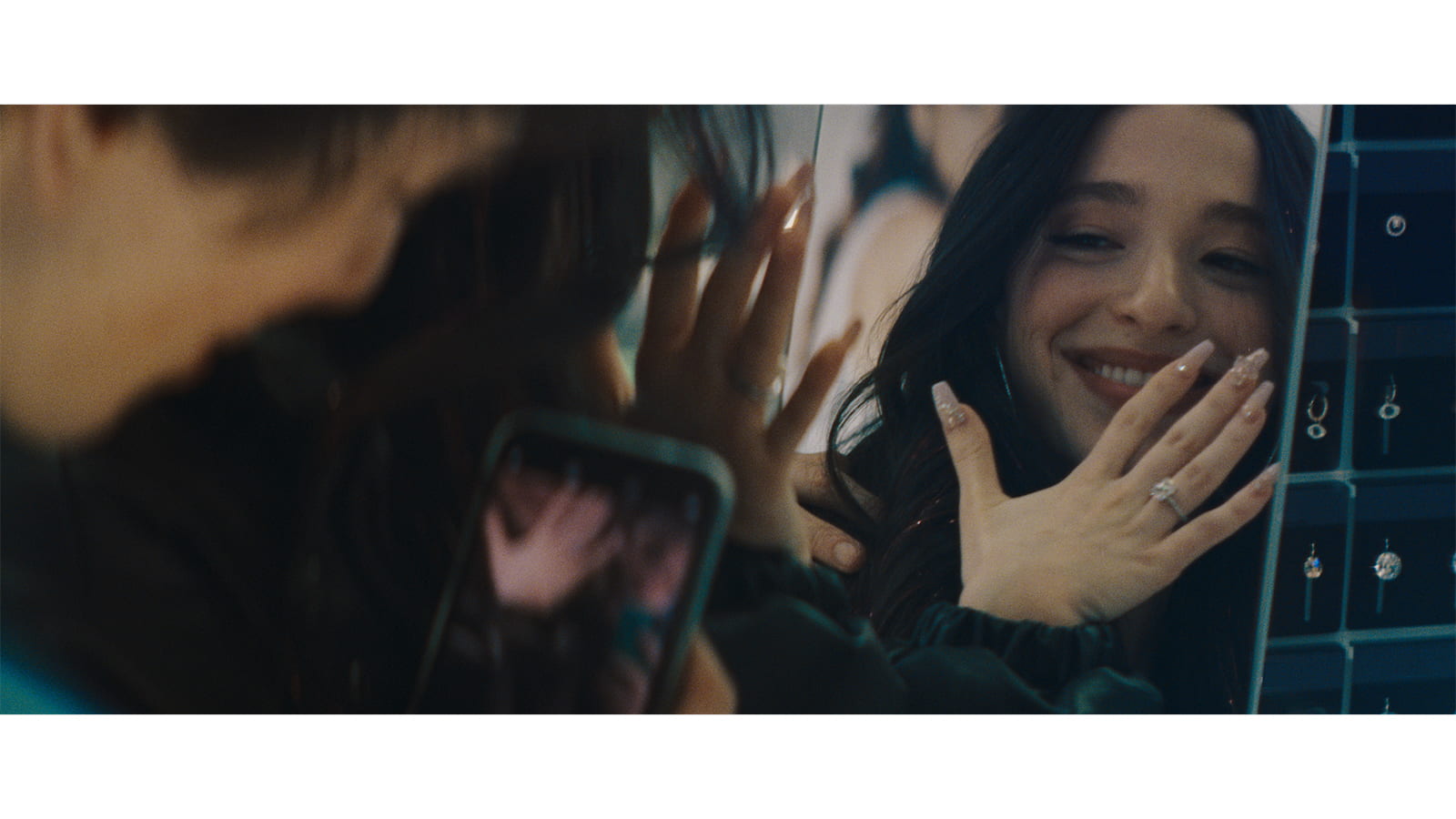
This year’s Palme d’Or winner at Cannes is a haunting exploration of a sex worker’s life; a bitter, impactful film that refrains from judging or condemning its protagonist. Instead, it offers a deeply human portrait of a young woman and her dreams. As the story unfolds, her profession becomes secondary, and her emotions and inner world take canter stage. The film crescendos to an extraordinary climax, with tears that had remained unspilled throughout finally breaking free.
Joker 2: Folie à Deux (Todd Phillips)

Todd Phillips’s daring and ambitious approach to this film is enviable. He knew it wouldn’t be warmly received at the box office or by critics (as it’s entirely disconnected from its predecessor, building an entirely different world that defies audience expectations). Yet, he boldly crafts a deeply personal vision, pulling his protagonist into an intense and unique narrative. Defying Hollywood conventions, he delivers a dark, audacious, and compelling film that remains underappreciated.
Memoirs of a Snail (Adam Elliot)
An adult animation that delves into the bitterness and struggles of life, drawing viewers into the sorrows of Grace, a young girl, and her many tribulations. The story unfolds with captivating precision, beginning with death and transitioning to life. Without lapsing into preachiness, the film ultimately celebrates life, cinema, and art, delivering a deeply personal ode to cinema itself.
Emilia Perez (Jacques Audiard)
A well-crafted and engaging narrative with a unique storyline, departing from Audiard’s previous works and exploring a completely different (and non-French) world. The story revolves around a Mexican criminal who transforms himself into a woman to survive. This marks the beginning of an unpretentious exploration of gender concepts and the erasure of boundaries between men and women, told within a vibrant and tumultuous tale that invites viewers into a strange yet emotionally resonant world.
The Room Next Door (Pedro Almodóvar)

One of Almodóvar’s most visually compelling films—unfortunately one of his most underrated. Stepping away from his melodramatic tendencies, this film emerges as a poetic meditation on death. In an anti-narrative space, it examines two women’s confrontation with mortality, achieving fascinating conclusions: death becomes a natural continuation of life, not an obstacle to it.
The Seed of the Sacred Fig (Mohammad Rasoulof)
Continuing Rasoulof’s unflinching exploration of Iran’s socio-political realities, the film boldly portrays the current state of the nation without succumbing to censorship constraints. Aligning with the “Woman, Life, Freedom” movement, it portrays women as they rise against religious patriarchy. The climactic scene, reminiscent of the iconic image of Qasem Soleimani’s hand, buries the regime’s tyranny and oppression under layers of earth.
© 2020-2025. UniversalCinema Mag.

Exclusive interview with Jim Sheridan; from Daniel Day-Lewis to film as a belief system
Jim Sheridan, one of the most important filmmakers in the history of Irish cinema, ventured into rarely explored territories with My Left Foot (1981). A filmmaker with six Academy Award nominations to his credit, he shares in this exclusive interview with Mo Abdi his current feelings about My Left Foot and his experience working with Daniel Day-Lewis. He also talks about his childhood, the beginnings of his career in cinema, and philosophy of film as a belief system- much like religion, where we either believe in it or we don’t.
© 2020-2025. UniversalCinema Mag.
- ‹ Previous
- 1
- 2

Recent Comments