 By Ester Bovard
 By Bita Habibi
© 2020-2025. UniversalCinema Mag.


Black Bag, the latest feature from the seemingly tireless Stephen Soderbergh, is the kind of smart, stylish thriller we see too few of these days. Featuring a taut script from third time Soderbergh collaborator David Koepp, this spry spy flick centres the complicated marriage of two master agents at the top of their game as they attempt to navigate their way out of some very dangerous waters. Surrounding stars Cate Blanchett and Michael Fassbender with a suitably stellar supporting cast, Soderbergh crafts a fast-paced and engaging tale of modern spy craft well worth the price of admission.
Fassbender stars as British intelligence agent George Woodhouse, tasked in the opening minutes of the film with ferreting out the mole responsible for leaking a top-secret piece of software code-named Severus. The catch? His wife – fellow agent Kathryn St. Jean (Blanchett) – is at the top of a list of five possible suspects. With only a week to complete his mission, George wastes no time in rounding up the suspects… for a dinner party. They make for an interesting group: Freddie (Tom Burke), a boorish drunk, is also a savvy and calculated agent resentful at being passed over for promotion; Clarissa (Marisa Abela), satellite imagery specialist and Freddie’s much younger girlfriend; rising star James (Regé-Jean Page), recently promoted at Freddie’s expense; and agency psychiatrist Zoe (Naomie Harris), privy to all their secrets.
Fassbender’s performance is at first deceptively robotic (perhaps opaque might be a more apt description), but this opening dinner party sequence serves not only as a delicious aperitif to the audience, but illuminates a great deal about the complexities of his character, his marriage, and how he’s viewed by the people who surround him. Having dosed his guests with truth serum, George masterfully pushes their buttons, teasing out all manner of fascinating revelations and tensions simmering barely beneath the surface. Only Kathryn, already warned off the chana masala, escapes with her composure intact.
Of course, when a spy’s inhibitions are unknowingly lowered in this way, they may not stop at spilling their own secrets, and luckily for the audience, Freddie knows a few of George’s as well. Legendary amongst his colleagues for his unflagging devotion to his wife and marriage, George clearly lives by a strict moral code. It may not be the one you and I might live by, but it is nothing if not well defined. Indeed, far from robotic or cold, George is a deeply passionate man, as evidenced by the sordid family tale revealed by his drunken underling. Once tasked with surveilling his own father (also an agent, and inveterate – but careful – cheater), George took the opportunity to finally catch him in the act, ruthlessly exposing him at a family dinner. Here is a man whose rage is tamped down deep, but whose loyalty knows – quite literally – no bounds. Adhering slavishly to his own personal code, under the right circumstances, he will burn the house to the ground to protect those that he truly loves. The count, as far as I can tell, includes only his mother… and Kathryn.
Having thrown the rock in the proverbial water (as George so eloquently puts it), we then have the pleasure of observing the ripples. To reveal too many twists and turns would spoil the fun, but suffice it to say the film is full of such smartly executed set pieces – the polygraph sequence is a notable standout – with each one leaving you more confused about who is truly playing whom. The dim, fuzzy photography might be an acquired taste, but it’s a hallmark of the Soderbergh style, and Black Bag is a film that has his name written all over it. Subtly recalling elements of his previous efforts, I could have spotted the prolific director’s fingerprints a mile away, a distinctiveness all the more impressive give the breadth and variety of his filmography. As the film careened towards its speedy conclusion, I found myself questioning whether or not Soderbergh had completely stuck the landing. Nevertheless, despite a few loose ends here and there, it was still one hell of a fun ride.
Black Bag is currently screening in cinemas across North America.
© 2020-2025. UniversalCinema Mag.

Boris Lojkine, the French director whose film Hope won the SACD Prize at the 2014 Cannes Film Festival and narrated a migrant story, has returned with Souleymane’s Story, a story about a Guinean asylum seeker who cycles around Paris, the most romantic city in the world, not for the sake of love and life but for survival and identity. Souleyman, a courier who delivers food to various customers, captivates us with his journey through the streets of Paris. From the scattered remnants of his thoughts about a political faction he barely touched to his urgent race through the city’s maze as he strives to board the last bus to his temporary haven, the film paints a vivid picture of the relentless, anxiety-filled pace that permeates Souleymane’s life.
As Souleymane navigates the street to find the customer’s address, her deep eyes penetrate the truth of life—the geographical limitation. The destined man endures the hardships of a life he never chose. Souleyman is begging for his mundane rights from anyone around, whether it is the man who is training him how to fabricate a political story for his interview or Emmanuel, who ignores him while he is asking for his money. Every day, we encounter this bitter and familiar new narrative. It serves as a stark reminder of the countless individuals trapped in cycles of despair, where their aspirations are overshadowed by the weight of systemic barriers. As Souleyman navigates this harsh reality, he clings to the hope that one day he will break free from the constraints that bind him, seeking a life filled with dignity and purpose.
Boris Lojkine glimpses the African diaspora while Souleymane encounters them through cycling around Paris. To some extent, at the same level, they bring out the common pain of being cast into an unknown world not for the betterment of life but to survive. He planned to film Souleymane’s Story in the streets of Paris, capturing all the challenges he encountered throughout the process. The camera movement with Souleymane on the bicycle and following every single moment with him gives an uncertain feeling to the audience, as all asylum seekers are around the world. This immersive technique not only highlights Souleymane’s struggles but also evokes empathy in viewers, drawing them into the harsh realities faced by many. By presenting the rawness of his journey, the film aims to spark a conversation about displacement and resilience, urging audiences to reflect on their own perceptions of migration.
Souleymane is preparing for a pivotal interview at OFPRA, a critical juncture in his asylum quest, which is just two days away. In this crucial interim, he turns to Barry (Alpha Oumar Sow), a seasoned broker who offers not only his expertise in navigating the labyrinthine immigration process but also the reassurance of knowing that his paperwork is in capable hands. As they sift through the documents together, Souleymane clings to hope, each signature a step closer to a future filled with possibility. First-time actor Abou Sangare, who portrays Souleyman with his good-natured, hard-working manner and handsome features, catches eyes and asks who is playing the role so plausibly. And the most impressive part of his acting is where he struggles between the bafflement and reality. He is trying to believe and repeat a fallacy that has no place in his life; however, his traumatised life with his sick mother since childhood is a cynical tale that could move any interviewer. As the director said, the story of Soleymane’s sick mother was a real one of Abou Sangare’s. Boris Lojkine believes that he has learnt a lot from the process of filming, and the actors have brought him a sense of joy by showcasing the tangible world of African refugees.
Lojkine’s taut, honed screenplay, co-written by Delphine Agut (Inshallah a Boy), coupled with Tristan Galand’s cinematography, made a grounded and sober narration on Souleymane’s unsteady bicycle. Such a trembling moment, nestling in the depths of human neverending pain, was depicted. Beauty does not captivate Paris; instead, we witness a Guinean asylum seeker relentlessly striving to overcome his ultimate destiny. The crux of the conflict emerges in the interview room as he sits down to decide between truth and falsity.
The declared film premiered in the Un Certain Regard section of the 2024 Cannes Film Festival, where it received both the Jury Prize and the Performance Prize. Souleymane’s Story garnered eight nominations for the 50th César Awards, including Best Film, and won four: Best Supporting Actress (Nina Meurisse), Best Male Revelation (Sangare), Best Original Screenplay, and Best Editing.
© 2020-2025. UniversalCinema Mag.

I’m Still Here, Brazilian director Walter Salles’ first feature film in over a decade, explores a dark period in his nation’s history. Recently awarded the Academy Award for Best International Feature Film, Salles’ fleshes out the human cost of a brutal military dictatorship characterized by extensive human rights abuses, institutionalized torture, and the forced disappearances of its opponents. One of the most well-known victims of the regime was Rubens Paiva, a former congressman active in the underground resistance. Featuring a tour-de-force performance from Fernanda Torress, the film examines the devastating effect his abduction has on his family while shedding light on the incongruous reality of trying to make a life under the thumb of a terrifyingly repressive regime.
That incongruity is hinted at early on, as the family enjoys a day at the beach. Running along the beautiful Rio de Janeiro shoreline, surrounded by gorgeous mountains, the Paiva family is the picture of health and good humour, resembling something akin to a seventies advertisement for sunscreen scored to the evocative sounds of Brazilian funk artist Erasmo Carlos. The cracks in this utopian façade are soon revealed, however, when eldest sister Vera (Valentina Herszage) and her friends are pulled over by a military roadblock and subjected to an invasive and aggressive search. The moment is jarring, and will unfortunately prove to be just the tip of the iceberg for this tight-knit family.
Salles was acquainted with the Paivas as a child, and his familiarity with this place and time is more than evident as he effortlessly roots the audience in their world. Rubens (Selton Mello) lovingly presides over his energetic household, adored by his children and still madly in love with his devoted wife Eunice (Torres). It’s the kind of house where you’re just as likely to find yourself in a spirited political debate as a spontaneous dance party. The kind of house in which many of us might have wished to have grown up. Despite his entreaties to his children to be careful, it is clear that Rubens himself is still active in the resistance, taking surreptitious late night phone calls and passing mysterious letters and packages, all the while hiding his activities from his family for their own protection.
One day, having caught the military’s attention, a trio of goons show up at the door to escort him to a “deposition” at an undisclosed location. Soon enough they would also take custody of Eunice and their daughter Eliana (Luiza Kosovski) as armed enforcers stand guard over the rest of the children. It’s hardly a spoiler (or surprising to anyone with a basic grasp of history), that Rubens’ family never saw him again, or that his body has never been found. In the days and months following that first fateful day, we experience the fallout from Eunice’s perspective. Imprisoned and “interrogated” for twelve days herself, her experience goes a long way to unshrouding the mystery that surrounds the vast majority of such forced disappearances.
Torres’ performance is peerless (apologies to the incredibly talented Demi Moore and Mikey Madison) as she subtly projects Eunice’s struggle to protect her family and fight for justice. Intelligent, loving, gentle, and relentless in her pursuit of the truth, it is fascinating to behold Eunice Paiva as she negotiates the treacherous terrain in which she finds herself. Fiercely protective of her family and rarely reactionary, Eunice swallows her considerable grief and plays the long game, always observing and evaluating with careful consideration and intelligence. That quiet consistency renders her few moments of outward vulnerability and rage all the more powerful. One of the most powerful and revealing scenes in the film finds Eunice sitting among her family at a local ice cream shop. Grappling with unimaginable grief that she hides even from her own children, her eyes wander to the people that surround them. Young couples laugh and flirt, children play – each of them simply trying to grasp whatever moments of joy and levity that they can, doing their best to ignore the darkness lurking just around the corner. It’s a harrowing moment, and one that hits all too close to home.
I’m Still Here is currently in screening in cinemas across North America.
© 2020-2025. UniversalCinema Mag.

As we hurtle clumsily into the future, our lives increasingly mediated by electronic interfaces, it can be easy to overlook the dramatic shift in how we relate to each other in the digital age. With the advent of social media and a seemingly endless proliferation of elaborate RPG worldscapes, we seem to be on precipice of an era in which entire lives could be lived purely online. Leaning into that theme, Grand Theft Hamlet – which premiered to great acclaim at the SXSW Film & Television Festival last year – takes a hilarious and surprisingly poignant look at the unexpected possibilities that lay in wait just on the other side of the screen.
The story kicks off at the height of the COVID epidemic. Out-of-work actors Sam Crane and Mark Oosterveen – faced with the isolation of a protracted lockdown – find themselves increasingly retreating into the digital landscape in order to maintain some tenuous sense of human connection. Their destination of choice? The massively popular video game Grand Theft Auto. Wiling away the time clad in the flashy garb of their GTA avatars, the pair one day find themselves striding across the stage of the sprawling Vinewood Bowl (GTA’s facsimile of the legendary Hollywood Bowl arena). With little else to devote themselves to, they are struck with the inspiration (or folly) to attempt a production of Hamlet on that very stage. What begins as a lark soon grabs hold of them, and all but takes over their lives.
Shot entirely within the world of the game (with the help of Sam’s wife, documentary filmmaker Pinny Grylls), the film follows the pair’s trials and tribulations as they attempt to cobble together a cast, hold rehearsals, and keep the project (and each other) from completely falling apart in the process. The auditions kick off with a literal bang, as confused bystanders interrupt monologues with gunfire and random acts of violence. Nevertheless, they are a delight to watch, as a motley crew of mismatched avatars enthusiastically dive into the oddball project. Like the rest of the film, the audition sequence is engaging, fun, and punctuated with moments of unexpected depth and beauty, such as when one player – inhabiting the avatar of a naked green alien – somberly recites a verse from the Quran.
That alien becomes an integral part of the unlikely community that forms as a result of this unusual project, and it’s beautiful to see how this group of far-flung strangers bands together to support each other in such a strange and lonely time. Committed to the same esoteric goal, this strange set of characters keeps showing up, supporting and cheering each other on. Watching them negotiate the slings and arrows of this unorthodox production, one quickly forgets that we are viewing them completely within the world of a videogame.
It’s all too easy to forget that the world we’re seeing is actually quite disconnected from what’s happening IRL. As the world outside the game starts to open up, and key players begin to come and go, our protagonists soldier on, though not before the conflicts in their own lives begin to take a toll. When Sam, Pinny, and Mark’s real-world realities start to bleed into the game, the play feels like it might just fall apart, and the trio have to face up to the conflicts between them in order to forge ahead.
The show must go on, as they say, and the film does a great job of communicating the pleasure and pain of pure artistic endeavour. One of the most fascinating aspects of the film for me was that while the world outside was closing in on them, Mark and Sam soon realized that by putting on their production within this fantastical landscape, they were not confined to the limitations of the real world. Striding beyond the limits of the traditional theatre, they began staging the actions on yachts, blimps, and mountaintops, limited by little more than their own imaginations. Recognizing the seemingly limitless possibilities, they started taking risks they would never be able to otherwise, and succeeded in creating something very unique in the process.
Grand Theft Hamlet is currently available to stream on MUBI.
© 2020-2025. UniversalCinema Mag.
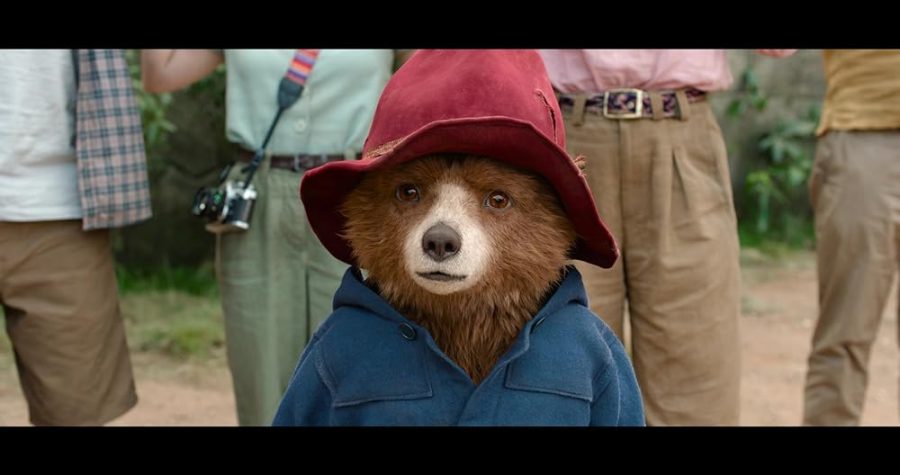
Paddington in Peru is the third installment in the Paddington film series and the first to occur most predominantly outside of England. The Paddington series follows the great animation history of blending live action with animation, blurring the lines of fantasy and reality, and creating a magical world where anything is possible and acts of kindness and a marmalade sandwich can move mountains.
The first film finds Paddington setting off for London when his Aunt Lucy moves into a Home for Retired Bears. She sends him off with a tag around his neck like the children being sent in the trains from the Blitz, reading “please look after this bear, thank you.” Mary Brown (played by Sally Hawkins in Paddington and Paddington 2 and taken over by Emily Mortimer in Paddington in Peru) sees him at the station and is the one to bring him into their family and give him his name after the station. Paddington in Peru begins with Paddington (voiced by Ben Whishaw) being summoned back to Peru because Aunt Lucy (voiced by Imelda Staunton) isn’t doing well. The entire Brown family, and Mrs. Bird (played by Julie Walters) goes with him, setting up the promise of his new family meeting the one that raised him. Only the audience is already aware that the Reverend Mother (played by Olivia Colman) at the Home for Retired Bears is up to something. So, it comes as no surprise that when the Brown’s arrive in Peru, Aunt Lucy is nowhere to be found and Paddington and company must go on a dangerous mission to find her.
There is a lot of kindness and forgiveness in the Paddington films. When push comes to shove, Paddington will give a “hard stare,” but if a character shows even an inkling of repentance, he is more than willing to bury the hatchet. That is shown in multiple instances in Paddington in Peru, like when he offers Hunter Cabot (played by Antonio Banderas) entrance to something after just running from him to keep him out after Hunter makes a change, and then the post-credit scene with Phoenix Buchanan (played by Hugh Grant).
The first Paddington film did a good job of balancing the family dynamic between all the different Browns and Paddington and letting each one have a moment with him to form a familial bond – BUT that first scene with Mary and subsequent scenes created the core relationship, the heart. Sally Hawkins did a wonderful job of creating a connection between Paddington and the Brown family, so it was going to be challenging for another actor to step into the role. One that Emily Mortimer took up with aplomb. She slipped into the role of Mary in a film that relied on her and her character to tie the emotional weight back to that early moment from the first film. Her performance is not the same as Sally Hawkins, and I would not want her to mimic it, but it feels like they are leading the characters from the same underlying warmth and that made the transition relatively seamless.
Each Paddington film has been a little more musical than the last, the first film had a diegetic song performed by street musicians that played over the montage of Paddington discovering the city and some non-diegetic needle drops. Paddington 2 had a full musical number for the end credits performed by Hugh Grant’s Phoenix Buchanan and other inmates. While it is completely over the top, it still felt grounded in the established Paddington world. Paddington in Peru has a musical number in the film itself performed by Olivia Colman’s Reverend Mother when she receives news that Paddington is coming to Peru. I love a musical, I come from music theatre, but I liked the musical rules that had felt established in Paddington, and this felt like it broke them because if characters could always break out into song, it feels like there are plenty of other characters that would have done so before. I can give it the benefit of the doubt as she was maybe doing her interpretation of a nun re: The Sound of Music and thus her musical number. To know for certain if this was a character choice or a change in direction, we’ll have to wait for further Paddington adventures.
It’s unclear, should there be future Paddington films, if the cast would remain the same. While this film cemented the familial bond between Paddington and the Browns, the cast change from Hawkins to Mortimer showed that as long as the heart of the story remains true, the films can bear cast changes. It is well known that Colin Firth was originally cast to voice Paddington but could not find the voice for the bear and stepped back, which is how the role eventually went to Whishaw.
Paddington in Peru is currently in theatres.
© 2020-2025. UniversalCinema Mag.
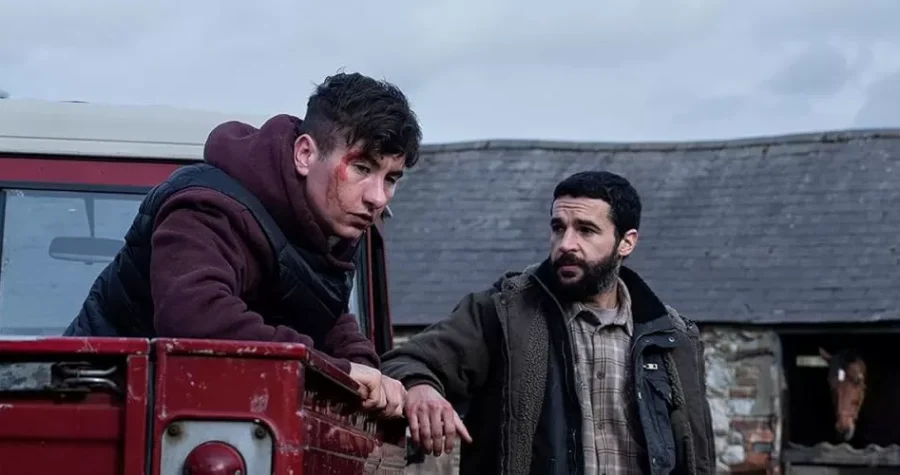
Every so often, a film will be released that is essentially a collection of short films. In film school, we only watched Martin Scorcese’s “Life Lessons” from New York Stories. Sometimes, these anthology projects will have a little story overlap, a character or thread that connects them. While not a short film anthology collection, Krzysztof Kieślowski’s Three Colours trilogy notably does this with minor background characters/action in Blue and White, but in Red, you see the convergence of the characters from all the films. However, the films can still be watched independently without missing context. Freaky Tales weaves a little closer with its interlocking stories, and while the first three stories can be enjoyed individually, the fourth builds on the knowledge of the previous tales.
All the Freaky Tales are interwoven, and you get this sense as soon as you tap into the second track of the mix tape, and the entry point is the same place as the first, only from a new character’s perspective. It is very pulpy and has the style of the late 80s and early 90s TV (think Tales of From the Crypt, Are You Afraid of the Dark?, and Goosebumps) fitting of its 1987 setting in Oakland, California. The first short centers on a bunch of punks who are targeted by some neo-Nazi skinheads and are going to fight back. It’s a simple punching Nazis story with budding romance at its heart (between two of the punks, not across enemy lines), the second short involves two female rappers (Barbie played by Dominique Thorne, and Entice played by Normani) who get offered the chance to rap battle Too $hort (played by DeMario Symba Driver but, the real Too $hort is a producer on the film which derives its name from his album, he also narrates), and after overcoming a little imposture syndrome and introducing a concept that comes up later, they tear it up on the stage. These first two tales end well for our protagonists. They don’t suffer significant losses and they get their desires. When we enter the third track, most audience members will be keenly aware they already caught a glimpse of this protagonist in the first track, as he’s played by Pedro Pascal. Pascal plays Clint, an enforcer for a boss, who is revealed to be the sleazy cop (played by Ben Mendelsohn) who harassed Barbie, but he’s supposed to be out on his last job. And then someone from his past comes back and, while threatening him, accidentally kills his pregnant wife. With nothing to lose, Clint wants out. But his daughter survives by a miracle, Mendelsohn’s character tries to use it against him, but Clint holds strong as we go into the final track, which is the wildest track of all.
The final track centers on the main character in Oakland’s history on the night in question when the film’s main events happen, May 10, 1987. On this night, Eric “Sleepy” Floyd set an NBA record by scoring 29 points in one quarter and 51 points in the game to help the Warriors take Game 4 in the playoff series against the Showtime Lakers. But while he is winning the game, his house and many of his teammates’ houses are being robbed. While Floyd was a hero to Oakland that day, the rest of the track is pure fiction. His house was not robbed, and so no one in his family was hurt as a result. So, while Floyd was a hero in Oakland for what he did on the court that night, he was not the sword-wielding, justice-dispensing badass that wraps up the tales. But links like Sleepy Floyd and Too $hort are the things that that ground this film in Oakland and give it a distinct sense of time and place despite the supernatural or fantastical elements.
In his limited screen time, Tom Hanks makes a memorable impression as the video store guy trying to recommend the top five underdog movies of all time to Clint. Though, in classic cinema style, he only teases Clint and the audience with number one, the filmmakers (writers and directors Ryan Fleck & Anna Boden) leave it up to audiences to do the leg work to get the answer.
Freaky Tales is in cinemas now.
© 2020-2025. UniversalCinema Mag.

Peaceful green forests are streaked with sunlight, giving the air a golden colour. A scruffy-looking man, Ion (Gabriel Spahiu), enters the field. He mumbles profanities as he picks up empty plastic bottles and cans discarded in nature. A huge, colourful dinosaur appears next to the man, moving and making noises. For a second, the viewer is transported back in time to Jurassic Park, then everything becomes clear: the man is walking through a deserted theme park. He talks to a velociraptor, dives into the half-shelled egg of a diplodocus, and smokes a cigarette next to a spinosaurus. Before retiring to his hideaway, Ion’s day continues through the tables of the city centre’s outdoor cafés. There he asks the customers for money. Many are annoyed by his presence and give him some change, only to get rid of him, to make him disappear, as if his presence were ruining the image of the historic city. There is so much dissonance in this first sequence to promise what is yet to come: an alienating journey of redemption through guilt and hypocrisy that will leave you shaken from head to toe and with many questions in your head. Kontinental ’25 by Romanian director Radu Jude starts with one of the most astonishing opening scenes of this 75th Berlinale, where it premiered on Wednesday and is competing for the Golden Bear.
Orsolya (Eszter Tompa) is a bailiff. Her job is to evict Ion from the basement of a historic building bought by a German investment fund that wants to destroy it and replace it with a boutique hotel. When she arrives, Ion is not ready to leave, although she has given him an extension and even organized a van to move his belongings. Ion is given another twenty minutes to collect his things, and Orsolya and the law enforcement guards leave to get a coffee nearby. When they return, Ion is dead, having strangled himself by wrapping a metal wire around his neck and tying it to the radiator. Orsolya’s legal innocence is immediately declared, but guilt and remorse begin to assail her, as sexist and racist slurs on social media do when it is discovered that she is of Hungarian origin. Orsolya is so affected by the whole affair that she decides not to go with her family to holiday in Greece and stay at home to reflect on her life and “make some decisions”. In the days following Ion’s suicide, Orsolya meets with her cynical mother (Annamária Biluska), a good friend (Oana Mardare), a Zen ex-law student (Adonis Tanta), and an Orthodox priest (Serban Pavlu) to talk about what has happened. With each of them, she seeks absolution rather than honest exchange and confrontation.
In 2021, director Jude won the Golden Bear for Bad Luck Banging or Loony Porn, about the moral, and not only, the trial of a teacher whose homemade sex tape is leaked on the Internet. As director Jude put it at the premiere’s press conference, Kontinental ’25 is also a dramatic comedy “about a moral crisis, and I usually hate that kind of film, but I hope this is interesting because it is out of place” and “there is a comic side to everything”. Director Jude goes on to argue that issues such as gentrification, inequality, racism and sexism should be approached “from the field of economics and history, … and not from metaphysics”, as Orsolya, the protagonist in this film, actually does. In her life, she is at a very simple and obvious material crossroads. Through her work, she takes from the poor to give to the rich, and she could just stop, but she doesn’t want to. She refuses to face up to her responsibilities. Instead, she seeks empathy and solace. This is most evident when, without thinking, she donates 500 euros to a charity that takes care of a Roma family, or when she shows her friend how strong her sense of civic responsibility is by donating 2 euros every month to all sorts of charities. In post-communist Romania, money seems to fix everything, at least for those who have it. And those who don’t? Well, too bad, that does not seem to be Orsolya’s problem, although she is a good citizen and, at least to some extent, a compassionate human being, after all, she tries to avoid evictions in winter.
Kontinental ‘25 was filmed in just ten days. The sequences are shot from a fixed camera position, without changes in angle or depth, by Marius Panduru cinematographer and long-time collaborator of Jude. Articulated dialogues are interrupted by sequential plans of the city, its nature and architecture. Soviet-style apartment blocks alternate with contemporary skyscrapers and Austro-Hungarian buildings. The colours are vivid but realistic, as are the characters, who are incredibly lively but also resemble ancient archetypes. The mother, like all mothers, is the only one who seems to dare to tell Orsolya what she doesn’t want to hear. The friend is Orsolya’s mirror, because they live in the same comfortable bubble, and she is also looking for redemption for her cruel deeds. The former law student is a lost soul. He is an incredibly well-drawn symbol of a generation that has been screwed by its parents but is trying to hold it together by embracing neoliberal New Age bullshit and mindful nonsense. Yet he is also pragmatic enough to write his ethnicity on his delivery rucksack in order to be respected by aggressive drivers. The actions of every single character are very precise, there is nothing superfluous in Kontinental ‘25, not a word, not a shot, a bit like in early cinema. As Jude himself said, in this phase of his production, he is trying to go back to the Lumière, to the essential, “and it felt very liberating!”.
© 2020-2025. UniversalCinema Mag.

The Message, the latest feature from Venezuelan director Iván Fund, is a skillfully realized meditation on love, hope, and the unexpected families we build for ourselves. Taking a naturalistic approach to a tale that flirts with the supernatural, Fund gently draws the audience deep into a landscape that he is intimately familiar with. Shot entirely in his home province of Entre Ríos, this intimate road movie is reminiscent of many classic American travelogues (Paper Moon comes immediately to mind) even as it presents us with something wholly different and very much rooted in the Argentinian context.
Following the seemingly aimless journey of a young girl called Anika (Anika Bootz) and her mysterious guardians Myriam (Mara Bestelli) and Roger (Marcelo Subiotto), the film leaves much to the audience’s imagination. Anika, we are told, is a pet medium, born with the ability to channel the thoughts of animals. The trio makes a meager living roaming the countryside in their van, selling the girl’s services to anyone willing to fork over a few thousand pesos. Whether or not her abilities are meant to be genuine is left to us to decide, though Anika herself clearly believes in the authenticity of her gifts. Whether Myriam and Roger do is another matter entirely.
The sessions the group holds with the various pet owners they encounter are brilliantly realized, and the non-human casting in the film is truly out of this world. At the first house call we witness, for a sickly cat named Junior, Anika reveals that he has been spying on his mistress and eavesdropping on her alleged indiscretions. One of the greatest (and funniest) shots in the film
comes as the cantankerous Junior (a cat with star power to spare) subsequently spies on Roger and his owner from behind a kitchen counter.
The film is full of such clever tableaux, at times simply humorous, and at other shrewdly satirical, communicating incisive social commentary and speaking volumes about its characters and the world they inhabit, all without uttering a single word. Shooting in gentle tones of black and white, Fund and cinematographer Gustavo Schiaffino take impressive advantage of the tiny world contained within the group’s ramshackle van. Whether lingering on every perfectly chosen detail of its contents, or keeping the vista’s sprawling landscapes framed in its windows, they nestle us firmly in the world of this unusual little family unit.
The trio lives on the fringes, but not unhappily. They clearly share a great deal of affection for each other, and watch out for one another. Myriam and Roger, whatever their relationship to Anika may be, appear to be diligent guardians. We collect few clues as to how the group came together, but when we do, they tend to raise more questions than answers. I would happily watch an entire film just about Roger’s past as a traveling circus performer, but find myself most fascinated by Myriam, and just what her true connection to Anika really is.
We gain some clarity when the group arrives at a sprawling psychiatric facility to pay a visit to Anika’s mother, Eloísa (Bettania Cappato). At the gate, Myriam identifies herself as Eloísa’s mother, but refuses to see her, hiding in the van as Roger watches over the tender reunion. While it would certainly be plausible, Myriam’s habit of bending the truth makes it impossible for the audience to be certain of her real relationship to her young charge’s mother. Closer to the film’s conclusion, however, Anika has been wandering a field alone when she suddenly rushes back to tell Myriam what a (literal) birdie has just whispered in her ear. Eloísa loves her very much. Myriam seems moved, and her reaction, if somewhat perplexed, is a tender one. Roger looks to Anika with love and gratitude in his eyes.
As pleasant as it was to spend time in this meticulously constructed world, I kept waiting for some kind of conflict to arise. It never did. Despite the gorgeous photography, the engaging score, the faultless performances of its leads … I kept wishing for something more. Nevertheless, I look forward to what Fund comes up with next.
The Message premiered in competition at the 75th Berlin International Film Festival.
© 2020-2025. UniversalCinema Mag.

Sundance Prize Winner, Lemohang Jeremiah Mosese, pens a lengthy piece of personal poetry on a blank cinematic canvas, dreaming of his lost city, while his homeland struggles to recall the language of his dreams. In Ancestral Visions of The Future, he portrays a world beyond mere observation. He depicts the world of becoming. Since the very beginning, the expense of becoming blood appears in the different spots of the film, from meadows to the valley nestled into the water in the shape of a red fabric ribbon moving through the whole story, and we know that wound is going to hurt us, as he suffered from that hugely. His detailed poem resembles a requiem for death, as he wanders through the twilight of exile and belonging. He never serves a purpose on the silver screen but bewilderment in the frames of benevolent footages, symbols, and colours.
Ancestral Visions of The Future employs fragmentary storylines featuring a young boy, a market lady, and a puppeteer to examine the director’s childhood in the mountainous southern African nation of Lesotho and the exile that has characterised his adult life in Berlin. While the camera moves on the natural scenery, showing some ladies washing their clothes near the river, the narrator mourns with the first sentence of dislocating to a building confined to walls that never crumble. Since his mother is busy with her own achievements, the young boy stays with his grandmother. “We stayed behind with our grandmother: me, my brother, my uncle, and my cousins, seven souls bound together by blood and necessity,” the narrator said. He clarifies that their eviction from the only home he had ever known occurred when he was barely eight years old. But it was just the beginning of missing home.
Lemohang Mosese, Mosotho director and screenwriter, employs symbolic scenes to depict a young boy and an old man on land that requires planting and harvesting. Is it the stereotypical tale of father and son and the eternal earth of birth, death, and rebirth? The close-ups of youth and ageing portray the dual face of humans and the agony of farming via some slow filming techniques, like torturing in the moments to witness how hard our ancestors bear to pass on life to us—the generation of oblivion. The best description of the situation is what he reads: “We are no longer the earth dwellers; we are the material in the hand of a shaped world with cube building.”
From Berlin, all we see are a few marble statues and a brief glance at the European city that frames the depth of the narrator’s words: “In Berlin, a city sculpted from cold stone and steel, Baobab trees do not grow.” The philosophical reading of home is here in Europe, and the truth of origin is there beneath the land of ancestors.
Sobo, the martial artist, is one of the other important characters of the narrative. Dancing in a class while the sitting students are gazing at Sobo, we see a sentence written on the chalkboard: “God is good all the time.” For Sobo, the city is where people greet each other with subtle nods, not the buildings confining the unshaking walls. Here we see the huge flow of words coming through the scenes of streets, the puppet show, and the screaming mother in the market. Grasping them is like following a wild horse running in the meadow—never ever possible, so the best is to stand and see them as fast as time moves.
Lemohang Mosese, as he desperately strays from home and resides in a twilight between birth and death, explores the magic of forgetting and the path to remembering in cinema. Here, we deeply understand his personal philosophical poem on home, mother, father, and friend on the track of time on a land in which violence and warmth are living hand in hand, even after a father like Sobo sees the death of his sons or a mother in the market screams for her child. It seems the story of Lemohang Mosese’s ancestors and many others is the same narration of humans buried under the dust of time. But here we are, the grandchildren of necessity, to bring a new chapter of wisdom through the creation of cinema.
The home is gone, but Lemohang Mosese’s film Ancestral Visions of The Future, coupled with masterful cinematography, leaves something unforgettable in our hearts—something we may remember in our dreams, even if we forget the language of the dream. Similar to the cinematic poet Andrei Tarkovsky, Lemohang Mosese delivers his poetry with a louder and more severe tone, as if each word pierces your heart without causing any bleeding.
Mosese is a co-founder of Mokoari Street Media, a production business and artists’ collective that created Ancestral Visions of The Future in collaboration with Paris-based Agat Films and in co-production with Germany’s Seera Films. Established in Lesotho in 2009, it exemplifies the camaraderie that Moses asserts is gaining traction among his generation of African filmmakers, which he characterised as “the greatest currency we possess.” Ancestral Visions of The Future premieres in the Berlinale Special strand on 20 February.
© 2020-2025. UniversalCinema Mag.

Burhan Qurbani, the German-Afghan filmmaker who captivated audiences with his remarkable film Berlin Alexanderplatz—featured in the main competition of the 70th Berlin International Film Festival—returns with his latest work, No Beast. So Fierce. Premiered in the Berlinale’s special section this year, this film crafts another mad, chaotic world. Though it doesn’t match the power of his previous work, it still showcases a filmmaker who resists conventional storytelling, striving instead to create a distinct cinematic universe unlike any other.
In No Beast So Fierce, Qurbani transposes Shakespeare’s Richard III into contemporary Berlin, once again portraying the sprawling metropolis as a key character in the film. The first act immerses us in this vast, intricate city, where Shakespeare’s tale of power and betrayal transforms into a brutal struggle between two immigrant families controlling Berlin’s underworld. From the opening moments to the very end, an intense, terrifying tension pervades, confronting the audience with an unrelenting atmosphere of violence and horror.
The film begins with bloodshed—murders within and between the rival families. Soon, we are drawn into the complex dynamics of two brothers and their sister, Rashida. In a strange scene, captured with a camera that weaves through the crowd, an even more ominous conflict emerges: Rashida’s ambition to seize power from her older brother. As the film unfolds, it becomes clear that the tensions within the family are even more savage than their feud with their rivals.
At this point, femininity merges with Rashida’s ruthless quest for power, gradually leading to an escalation of explicit violence, which dominates the second half of the film.
The gritty realism of the first half—set in the everyday locations—morphs into an entirely surreal narrative in the latter part. The story abandons the urban landscape for a grim, decayed tower, a setting that better reflects the dark, twisted nature of the characters. Rashida’s inner world progressively manifests outwardly, and the familiar cityscape gives way to the ruins of human morality. Here, characters will stop at nothing—even fratricide—to achieve their aims. And then, the horror intensifies further: infanticide. Rashida orders the murder of her brother’s children, a command so monstrous that even her most loyal handmaiden refuses to carry it out, choosing to abandon her instead. Yet, Rashida finds another way to achieve her goal. Initially, it seems the filmmaker will refrain from depicting the children’s murder, allowing it to be conveyed through a killer’s confession. But we soon realize that Qurbani does not shy away from the full horror—he returns to the scene, showing us the gruesome act in all its brutality (undoubtedly the most distressing moment of the film).
Qurbani has no reservations about displaying violence. In a film fundamentally about brutality, he deliberately forces the audience to confront the darkest aspects of his characters. Even Rashida’s romantic and sexual relationship with a woman from the rival family does nothing to soften the film’s tone; rather, it serves only to propel the story toward its inevitable, nightmarish conclusion. The filmmaker constructs a hellish world of womanhood where love, sex, and traditional femininity hold no meaning. In such a world—devoid of affection and tenderness—there is no escape from violence, humiliation, suffering, and, ultimately, death.
Once again, Qurbani makes extensive use of music, which dominates most scenes. Likewise, his signature camerawork is ever-present—dynamic and fluid—heightening the tension of each moment. The camera not only intensifies the scene’s energy but also draws closer to the characters, penetrating their turbulent inner worlds.
© 2020-2025. UniversalCinema Mag.

 By Cara-Lynn Branch
 By Elias Bovard
 By Giulia Dickmans
 By Mo Abdi
Recent Comments