 By Amir Ganjavie
© 2020-2025. UniversalCinema Mag.

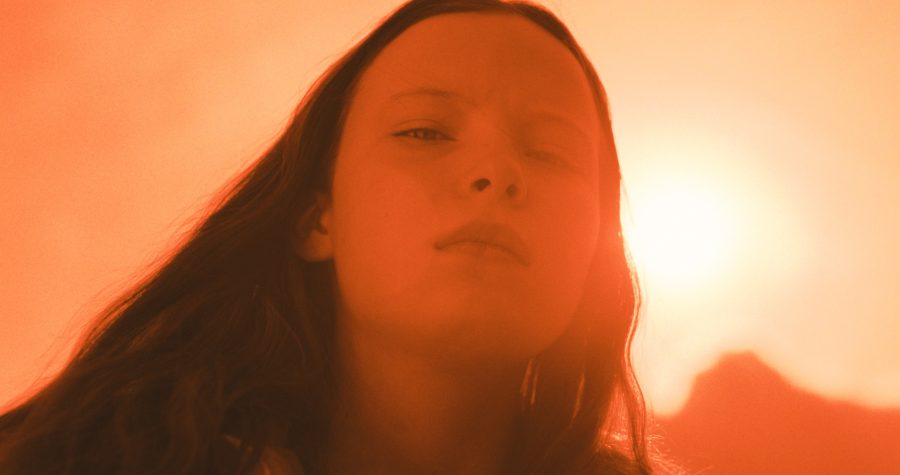
The Berlin competition film What Marielle Knows presents a compelling philosophical and psychological inquiry into the nature of truth and deception. The film follows Julia and Tobias, a seemingly perfect couple whose lives are upended when their daughter, Marielle, suddenly develops telepathic abilities, allowing her to perceive every thought and action of her parents. This newfound power disrupts the fragile balance of their relationship, revealing hidden secrets that threaten the cohesion of the family unit. The film raises profound ethical and existential questions about whether absolute truth is always desirable and whether deception can sometimes be a necessary component of social harmony.
I was once told a story about an elderly couple who had been married for over fifty years. One day, the husband found an old box hidden deep in the attic, containing letters his wife had written but never sent. Curious, he read through them, only to discover moments of doubt, hidden affections for another person, and worries she had kept secret to avoid hurting him. He was devastated but also understood that those secrets had allowed their marriage to endure. In What Marielle Knows, Marielle’s telepathic ability mirrors this dilemma—knowing everything about another and never telling lies might not always bring comfort; rather, it could unravel the relationships we hold dear.
This theme has a rich tradition in philosophy. Plato famously introduced the concept of the “noble lie” in The Republic, arguing that certain falsehoods, when strategically employed, can serve the greater good of societal order. Conversely, Immanuel Kant, in his deontological moral framework, vehemently opposed lying under any circumstance, asserting that truth-telling is a categorical imperative regardless of the consequences. Kant’s rigid stance, however, has been critiqued by later philosophers such as Friedrich Nietzsche, who viewed the very structure of human existence as one built on layers of deception and self-deception. Nietzsche argued that truth is often constructed rather than absolute and that illusions are sometimes necessary for human flourishing.
In fact, in every act, we engage in a selective forgetting of our true selves to conform to social norms. We shape our identities to fit the expectations of others, often presenting an idealized version of who we are. This performative nature of human existence necessitates occasional deception, as absolute honesty can sometimes lead to personal or social ruin. Throughout history, individuals have strategically withheld information or altered their narratives to avoid unnecessary conflict, embarrassment, or even harm. In personal relationships, complete transparency about past thoughts or fleeting desires could damage bonds that otherwise thrive on mutual understanding and selective ignorance. The tension between authenticity and the need for concealment is, therefore, not only a moral dilemma but an essential part of navigating human society.
What Marielle Knows effectively dramatizes these tensions. Marielle’s ability to perceive every hidden action and unspoken thought places her parents in a precarious position, where the very fabric of their relationship is at risk of unraveling. The film suggests that some secrets, while ethically questionable, are necessary for maintaining personal and social stability.
At the same time, What Marielle Knows is a surprisingly funny film, filled with moments of humor that had audiences in the theater laughing. The film skillfully balances philosophical depth with an honest and entertaining portrayal of human flaws. The humor does not dilute its message; rather, it enhances it, making the philosophical reflections more accessible. The actors’ performances contribute significantly to this, creating a believable and deeply human world.
The filmmakers have constructed a story that resonates because, as human beings, we all recognize that none of us are perfect—we are flawed, contradictory creatures, often concealing our real passions and emotions while presenting a curated version of ourselves to the world.
By weaving a gripping narrative with rich philosophical underpinnings, What Marielle Knows stands out as a thought-provoking and entertaining meditation on the nature of truth.
© 2020-2025. UniversalCinema Mag.
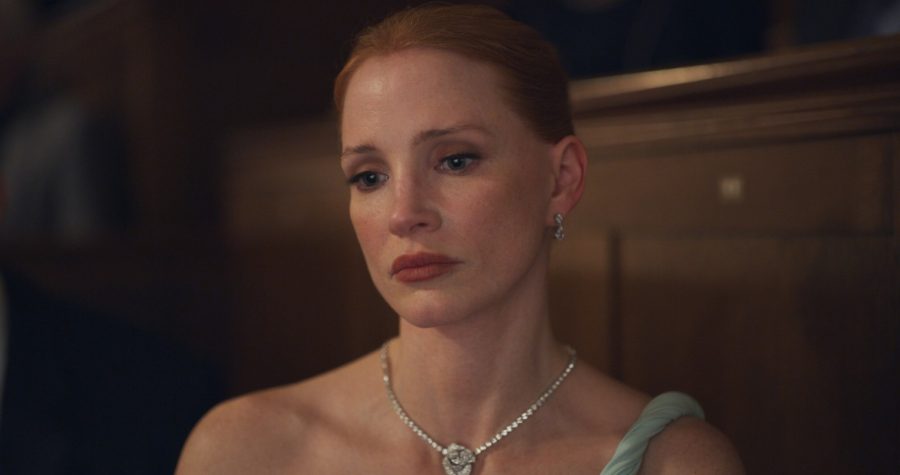
Being equal, isn’t it the most difficult thing for a couple to achieve, if at all possible? Isn’t love ultimately about balancing power and control, desire and trust, over someone else’s body and mind? And how can that get out of hand when different economic and legal statuses begin shedding feelings? Michel Franco’s Dreams premiered at the 75th Berlinale and competing for the Golden Bear, wrestles with these very questions. The Mexican director reunites with leading star, Jessica Chastain, after their collaboration on his previous tender film Memory (2023). In Dreams they deliver a fierce portrait of a neo-colonial love story, a Pocahontas of the Trump era.
It’s night, in the middle of nowhere. A truck is swaying as people scream for help from inside. The migrants are trying to survive with what little air and space they have. Suddenly, when most of them appear to be dead, the doors open and they emerge as cannon fodder from the bowels of this metal monster. A young man, whose physicality is immediately striking, separates from the group and staggers forward into the unknown. His first stop is a diner on the highway, where he searches for water. There, a Mexican waitress on shift kicks him out as if he were a dog, only to pick him up a short time later, take him home, and offer him a meal and a shower. His journey continues to San Francisco, to a chic neighborhood. Knowing where the spare keys to the house are hidden, he easily lets himself into a sterile yet luxurious apartment overlooking the valley. After raiding the fridge, he installs himself in the master bedroom. His naked, sculpted buttocks winking at the audience from between the expensive sheets. A woman comes home and slips on top of him. Two people in love, is the first impression. But reality is there to confront the romantics. The young man is Fernando (Isaac Hernández), a young ballet dancer from Mexico City. The older woman is Jennifer (Chastain), a wealthy philanthropist from San Francisco. So close but yet so distant. The two met in Mexico City, as Jessica is the financier of the art academy where Fernando used to work. There they bloomed. Now, in San Francisco they dry out.
The differences between Jessica and Fernando couldn’t be more obvious: age, class, race, gender. Yet they seem to love each other. Asymmetry is only a weak euphemism for the unequal power relations that bind them together. The inequalities between the two are exacerbated by family and social prejudices. “We were happy in Mexico”, Jessica says at one point, implicitly meaning “where I had everything under control”, keeping Fernando in a golden cage and coming and going as she pleased. This game of presence and absence, of appearing and disappearing, becomes a weapon that the two take up in turn. Fernando has his own dreams and desires, as we learn when he talks about his former life in New York. He left Mexico to be with Jessica and to fulfill her dreams, mainly erotic ones. But he is also eager to seize any professional opportunity, which, because of his status as an undocumented migrant, will lead to his ruin. Fernando’s body is symbolically his greatest asset, but also his greatest obstacle, and ultimately his downfall. The key to love and acceptance, with Jessica as well as with his fellow dancer and choreographer, but also the evidence of his “crime”. In today’s USA, just being an undocumented migrant makes you a criminal. Premiering just weeks after Trump’s re-election, Dreams invites the public to reflect on what the United States has become. The land of dreams and promise, founded on the melting pot of migrants from all over the world, is now all about “America first” and “Make America great again”. Yes, but what “America”? White US.
Colonial history has never been more evident. Jessica’s extreme sexualization of Fernando’s racialized body is only the most obvious sign of a more complex relationship of subalternity between the two. How she provides him with money, shelter, clothes, and food on her terms emphasizes the dependency. When she asks him not to speak Spanish with his countrymen in her presence, the mission of civilization is in full swing. She is, after all, a philanthropist, full of love and good intentions, but very unidirectional. Even the obvious signs of loneliness and neurosis don’t make it easier to sympathize with such a manipulative egocentric character, incapable of empathy. When Fernando shows any desire, it is immediately suppressed or ignored. He is here to please, as a pet, and Mexico is the ultimate place for that. In Jessica’s imagination, as in that of the US people, it is the place of good food, sun, color, and desire. There, Jessica suddenly wears airy, embellished dresses instead of monochrome, geometric ones. The house is full of colors and plants, very different from the ascetic one in San Francisco. Sometimes music plays in the background and friends come over to visit. Director Franco manages to convey the overarching dichotomy that dominates the protagonists’ lives through small, piercing details, in which the senses also play an important role. DoP Yves Cape provides the images for this detailed investigation of the development of this historical, anthropological, and sociological relation between the US and its closest neighbor, Mexico, at a time when reflection on power relations among the two is much needed.
© 2020-2025. UniversalCinema Mag.
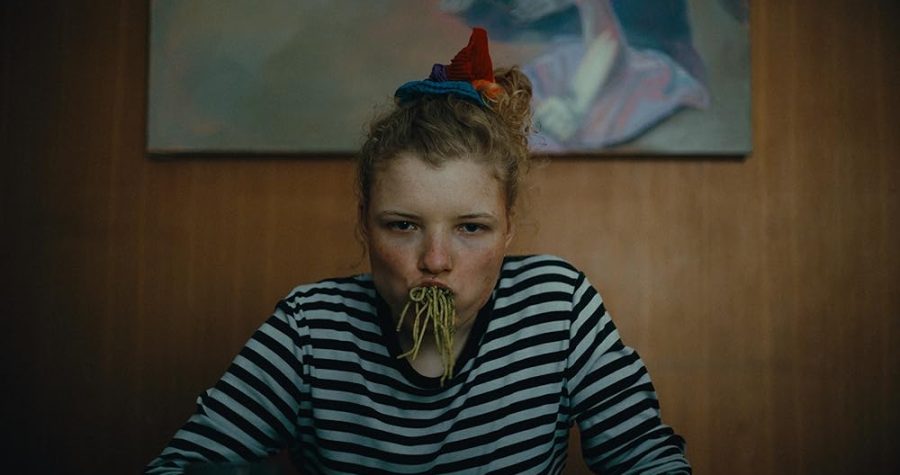
Festival programmers work hard to build lineups that fit their sections. It’s part of the trust they build with audiences who come with expectations of what to expect from a particular festival or section. Attending a new festival, part of the experience is figuring out what to expect and the promise of the sections. Perspectives is a section at Berlinale that you can get a sense of from its name, but more precisely it is for exceptional emerging filmmakers from around the world who have bold and fluent cinematic language and offer arresting perspectives and new ways of seeing the world. Writer and director Florian Pochlatko’s How to Be Normal and the Oddness of the Other, which ask the questions, “What is normal? Who gets to decide who is normal?” as Pia (played by Luisa-Céline Gaffron), a 26-year-old freshly released from a psychiatric hospital, struggles with identity as she struggles to try to hold onto to who she was as she and world have changed. The film is centered in perspective. While Pia is the main perspective, the film does a good job of weaving in other perspectives of those in Pia’s orbit, particularly her parents. These additional perspectives are an important layer because in a film that asks questions rooted in “Who gets to decide what is normal?,” it’s important to see that characters without diagnosis also struggle, can get anxiety, or fail to react appropriately.
The aspects of the film that captured me the most were the editing and composition. Early in the film, unprompted or revealed until much later, you are dropped into a scene from a TV drama, creating a stark contrast from the previous shots. This early use of different looking works, paired with a monologue centered on the world ending and how Pia slips through time, does a good job of setting up a visual sense for the film. However, it is in the sequence after Pia sees her ex with his new girlfriend (who looks a lot like her), where the shots cut back and forth between locations with sounds as she spirals and even as a viewer you feel like you are slipping through time with her until her mom wakes her and it’s the following evening. This reminded me of the TV series Big Mood (recently renewed for a second season), where Maggie, who is bipolar, lost time at an important time for her friend Maggie.
For a good portion of the film, Pia is going through crisis. Her parents don’t realize she’s going through crisis and someone will be quick to condemn them as bad parents, but charitably I think what so often happens is people hope their loved ones are doing better than they are until they can’t deny it. Pia’s young neighbour is the only one that seems to be able to get through to her when she’s in crisis because he still treats her like she’s normal. This is what she’s been seeking and hasn’t been able to feel on or off her medication.
The film also touches on the tragic reality that people with mental health issues often face police whose training has in documented cases resulted in injury or death. SPOILER: While the film briefly makes it look like the latter, it is thankfully the former and ties it back to slipping through time.
The film also features an impromptu tap dance scene, keeping you on your toes.
How to Be Normal and the Oddness of the Other World had its World Premiere at the 75th annual Berlin International Film Festival in the Perspectives section. Paris-based sales company Alpha Violet has acquired the international sales rights for the film.
© 2020-2025. UniversalCinema Mag.
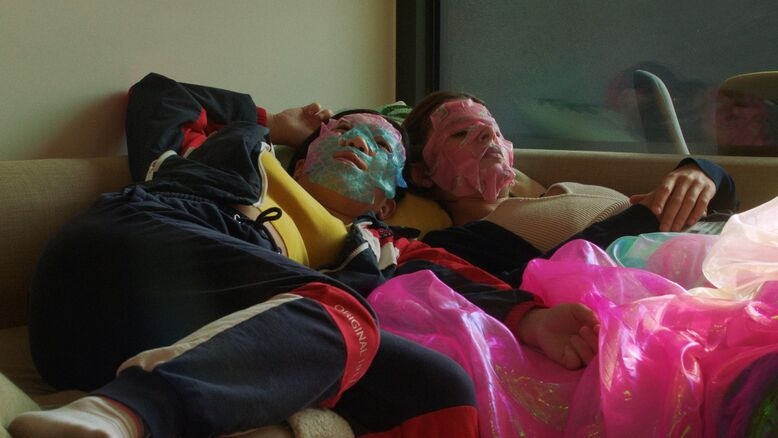
Fwends, the debut feature from Australian director Sophie Somerville, takes a meandering look at the complexities of friendship and the existential struggle that so often defines the transition from adolescence to adult life. Taking a largely improvisational approach (the film’s leads are credited as co-writers), Somerville paints a loving portrait of the city of Melbourne as two old friends banter and bicker their way to a better understanding of each other, and themselves.
When Em (playwright Emmanuelle Mattana), arrives in Melbourne for a spontaneous weekend trip to visit her childhood friend Jessie (Melissa Gan), they seem an unlikely pair. Em, a lawyer based in Sydney, is rigid, uncomfortable in her own skin, and driven to monologue incessantly about the toxic work culture at her firm. Jessie, on the other hand, is the kind of girl who earnestly hugs trees in the park. Or maybe more accurately: the kind of girl who wants you to believe that she’s the kind of girl who earnestly hugs trees in the park.
Chattering away in a familiar shorthand, their conversation is tinged with that affectionate but awkward quality typical of old friends who have grown apart and, in many ways, become strangers to one another. As the gentle and flighty Jessie does her best to play tour guide and show her friend a good time even as she copes with the fallout of a recent breakup, Em seems frustratingly determined to lose herself in a litany of complaints. When Jessie finally tires of the attitude and confronts her, Em reveals the real (and maddeningly predictable) reason for her unexpected visit. Her boss made a pass at her, and rather than offering support, her female mentor simply laid into her for failing to stand up for herself. Conflicted and feeling trapped in a life she’s worked incredibly hard to build, she felt compelled to run to the embrace of a friendship that existed long before she had to deal with any of these complicated grown-up dilemmas.
To be sure, an interesting (if occasionally grating) aspect of the film is the way that these two grown women seem to revert somewhat to their childhood personas, nattering away in high pitched babygirl voices, building forts and playing with toy microphones like they’re at an overgrown adolescent slumber party. At one point, as they stand draped in luminescent chiffon fabric on Jessie’s balcony, their conversation turns once again to serious matters. For a moment feeling safe in this makeshift facsimile of childhood innocence, Em and Jessie trade revelations and deeply held insecurities about their very adult lives.
Shortly thereafter, the narrative takes a sharp turn when Jessie gets them locked out and the pair makes the interesting choice to score some MDMA and stay out all night rather than simply book a hotel room. Taking advantage of their drug-fueled adventure to indulge in a veritable smorgasbord of mishmashed cinematic motifs, Somerville’s film loses some cohesiveness, but gains momentum. As the girls careen about the city and their inhibitions melt away, Jessie reveals herself to be far darker, more complicated, and far less empathetic than she pretends to be. Perhaps it’s no surprise they drifted apart after all.
In the morning, when the pair finally manage to sneak back into the apartment, Em reads aloud as Jessie snoozes peacefully next to her. The passage she reads is about love, friendship and the complex but ultimately redeeming nature of humanity. The scene appears intended to impart a more profound meaning to the events of the film, but feels slightly contrived and far less authentic than its actual conclusion.
In the film’s final moments, Jessie walks Em to the metro and they part awkwardly, in an exchange that will feel genuinely familiar to most of us. There is no dramatic moment of rapprochement to be witnessed, nor do we sense that the relationship between them has been forever changed. It seems unlikely that they as individuals are going to change anything about their lives or how they move about the world. It feels incredibly true to life, and serves as a fitting capstone to Somerville’s minor mumblecore opus.
Fwends premiered in the Forum programme of the 75th Berlin International Film Festival.
© 2020-2025. UniversalCinema Mag.
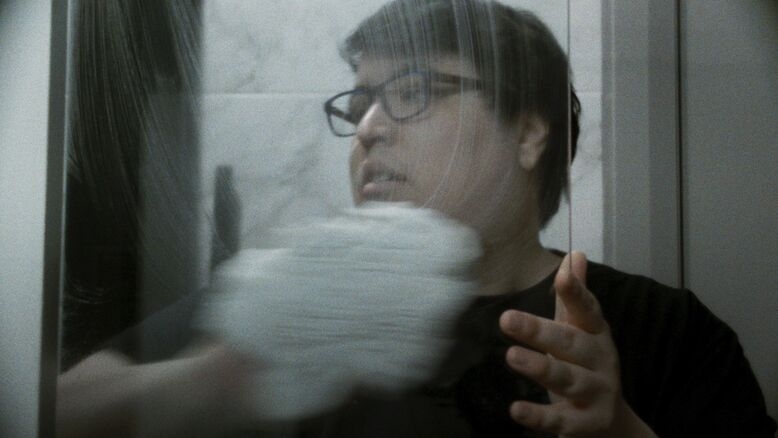
Paul, the latest documentary feature from prolific Quebecois director Denis Côté (Curling, Vic + Flo Saw a Bear) takes a detached and sympathetic look at one man’s idiosyncratic corner of BDSM culture. Featuring a variety of whips, ropes … and donuts (don’t ask) wielded by a panoply of friendly neighbourhood dominatrixes, it would be difficult to imagine a more fitting venue for its world premiere than the venerated Berlinale.
Visually striking from the first frame, Côté’s film takes a deep dive into the life and mind of the titular Paul, or as he’s known on Instagram: Cleaning Simp Paul. At first quite unassuming, we observe as he makes his way through his seemingly mundane routine. Trudging around the snowy streets of Montreal. Editing photos and videos on his computer. Tidying up around the house. Nothing much to see here. Or so it would seem.
Our first clue as to why Côté has chosen this rather ordinary man as his subject arrives with a glimpse into his online persona. In an effort to heal himself from a long depression and free himself from the shackles of social anxiety, Paul has taken to documenting his self-help journey online. Taking a rather unconventional approach (alongside more expected wellness content), he channels his energy into cleaning the houses of dominant women (largely pro bono) as a kind of therapeutic release.
Following along as he makes his rounds, we learn that despite having been banned by many dating apps mistaking him for a professional cleaning service, Paul has managed to accumulate a roster of about fifteen “bossy ladies” he serves on a rotating basis. Despite his drive to serve these women, Paul does not consider himself a full-fledged member of the BDSM community – a claim that feels increasingly odd as we watch one woman after another whip, ride, or debase him in exchange for his services.
Maintaining a curious but objective gaze, Côté offers up a fascinating window into his interactions with these women, as often caring and familiar as coldly transactional. While the relationships are certainly unorthodox, they clearly add something to Paul’s life, pulling him from the depths of depression and solitude that he experienced for so long. Many of the women he interacts with are clearly friends, and genuinely appear to care about Paul’s well-being. For each expected instance of debasement or punishment, there seems to be an equal moment of care: cutting his hair, teaching him a new yoga posture, or simply chatting with him amiably about his family life.
For Paul, perhaps the framework offered by his arrangements with these women simplifies the power exchanges hidden in more commonplace relationships, allowing him to feel more comfortable in his own skin. At one point, he mentions that his family has been trying for years to set him up with submissive Asian women in a wild misreading of what he actually seems to be looking for. Paul is clearly uninterested even in taking charge of himself, let alone anyone else. As one his ladies sits atop him, grilling him about his diet and exercise plans for the week like some sort of demented motivational coach, we start to understand how much Paul must need this. If serving himself will serve her, then perhaps that is all the motivation he needs. To be fair, it seems to have worked a charm. In his own way, Paul is actually kind of… thriving.
At the time of filming, Cleaning Simp Paul had amassed about 7500 social media followers (he now has nearly 10 000, putting him firmly in micro-influencer territory). Clearly connecting in some way with his growing audience, the introverted Paul finds he can no longer take refuge in complete anonymity, and the awareness that so many people are watching him begins to cause him some anxiety. Despite this, he obsesses over views, craving the validation that comes with the increased attention. When you get right down to it, in all of his (admittedly unusual endeavours), Paul simply seems to be seeking the same thing that most of us are: connection. And what could be more relatable than that?
Paul premiered in the Panorama Dokumente programme of the 75th Berlin International Film Festival.
© 2020-2025. UniversalCinema Mag.
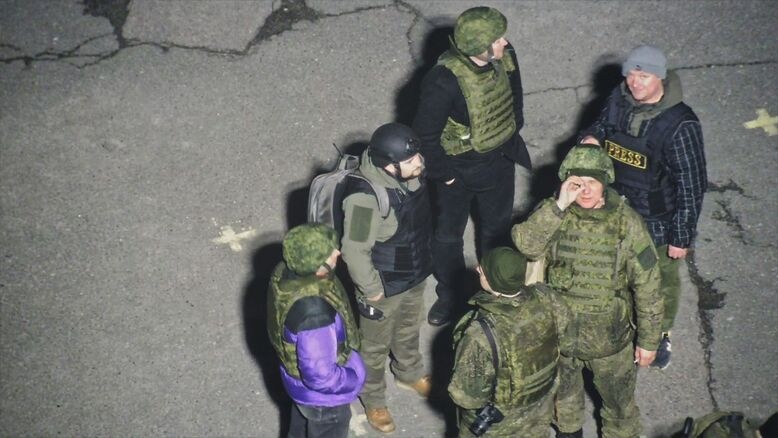
In the dawning hours of February 24, 2022, a shadow crept across the storied land of Ukraine as Russian forces cast their grasp upon the Chornobyl Nuclear Power Plant. It was a place haunted by the echoes of history, now once more thrown into the unforgiving eye of conflict. As the invasion unfurled with relentless precision, these soldiers, bound by a mission to reach Kyiv a mere hundred miles distant, transformed the desolate site into a strategic military bastion.
The territory, fraught with spectres of past radiance and ruin, became a tableau of military machinations caught by the unblinking gaze of CCTV cameras. These mechanical sentinels documented the unfolding drama—a sombre chronicle of the occupation that stretched into weeks marred by the spectre of radioactivity.
In an evolving tapestry of video, Oleksiy Radynski, who feels documentary is in his blood, immerses his audience in a stark narrative—a horrifying symphony of silent military logic. In the heart of Chornobyl, history’s grave whispers reverberate, with each image serving as a stark testament to the perils wrought by human hands. Proof of the gravity of events captured during this tumultuous period lies in the vast trove of footage amassed by the director, culminating in nearly 1,000 hours of material. This expansive archive offered a comprehensive canvas from which the documentary was meticulously crafted, allowing the director to piece together a harrowing narrative thread and shed light upon the occupation at Chornobyl.
Each footage serves as both evidence and testament to the unfolding drama, preserving moments of tension and revelation in a haunting testament to the times. Radynski has finished two films on the Russians in Chornobyl. In his short Chornobyl 22 (2023), he used video from an unidentified source who had captured the Russians filming the nuclear plant.
As the film unfurls and the screens flicker to life, emerging from a shroud of stillness, a thought may whisper in the mind: “What rudimentary filmmaking this seems.” Yet, a second glance reveals the deeper story etched within each frame—a desolate, unyielding landscape brushed with the indifferent passage of Russian tanks and troops entering the realm of Chornobyl with unsettling nonchalance.
In this moment, something profound stirs within the heart: “Here lies the site of catastrophe past, and now, a new malevolence threatens to unfold.” You find yourself seated, transfixed before the surveillance screen, feeling the cold tendrils of empathy as they wrap around your soul. With each scene, you witness humanity’s repeated dance with oblivion, the persistent disregard for the unforgiving truths of existence. The austere footage transforms into a mirror, reflecting both the frailty and folly of mankind, as the echoes of history resonate anew within the silent confines of your observation.
At the film’s outset, a simple frame—a window—becomes the portal through which voices occasionally filter. Through this modest aperture, the world leans in to listen as a phone captures faint echoes of civilian life disrupted. These voices, tremulous and charged with urgency, speak of the depths of the assault, of structures crumbling under the weight of conflict, and of the countless refugees leaving to seek solace beyond the city’s perimeter. From this unique perspective, the window provides a profound insight into the human cost of war, as it unfolds in whispered fragments of desperation and hope. We can profoundly perceive the passage of time as it snows, turns dark, or transforms into light. Here we are in the eyes of God, observing his children through the lenses of CCTV.
The filmmakers aimed to give the collected historical events an audio life even while the raw CCTV material lay silently. Oleksiy Radynski worked with famed Lithuanian-based sound artist Vladimir Golovnitski for this challenging project, known for his emotive work. Golovnitski created a spooky soundtrack that gave the visuals an unsettling resonance, thereby accentuating the weight of the moments with layers of sound reflecting the uneasiness of the developing story.
At the 20th anniversary of Forum Expanded, which is part of the Berlin International Film Festival, the premiere of the Ukrainian film “Special Operation” by director Oleksiy Radynski would take place. “For me, it’s important that the premiere takes place in the Forum Expanded section, which combines experimental and political cinema,” says Radynski.
© 2020-2025. UniversalCinema Mag.
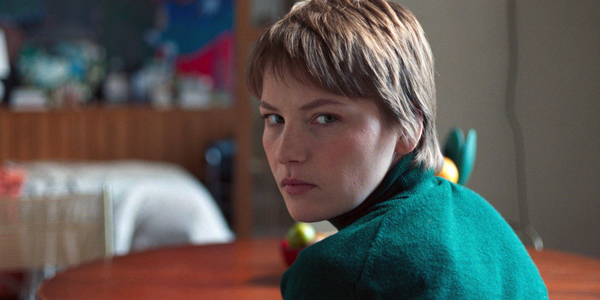
Mehmet Akif Büyükatalay returns to Berlinale with the World Premiere of Hysteria, he previously attended the festival with Oray, which won the Best First Feature Award in 2019. In both films, Büyükatalay explores themes of Muslim culture in Germany. Hysteria centers on the making of a film about an arson attack on German migrant residents in the 90s, however, during the production, the film-within-the-film’s director, Yigit (played by Serkan Kaya), uses migrants from a local refugee center as extras for a scene who discover that he burned a Quran for the film, leading to fiery tensions and conflict.
The opening scene does a lot of work as Büyükatalay does a good job showing the disconnect between the experience happening on set and that behind the monitors. Some lines in Act One elucidate the film’s theme, particularly when one of the extras, Mustafa, explains why he doesn’t like Yigit or filmmakers like him. He’s talking to Elif (played by Devrim Lingnau), and he says directors like Yigit “make films so they can have a clean conscience,” that people that look like him and Said (played by Mehdi Meskar) can only “play a victim or a terrorist.” He gets to the meat of the burning of the Quran; Mustafa himself isn’t religious but he recognizes that burning the Quran was meant to illicit a reaction. If you go back to that opening scene, when Yigit is speaking to these extras, who are refugees, he tells them not to act but react as if it was the real house after the incident and not a set, illustrating this is how he operates. Mustafa posits that filmmakers make a choice, “do [they] want to share something, or sell something?”
This is a film about who has the power to control narratives, and it plays that out repeatedly as the tensions boil in the aftermath of the filming when the tapes disappear. But the film also asks you to look into who gets to tell stories and what stories they choose to tell. Yigit, and most of the crew, like Elif, believe he’s making an important film. However, it looks at a specific act of violence that most Western audiences could watch and feel bad/sad about, but brush off as a thing of the past and not reflect on what is currently happening. Büyükatalay’s film is much more interesting than the film that Yigit was trying to make because within it we get a hint of perspective from all these characters as the conspiracy behind the missing tapes unfolds and blame is shifted.
Ignorance and a lack of curiosity in the subjects some filmmakers center their films on is also something the film touches upon. Yigit seems to have genuinely not realized burning the Quran was going to be problematic. So, you have to look back at his initial choice as being one done in pure ignorance, he was thinking of the characters and what they would have in their house when it got burned, and did his set accordingly, not considering what it would mean. Now, my read on Yigit as a filmmaker is that if he had known, he would have still done it because he wanted a reaction, it was why he hired extras that he believed could relate to the experience. This is tied to him being a filmmaker who wants to sell rather than share something. Someone truly connected to wanting to share the story and push for change would not just try to recreate the events to create an emotional reaction, they would try to get the audience to engage to make a change today. He would not need tricks like seeking people he believed could give a “real” reaction due to his belief of their shared trauma/experiences with the victims, but found a way to tie the themes of the film with current events in Germany (like Büyükatalay does in Hysteria). And he wouldn’t have needed to burn a Quran, and if he felt that it was important enough to see in the scene, he would have done a fake prop one.
Hysteria had its World Premiere at the 75th annual Berlin International Film Festival in the Panorama section.
© 2020-2025. UniversalCinema Mag.
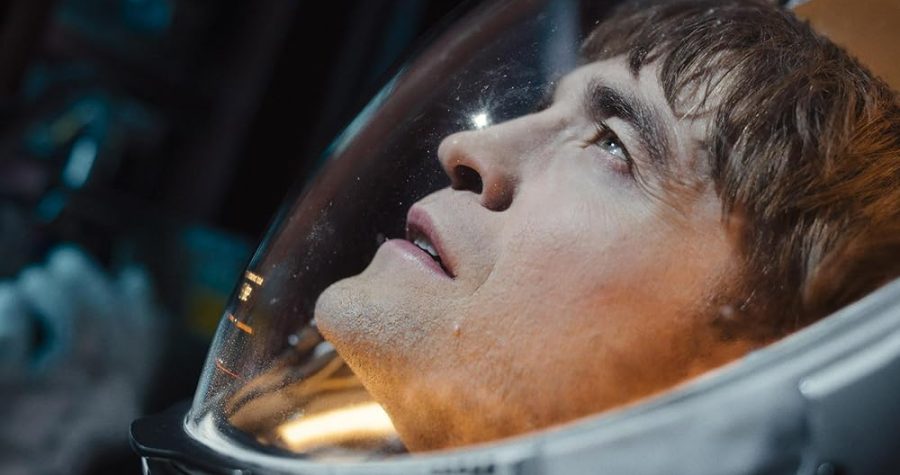
Premiering at the Berlinale, Mickey 17 is Bong Joon-ho’s latest foray into science fiction, delving into the ethical and existential dilemmas of cloning in a future where human labor is outsourced to space. The film follows a man who is repeatedly resurrected through cloning to perform perilous tasks, raising profound questions about identity, responsibility, and the unintended consequences of human progress. As the story unfolds, it critiques both the blind faith in technological advancement and the ecological consequences of human intervention, ultimately suggesting that nature’s logic may surpass human reasoning.
Within Bong’s body of work, Mickey 17 continues his exploration of dystopian settings and systemic critique, aligning with Snowpiercer (2013) and Okja (2017) in its engagement with the consequences of human ambition. However, unlike his sharp class commentary in Parasite (2019), this film shifts its focus toward the philosophical paradoxes of science, technology, and ecological survival. Initially framed as a celebration of progress—where cloning is positioned as a tool to extend human survival beyond Earth—the film gradually unravels into something far more cautionary. It is not simply about the triumphs of scientific achievement but about the moral and existential dilemmas that emerge when humanity attempts to outmaneuver its natural limitations.
At its core, the film explores the philosophical tension between human agency and systemic dehumanization. While the opening act presents religious and political opposition to cloning as regressive obstacles to technological progress, the narrative ultimately complicates this perspective. Rather than a simple endorsement of scientific advancement, the film suggests that unchecked systems—whether economic, political, or technological—can strip individuals of their worth. It is not merely ideological constraints that drive humanity to the stars, but also the same exploitative logic that devalues human life in pursuit of efficiency. By juxtaposing cloning with capitalist disposability, the film questions whether technological progress alone can lead to true evolution or merely reinforces existing hierarchies.
Yet, as the narrative unfolds, the very technology that was meant to secure human survival—cloning—becomes a dangerous force in itself, revealing a deeper, more unsettling contradiction. Is progress truly the answer, or does it inevitably bring about the conditions for its own undoing? The film subtly suggests that human reasoning is inherently limited in understanding the full complexity of nature. The natural world, rather than being an enemy to be conquered, holds an inherent logic that human beings often fail to grasp.
This brings the film into dialogue with a long-standing philosophical tradition that questions the nature of human progress. The idea that scientific and technological advancements do not necessarily equate to ethical or existential fulfillment recalls Rousseau’s skepticism of modernity—his argument that progress can just as easily enslave as it can liberate. Mickey 17 reinforces this perspective, showing that while cloning offers humanity an unprecedented means of survival, it also strips away fundamental elements of individual identity, agency, and moral responsibility.
Among the most thought-provoking elements of the film is its exploration of the ethical quandaries of cloning, particularly in terms of identity and accountability. What happens when multiple versions of the same person exist simultaneously? Can a person truly claim to be themselves if their existence is endlessly replicated? More disturbingly, what if one of these clones commits a crime—who, then, is responsible? The film introduces the unsettling possibility that cloning could create a reality in which identical figures exist with different moral inclinations, where some are used for acts of violence while others remain innocent. This raises profound legal and philosophical questions: should punishment be assigned to an individual or to the very concept of cloning itself? If a clone is just an extension of the original, does the original bear any responsibility for the actions of their duplicates?
These dilemmas place Mickey 17 in conversation with broader debates in philosophy and science fiction, particularly regarding identity and free will. The film echoes concerns raised in works like Blade Runner and Never Let Me Go, questioning whether a person remains the same when replicated and whether moral responsibility can be shared among versions of the self. The implications are unsettling: if we are no longer singular entities, what does that mean for accountability, ethics, and even personal identity?
Alongside its philosophical concerns, Mickey 17 does not shy away from contemporary political allegory. The film constructs a clear caricature of Donald Trump—a reactionary leader whose rhetoric and actions embody the resistance to scientific and technological progress. This figure functions as an obvious critique of populist nationalism, where fear of change and a nostalgic attachment to outdated ideologies prevent humanity from embracing its full potential.
However, unlike Bong’s previous works, where political critique is often layered with subtlety, here the message is clear from the outset. The film does not ask the audience to interpret its stance—it simply presents its target in an unmistakably overt fashion.
In the end, Joon-ho has created a film that appears to be both a vision of the future and a warning. However, the film strays infinitely far from subtlety, especially in its political messaging, to the extent that the audience knows the film’s objective from the very beginning, leaving no room for personal interpretation. Instead of engaging the viewer in a deep discussion, its narrative presents everything in an overly explicit and simplified manner.
© 2020-2025. UniversalCinema Mag.
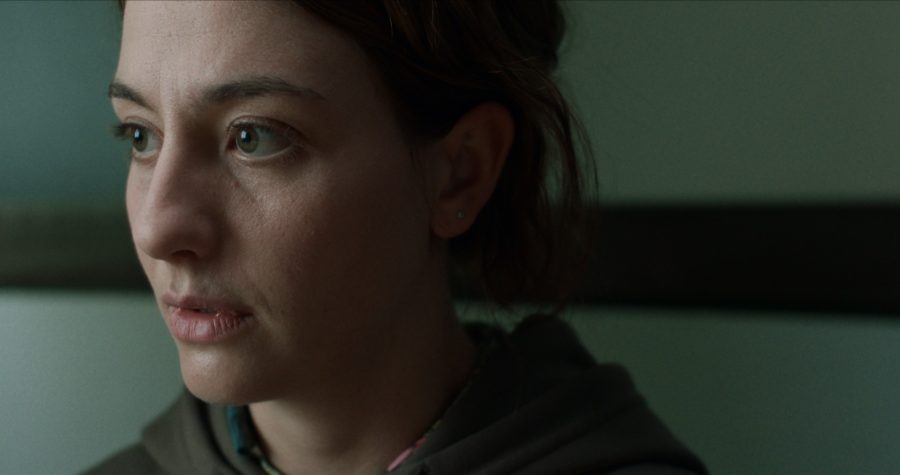
Does unconditional love have limits? Does forgiveness? As women navigating a predatory world where should our loyalties lie? At what cost to our own personal sense of right and wrong? Director Sarah Miro Fischer grapples with all of these questions and more in her intimate and compelling debut feature, The Good Sister.
At first glance, Rose (Marie Bloching) appears every inch the flakey but lovable younger sibling.
Thrown out by her girlfriend in the middle of the night, she shows up at her brother Sam’s door in what is clearly a familiar ritual. The pair share an easy and intimate bond, hewn over a lifetime of shared experiences. As they move about the world, interacting with family and friends, their well-established dynamic is on clear display. Sam (Anton Weil) comfortably inhabits his role as gentle but protective older brother, the golden child always looking out for his beloved but fragile little sister.
Late one night, as Rose struggles to sleep on his sofa, she hears him stumble through the door and into the bedroom. He’s not alone, and good sister that she is, Rose does her best to ignore the sounds drifting through the thin walls of the apartment. When she gets up for a drink of water, she makes eye contact with her brother’s companion as she exits. The woman is not Sam’s girlfriend, but Rose – loyal to the core – would never betray his secret.
When Sam is accused of rape, however, that simple gesture of familial loyalty threatens to drag Rose down a far darker path than she ever could have imagined. Called upon to testify against him, Rose instinctively goes into protection mode, buying into any and all of Sam’s rationalizations, refusing to believe that her brother could be anything but the sweet and stalwart protector she has always known him to be.
Ignoring the nagging tug of her conscience and determined to protect her family, Rose lies to the police about what she witnessed that night. But when she’s confronted with the details of his accuser’s testimony, she can no longer ignore the truth. Bloching’s performance in these moments is heartbreaking, and the scene as a whole is meticulously realized, with every subtle element – the relentless ticking of the clock, the aggressive clicking of the stenographer’s keyboard – ramping up the tension and drawing the viewer deeper into Rose’s internal world.
As the details stack up, and Sam himself begins to unravel, it becomes clear that the question at the centre of this tale is not whether or not he did what he stands accused of (he very clearly did), but what Rose is going to do about it. Bloching’s performance is beautifully vulnerable and complex as Rose flutters between light and darkness, begging the people she loves most to do the right thing so she isn’t forced to betray them. Watching her navigate this impossible situation, the viewer can’t help but wonder what they might do in the same position.
Thanks to Fischer’s extended rehearsal process, and impressively realized performances from every actor who appears in the film, the comfort and intimacy between the characters feels lived in and entirely genuine. We can almost understand why Sam’s mother refuses to doubt him, why his girlfriend chooses to forgive him, even how Rose continues to love him so deeply, despite what she knows him to have done. As we recognize flashes of ourselves in these characters, in their devotion to each other, it becomes much more difficult to simply dismiss or vilify them.
In discussing her motivations for making this film, Fischer has pointed to the fact that while most everyone seems to know at least one victim of sexual violence, few would admit to knowing a perpetrator. Confronting this impossibility, she compels us to reexamine our own deep-seated perceptions and self-deceptions. Powerfully, by choosing to focus on the perspective of neither victim nor perpetrator, Fischer Illuminates the far-reaching complexity of such matters for each and every one of us, daring us to interrogate ourselves as to what choices we would make if put into the same situation.
The Good Sister premiered in the Panorama programme of the 75th Berlin International Film Festival.
© 2020-2025. UniversalCinema Mag.

Sundance announced its Short Film Program Award winners on Tuesday, January 28th. If you’ve scrolled the IMDb pages of most feature directors, you would probably find they got their start cutting their teeth in short films. And if you are lucky enough to watch these early works, you will see the makings of the filmmakers they become. That is why the short programs at festivals are not something to dismiss and are a great way to spend your time. Especially as often there are a half dozen or more stories in any set. And, you can still choose between fiction, nonfiction, or even animation.
This year’s Sundance Short Film Grand Jury Prize went to Theo Panagopoulos for The Flowers Stand Silently, Witnessing (U.K.), an international nonfiction short film about a filmmaker of Palestinian descent based in Scotland who unearths a rarely seen film archive of Palestinian wildflowers and decides to reclaim the footage.
The Short Film Jury Award: U.S. Fiction was awarded to Jazmin Garcia for Trokas Duras, a film that goes into the world of the protagonist’s dreams and his waking reality in Los Angeles and what it looks like for those who serve others as they strive for their own elevation of body and spirit.
The Short Film Jury Award: International Fiction was awarded to Chheangkea for Grandma Nai Who Played Favorites (Cambodia, France), a film about where during her family’s Qingming visit, dead Grandma Nai sneaks away from her peaceful afterlife after overhearing that her Queer grandson is about to get engaged to a woman. The film uses humour to explore self and familial acceptance.
The Short Film Jury Award: Nonfiction was awarded to Christopher Radcliff for We Were the Scenery (USA), about how in 1975, Hoa Thi Le and Hue Nguyen Che fled from Vietnam by boat and docked in the Philippines, and then were utilized as background extras during the filming of Apocalypse Now.
The Short Film Jury Award: Animation was awarded to Natalia León for Como si la tierra se las hubiera tragado (France), about a young woman living abroad who returns home to Mexico hoping to reconnect with her past.
The Short Film Special Jury Award for Animation Directing was awarded to May Kindred-Boothby for The Eating of an Orange (U.K.). Fruit comes to the fore in this exploration of convention and sexuality.
And, the Short Film Special Jury Award for Directing was awarded to Loren Waters for Tiger (U.S.A.), a film about the award-winning, internationally acclaimed Indigenous artist and elder Dana Tiger, her family, and the resurgence of the iconic Tiger T-shirt company.
The jury only awarded seven of the 57 short films curated for the festival from over 11,000 submissions, here are a couple more of this year’s selected shorts.
Don Josephus Raphael Eblahan, the Sundance Short Film Grand Jury Prize winner in 2022 for The Headhunter’s Daughter, returned to the festival with Vox Humana. This short film, set shortly after a natural disaster against the stunning backdrop of the Cordilleran mountains in the Philippines, imagines a human embodiment of the disaster that can be confronted if someone speaks his language to gain answers. Enter a zoologist. The disaster depicted is an earthquake, and one of the other characters is a sound recordist, who we meet lost in the sounds of nature, a potential message of the film becomes evident: to listen for the signs and turn the volume up to 11 if you hope to avoid or mitigate future disasters. An interesting metaphor about vinyl records about earthquakes in the film supports this. The cinematography is breathtaking, particularly the shots of nature and wildlife, from the opening view of a worm, which isn’t in nature but moves across what seems to be something rusty, to the saliva dripping from the close-up of a horse’s muzzle, to the final shots in the lush vegetation.
The Reality of Hope (United Kingdom/Sweden), a documentary short, was picked up by Asteria and Documentary+ before the festival began. The film follows a Stockholm-based virtual reality creator who needs a kidney transplant. He’s set to get a transplant from a New York-based friend, but the twist is, that they’ve only ever seen each other in an online VR community where they each have a “furry” avatar. The film is vibrant in a world of VR, in spaces partially created by the main protagonist of the project, Hiyu. The film showcases the meaningful relationships people make in these VR worlds, while also shedding awareness on dialysis and how it affects those across ages and globes, real and virtual.
The full list of the shorts selected this year can be found on Sundance.
© 2020-2025. UniversalCinema Mag.

 By Giulia Dickmans
 By Cara-Lynn Branch
 By Ester Bovard
 By Bita Habibi
Recent Comments