 By Amir Ganjavie
 By Arash Azizi
 By Mo Abdi
© 2020-2025. UniversalCinema Mag.

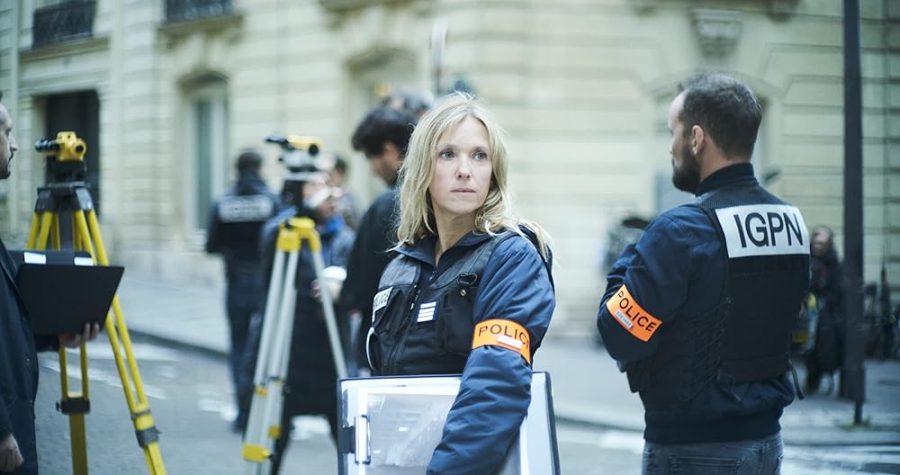
Dominik Moll’s Dossier 137, which premiered in competition at Cannes 2025, is a sobering dramatization based on true events
Continue Reading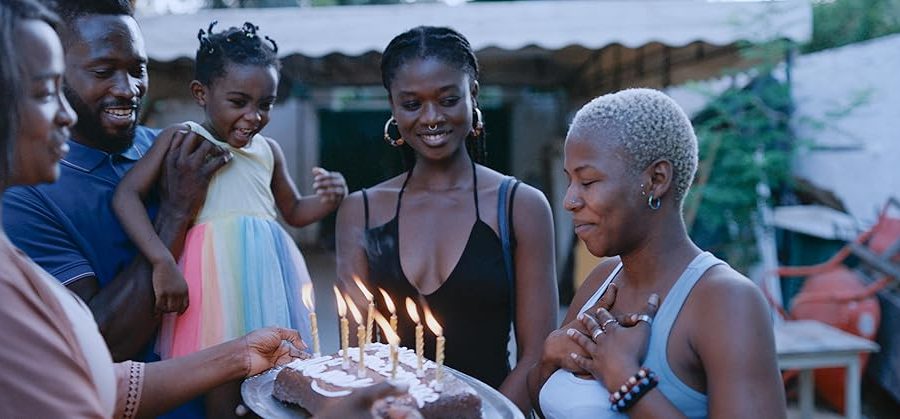
Erige Sehiri’s Promised Sky, which opened Cannes’ Un Certain Regard side-section, is based on a story with all the urgency and humanity
Continue Reading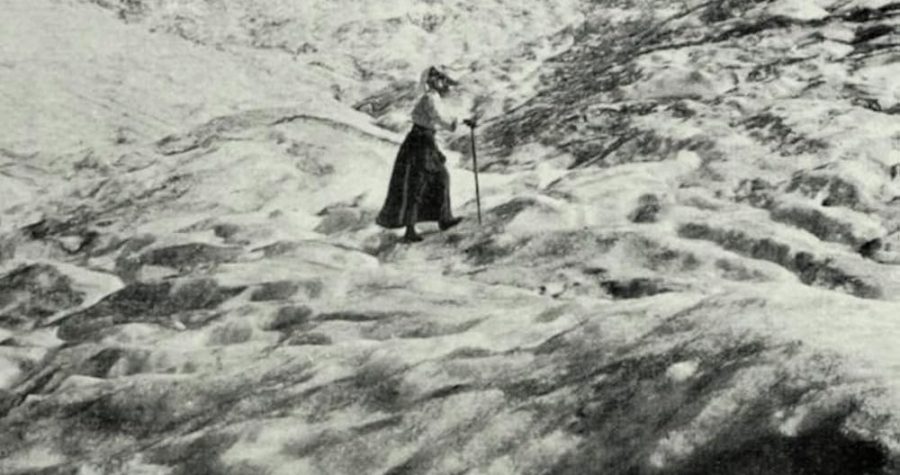
Louise Hémon’s The Girl in the Snow, which had its premiere at the Directors’ Fortnight during the 78th Cannes Film Festival
Continue Reading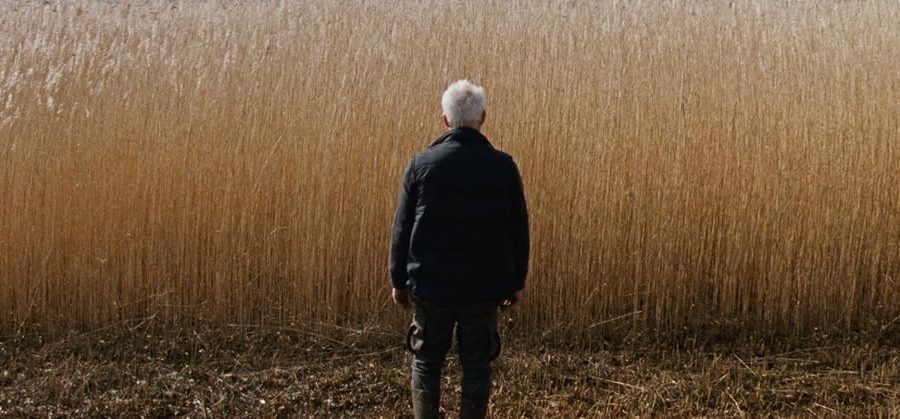
Premiering in the Critics’ Week section of the 2025 Cannes Film Festival, Reedland (Rietland) marks a quietly powerful debut by Dutch filmmaker Sven Bresser. Set in the marshy flatlands of the northern Netherlands and centered on a solitary reed cutter who discovers the body of a young girl on his property, the film quickly distances itself from the conventions of crime thrillers. Instead, it unfolds as a meditative, sensuous, and deeply haunting work—one that uses the language of landscape to explore grief, isolation, and the eternal ambiguity of human guilt.
The protagonist, Johan—played by non-professional actor Gerrit Knobbe with a face seemingly carved from the very earth he tills—lives a life of repetition and solitude. Each day, he rises to cut reeds by hand, burn what’s left behind, tend to his aging mare, and occasionally care for his young granddaughter. The discovery of the girl’s lifeless body interrupts this rhythm, but the film resists any traditional structure of investigation or resolution. What unfolds is a spiritual descent, a study in how a man’s quiet routines and rituals mask a deeper psychological disintegration.
At its core, Reedland is a film about landscape—not merely as backdrop, but as co-narrator. The wetlands where Johan lives and works are captured with a painterly precision that recalls the Dutch Golden Age masters: Jacob van Ruisdael’s stormy skies, Hobbema’s carefully composed forests, or even the melancholic silence of Vermeer’s interiors translated into open air. Here, nature is vast and indifferent, stretching across the frame with an unsettling stillness. It does not comfort, nor does it condemn. It observes.
This cinematic use of landscape carries a rich historical resonance. Dutch painting has long used the environment not simply to depict the external world, but to mirror the internal states of its subjects. Bresser continues this tradition, shaping his images so that fields, ditches, and stretches of reed become projections of Johan’s mind. The land is cultivated—tamed by generations of labor—yet something wild remains beneath the surface. When Johan looks out across the horizon or trudges down a muddy path, the audience senses that what he is confronting is not just a physical space, but a moral one: a terrain where memory, fear, and guilt are inextricably entangled.
The film’s rhythm—slow, deliberate, almost ritualistic—amplifies this sense of immersion. The camera does not seek revelation through plot but through presence. It lingers. It observes the passage of light through mist, the sound of reeds rustling in the wind, or the slow, repetitive gestures of Johan’s daily labor. Silence becomes a character. Dialogue is sparse, and what little is said only underscores what remains unspoken. This is a cinema of atmosphere and elemental force, where the most powerful truths lie beneath the surface, never fully named.
There are echoes here of a certain philosophical mode of filmmaking—one that refuses spectacle and embraces the poetic potential of austerity. In such a mode, reality is heightened by attention, not embellishment. Bresser’s direction leans on suggestion rather than explanation. The ominous mythologies whispered through the community—the mention of a hidden monster, a cursed mermaid, or the othering of the rival “Trooters” across the lake—are never fully developed, yet their presence looms, infecting the air with a subtle dread. The fear of the outsider, the projection of evil onto another tribe, becomes a quiet undercurrent, rendering nationalism and xenophobia not as political arguments, but as ancient, instinctual reflexes. Evil, the film suggests, may not be out there, but already rooted in the soil we till and the names we call our neighbors.
There is also a political dimension here, woven discreetly into the reeds. Johan’s traditional trade is in decline. Globalized markets have introduced cheaper, industrialized methods; European regulations threaten his lease. “You have to adapt to change,” he is told. But he doesn’t. He clings to old rhythms, to a way of life slowly eroding beneath him. This erosion—economic, cultural, even metaphysical—infuses the film with melancholy. What does it mean to be left behind not just by history, but by meaning itself?
And yet, Bresser resists despair. There is beauty here—moments of stillness that feel sacred, gestures of care between Johan and his granddaughter, the poetry of smoke rising through morning light. Nature may be indifferent, but cinema is not. Through its patient gaze, Reedland offers not answers but intimacy—a way of looking that honors the complexity of a life lived in silence.
As Cannes celebrates cinema in all its forms—from the dazzling to the daring—Reedland stands out for its quiet conviction. It is a debut that listens more than it speaks, one that dares to dwell in the spaces between action, in the reeds between words. In a world saturated with noise, Sven Bresser has delivered something rare: a film that hears the silence, and teaches us to hear it too.
© 2020-2025. UniversalCinema Mag.
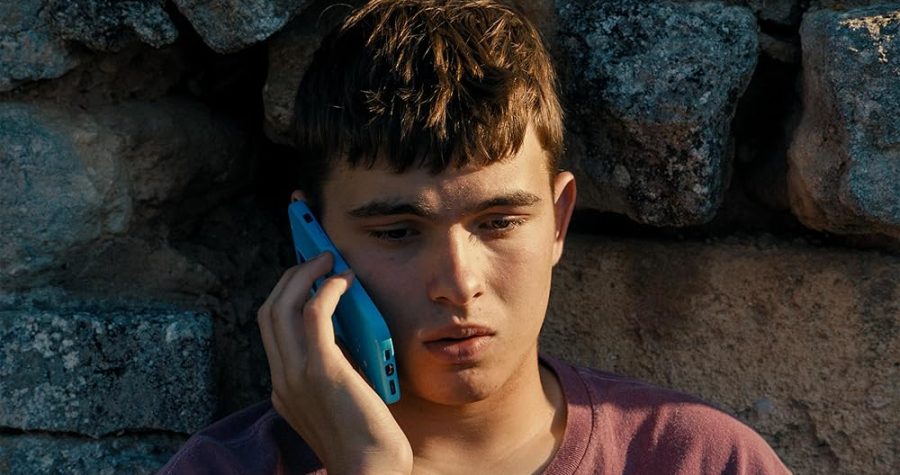
Robin Campillo’s Enzo, which opened this year’s Directors’ Fortnight at Cannes, is less a finished film than a luminous fragment of a life
Continue Reading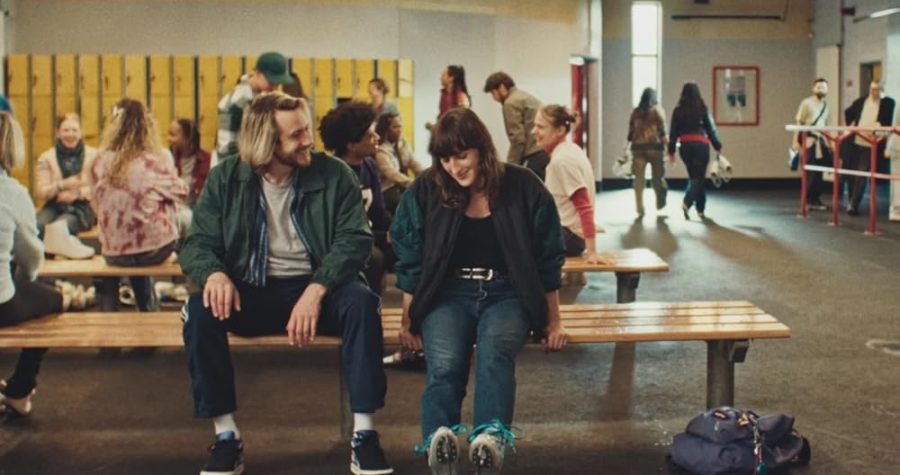
Leave One Day (Partir un jour), debut by Amelie Bonnin,is a humane musical comedy that is playing out of competition
Continue Reading
The Helsinki International Film Festival, known as Love & Anarchy, has carved out a unique space in the global film landscape, celebrating daring and unconventional storytelling. At the heart of this festival is Outi Rehn, the head of programming, who curates a diverse selection of films that embody the spirit of anarchy and artistic risk-taking. In this interview, Rehn discusses the festival’s programming philosophy, its approach to film selection, and its commitment to cinematic diversity, while also reflecting on the evolving landscape of film festivals in a post-pandemic world.
Amir Ganjavie, UniversalCinema Magazine (UM): Please introduce yourself and tell me about your role in your organization.
Outi Rehn (OR): Yes, I’m Outi Rehn. I’m the head of a program at the Helsinki International Film Festival, called Love & Anarchy.
(UM): What kind of movies are you looking for under the label “Love and Anarchy”? Are you exclusively selecting films that touch on these themes?
(OR): It’s a useful guideline for discovering films that push boundaries. Under the theme of anarchy, we look for edgy, unconventional films. It can be difficult to define exactly what a Love & Anarchy film is, but when I see it, I just know—it has that distinctive energy.
(UM): Do films need to incorporate both love and anarchy, or do they focus on one or the other?
(OR): Not necessarily. A film may not contain love at all. We focus primarily on arthouse films, covering as many different countries and genres as possible. We have a small midnight section and some dark-humor comedies, all with an element of edginess.
(UM): Is your festival open for submissions, or do you select films independently?
(OR): The festival operates by invitation only. While we receive many film suggestions, we don’t have an official submission system, so we can’t guarantee that every film sent our way will be reviewed.
(UM): Does that mean you don’t prioritize premieres? Are you screening films that have already been showcased at other festivals?
(OR): Yes, we don’t require world premieres. A film may have already screened in Sweden or elsewhere in the world, but that doesn’t affect its potential to reach our audience, who likely wouldn’t have seen it elsewhere.
(UM): What defines a “good” film for your festival? Do you prioritize script, cinematography, or directorial style?
(OR): Our programming team has diverse tastes, and we include some experimental films. We seek films that bring something fresh and unexpected—something that challenges audiences.
(UM): When you say “experimental,” do you mean films that break traditional storytelling structures?
(OR): Yes, exactly. That’s how they fit into our broader theme of anarchy.
(UM): Does your programming team have individual sections, or do you collectively decide on selections?
(OR): I have the final word, but our team has broad interests. Instead of predefined sections, we build the festival organically based on the films we select each year.
(UM): Do you have any preferences in terms of race, gender, or sexual orientation in your film selection?
(OR): We aim for as much diversity as possible. We include many queer films, though they are not confined to a single section. Our website provides keywords so audiences can find films aligned with their interests.
(UM): Do you have a special section for Finnish filmmakers?
(OR): Yes. Our Finnish New Wave section highlights emerging talent. We also run an industry event called Finnish FilmAffair, which has been ongoing for 14 years, successfully connecting Finnish films with global sales agents and media.
(UM): Do you take political stands when selecting films? Have you ever banned films from certain countries?
(OR): Film is inherently political. We have chosen to highlight Ukrainian films rather than Russian films at this moment. It’s not an official ban, but a curatorial decision. Similarly, we’re prioritizing Palestinian filmmakers. We received backlash for donating proceeds from a Palestinian film’s screening to human rights organizations, but the support far outweighed the criticism.
(UM): Would you screen a well-made film with conservative themes?
(OR): We prioritize films that align with our values. If we were to screen a film with a controversial stance, it would require additional context—perhaps a Q&A or a panel discussion—to explore why we chose to include it. Our goal is to expand perspectives while maintaining respect for human dignity.
(UM): Have you faced external pressure regarding your film selections?
(OR): Yes, but we’ve always sought to challenge the mainstream. In the 1980s, our retrospectives featured directors like Lina Wertmüller and Derek Jarman, which was radical at the time. In the 1990s, Finnish censors blocked Nekromantik from screening, so we took the 35mm copy to Estonia and showed it there instead.
(UM): How many films do you screen each year?
(OR): Around 150 feature films and roughly the same number of short films. We are the largest festival in Finland.
(UM): When does the festival take place?
(OR): It happens in the latter half of September, right after the Venice Film Festival.
(UM): Do you offer any special services for filmmakers?
(OR): We invite some filmmakers, but we don’t have a competition for feature films. There’s a national short film competition for Finnish films.
(UM): How is the festival funded?
(OR): It is publicly funded, supported by the Helsinki city government and our national government, in addition to box office revenue.
(UM): Does the government influence your programming decisions?
(OR): No, we operate independently. We have complete freedom in our film selection.
(UM): What about venue availability? Some festivals struggle with securing screening spaces.
(OR): We have strong relationships with Helsinki’s cinemas. The festival takes over almost every theater in the city, using around 20 screens. It does create some challenges for local distributors, but it’s only for eleven days.
(UM): How does staffing work for the festival?
(OR): We have about five full-time employees throughout the year. Around 20-30 people join us in the months leading up to the festival. Many return annually, though we always have some new hires who bring fresh ideas.
(UM): Has attendance been affected by post-pandemic challenges?
(OR): Yes, the years following COVID were tough. In 2023, we still lost a quarter/fourth of our audience. But last year, we saw attendance returning to pre-pandemic levels, which is encouraging.
(UM): How do you handle securing films from major streaming platforms?
(OR): It’s difficult, particularly with Netflix. If I see a Netflix-acquired film, I almost immediately assume it’s unavailable. That said, audiences still come to see films on the big screen, even if they’re available online.
(UM): Is there anything else you’d like our readers to know?
(OR): I’ve brought our 2023 catalogue, which showcases the kinds of films we program. Each year, we commission a different artist for our festival’s branding, and our artwork travels the world through our materials.
(UM): Thank you for your time.
(OR): You’re welcome!
© 2020-2025. UniversalCinema Mag.

In this conversation, Bard Ydén, the festival director of Norway’s only queer film festival, discusses the origins of the Oslo/Fusion International Film Festival, its approach to film selection, and the importance of supporting queer cinema. He also reflects on how the festival navigates difficult or controversial topics, secures venues, and overcomes staffing challenges, all while celebrating diverse voices and narratives in LGBTQ+ storytelling.
Amir Ganjavie, UniversalCinema Magazine (UM): Can you introduce yourself and tell me about your role in your organization?
Bard Ydén (BY): My name is Bard Ydén. I’m the festival director of the Oslo/Fusion International Film Festival. It’s the only queer film festival in Norway.
It was founded in 1990. It was called “Homofilmklubben” (the Gay Film Club) when it first started. Then it became “Skeive Filmer”, which simply means “queer films”. And then in 2015, we changed it to Oslo/Fusion so we could expand more on the programming, it felt like it was the right time.
(UM): And can you say more about the selection process? How do you pick movies? Is it through open submission?
(BY): We accept submissions through FilmFreeway. And then, I have a small team of screeners. So they watch the films. I watch obviously as much as I can. I watch all of their recommendations and then additional films. I’m also the senior programmer for international shorts at the Norwegian Short Film Festival, which is the only Academy Award qualifying film festival in Norway. So obviously, I get a lot of films from there as well. I’m in the middle of that programming process now. And of course I visit other festivals. I watch films, and then I have the final say in the programming. Summers are never a holiday. It’s programming time for me.
(UM): And do you have any kind of definition of what constitutes a good theme? What kind of movies are you mostly looking for when you say to yourself: “Okay. It’s a good movie for my festival”?
(BY): I don’t have a background in film. I met the director of my festival in 2003, and became part of the programming team the next year. So I learned by doing.
Now I pretty much just go by my personal taste and I listen to my team and the audiences.
What constitutes a good film? Storytelling is important, obviously. It can be low budget or big budget, if there’s talent and a great story, I wanna screen it. And there are so many different ways to tell a story. A couple of years ago, The People’s Joker premiered at TIFF. It’s a highly original film by young filmmaker Vera Drew. It was pulled from TIFF after one screening after threats from Warner Brothers, because it was all based in the DC universe with Joker, Batman, and many original characters. It was an homage, directly tied to her journey as trans, and I am very happy we managed to show it in the end – and it won the Grand Jury Award. It’s a pretty good example of a DIY filmmaker who makes it work.
This year, we’re also gonna show Luca Guadagnino’s Queer, which I find absolutely mezmerizing. So we will as always present a combination of indie film and studio films, in many genres. In addition, we screen between 80 and 120 short films every year.
(UM): Is there any kind of region where you showed more interest or became a part of your festival in the countries?
(BY): I’m always looking for more films from the African continent.
(UM): Films made there are very few.
(BY): I mean, they have a big production, but not many queer films. And it’s been hard to reach, but through partnerships and friendships, I hope that we will make that work. But it’s important for me in the process to have as many countries represented as possible, because I don’t want us to… I mean, as a festival, we should experience other people’s cultures and expressions, not get stuck in our own bubble of white privilege. You know? So, yeah, I think between thirty-five and fifty countries are represented every year in the program.
(UM): And in terms of political stance, some festivals, for example, don’t accept movies right now from Russia or, for example, from some countries with authoritarian regimes. What about your event?
(BY): We don’t accept Russian state-funded films. But usually, Russian state-funded films aren’t really queer. Israeli state-funded films are also on the boycott list, but that doesn’t mean a personal boycott of Israeli or Russian independent filmmakers. Last year we had an Israeli filmmaker visit with her film she made at a French film school.
(UM): And when you are saying that you are, for example, supporting queer cinema, do you have any kind of definition of what you mean or what for you represents queer cinema?
(BY): You know, anything that strays from the heteronormative lifestyle can be seen as queer.
(UM): For example, I saw a movie in which the main character was in love with a chair. So I’m just curious.
(BY): I mean, sure – that could be something to consider. Absolutely. Amanda Kramer had a film, By Design, at Sundance this year, where Juliette Lewis became a chair.
(UM): Yeah. Yeah. I watched that movie. Very beautiful. I loved it.
(BY): I don’t think we’re gonna show it, because I don’t think we’re gonna have an audience for it. But that’s a film that could… I mean, we’ve had… probably a little bit controversial, but we had an Austrian film called The Outing. It’s about a young man who discovers that he has feelings for younger boys and he tries to get help. He’s never acted on his desires, never assaulted a child, but he’s struggling to get help from the system. And he thought by being open and making this film, that would help him, you know, not commit a crimes. And it was interesting to see how we’re so quick to label them monsters, yet not offering any help. So it’s an important film in that respect, too. And it was well received by our audience, which was good. It’s important to include difficult films as well because we are very often compared to paedophiles anyway. So, just shedding light on difficult topics and addressing them.
(UM): This is very interesting because the problem that sometimes I have with some festivals is that they are trying to promote a kind of left or liberal position, but they are mostly following a kind of state agenda. So they are following what the state is saying, and they are trying to define according to that, what is normal and what is abnormal. But I always consider the queer, that kind of resistance against this particular realization and going against the state. The fact that you are mentioning that you are even going against what might a state impose as a kind of normal relationship and trying to show a different way of life, is something that I really like.
(BY): With queer festivals, you know, our existence—we’ve always had to justify it or fight for it. So for queer people to simply exist, that is a political act in itself.
In 1972, homosexuality between men was decriminalized in Norway. And the first person to openly come out as a gay person was Kim Freile. She did an interview with the state TV channel, where she explained homosexuality, and very eloquently so. And everything she said on TV in January 1973 are 100% the same arguments we use today. So yes, we’ve come far in many ways, but at the same time not, because we have to justify our existence in the exact same way that she did fifty years ago. And in the US, the Stonewall riot is probably gonna happen again. We’re going backwards, and we have to be prepared to fight even more. This does not affect only the queer communities, and we must come together in a bigger way to smash fascism.
(UM): I had a conversation with Denis Côté because his recent new movie, “Paul,” is about a guy who has a kind of masochistic tendency, and he likes to be a slave. And we had this conversation that at the end of that movie, the movie changed himself and it posed more about himself and his experience on social media. And he became a kind of celebrity. And at the end, we came to the idea that, to what extent cinema should represent human fantasies? Because at some point, humans like to, for example, have some hidden fantasies and revealing them, all of them, through cinematic gaze might make them less interesting or might devalue them as a kind of cashier.
(BY): I don’t know if I necessarily agree with that. I think everyone wants to see themselves and their lives represented on screen. And I think representation is very important. You know, if it’s a documentary, people usually choose to participate and expose themselves, which is very admirable in so many ways. If it’s a work of fiction and the filmmaker has done their research properly, you know, I’m all for it. I think it’s great.
At Oslo/Fusion we do show sexually explicit material as well. We’ve had scripted and documentary films covering a spectrum of sexual themes, and the audience here respond well to these films. A few years ago, we presented a Sensate Films documentary called Love Hard, about BDSM. We meet several protagonists, and one couple engaging in blood play, which I thought I would struggle to watch. But the way it’s presented, and the way they so eloquently talk about it and show us, it becomes clear this is about intimacy and trust.
I FEEL LIKE THIS IN YELLOW IS REDUNDANT
(UM): I understand your point of view but I’m just thinking, I don’t know if you’ve read it or not, Baudrillard has a book on seduction, and when he talks about seduction, he mentions that seduction works mostly through the hidden, that if we make it very clear that we want to seduce another person, it loses its value. It loses its meaning.
(BY): Yeah, yeah. But, you know, people try to seduce other people in different ways. If I try to seduce someone, you would think that I was deranged because I cannot flirt. You know? I would love some tips. But no, I don’t. I don’t know. There’s not a lot of mystery left in the world, I feel. You know, get rid of social media for a little bit because it’s, oh my god, we’re getting dumber through social media. It’s like who needs programs like Love Island or Sex on the Beach or whatever it’s called.
(UM): Some festivals are struggling in terms of having regular staff. They have, for example, only temporary staff. I’m just curious how is the situation at your film festival?
(BY): What do you mean temporary staff?
(UM): Working for two or three months and the rest of the month, they need to work at another location. And that’s causing a kind of insecurity for people who are working. They don’t have regular jobs.
(BY): I’m the only person at the festival who is employed. The other people on the team have other jobs. So they don’t necessarily work all year round. The majority of them come in during or right before the festival. But it’s hard to find people who can commit.
(UM): Is it because they are needed to work in voluntarily?
(BY): Yeah. And we can’t hire them permanently. So if another job comes up, I understand completely that they have to take that because it is paid and it’s better paid. I try to pay everyone, but I can’t hire them full-time.
(UM): And in terms of venues, is it easy for you to secure venues? Do you have your own venue? How does it work?
(BY): Our regular venue is the Cinematheque in Oslo, which is the Norwegian Film Institute. So that’s a regular one. And then there’s another independent cinema, it’s called Vega Scene, we collaborate with. Our third venue is Salt Art & Music, an event and music stage where we’ve had screenings, sauna events, and our annual The Rocky Horror Picture Show screening with audience participation. And then there are, throughout the year, smaller places that we collaborate with, like galleries, museums, bars, clubs – you name it.
(UM): One of the serious challenges for many festivals is making people come to the festival, especially after COVID or after the rise of platforms or streamers. I’m just curious. How was the situation at your festival?
(BY): It was funny for us because, in 2020 and 2021 when everything was shut, there was a window, like, a two-week window during the festival. So we actually managed to have a physical festival throughout the pandemic, but at 30-50% capacity. We didn’t really see a drop in attendance which was nice.
(UM): I think I asked all of my questions. I wonder if there is anything that you think might be very important to mention.
(BY): I want to encourage people to support queer film festivals. There’s a lot of great films that will only play a queer festival circuit, and they deserve a larger audience. There’s so much talent in the queer community, and so many important stories, and queer films are often regarded as lesser, which is really unfair. So, yeah, support queer films and queer artists – they will enrich your lives.
Thank you for talking with me!
Instagram: @oslofusion
© 2020-2025. UniversalCinema Mag.

In this conversation, Samuel Jamier, President and Executive Director of the New York Asian Film Festival and Foundation, offers insights into the festival’s origins, its focus on Asian cinema, and his personal take on programming criteria. He reflects on the influence of globalization and streaming services on film curation, discusses the challenges of staffing and funding in the U.S. festival landscape, and explains his vision for showcasing films in a city as diverse and demanding as New York.
Amir Ganjavie, UniversalCinema Magazine (UM): What’s your role in your organization?
Samuel Jamier (SJ): I’m Samuel Jamier. I’m the president and executive director of the New York Asian Film Festival and Foundation.
(UM): Can you tell me more about your festival? What kind of movies are you looking for? Is it for all the regions of Asia?
(SJ): So, it’s focused on the Asia region, which for us, because of its origin, started as a genre showcase of specifically Hong Kong films. Although we did show films from South Asia, that has come to decline a little bit, that part of the world for us. So we’re quite focused on East Asia.
What kind of films are we looking for? You know, I’m gonna give you a very American response. It’s the other way around. It’s, okay: great storytelling. I have my idea of really… I mean, cinema is a very impure art in a way. There’s a French philosopher who calls it the most impure art form. By that, you could say it’s hybrid. It’s just a combination of different arts, right? There’s drama in there, there’s literature in a sense, there’s photography and music. So, to me, that means you use all these elements, and you have an experience of, I don’t know, ninety minutes, two hours, and it takes you somewhere at the end of it, you know? It transforms you in a sense. So that’s the kind of film I’m looking for.
(UM): So, you are looking for movies with good stories, that are very good at combining different art forms and creating a unique experience.
(SJ): Yeah. Something unique and fun. I think I do believe in film as mass entertainment, something with broad appeal. Accessibility. You know, again, running a film festival in New York and America, that’s kind of central to the concept of cinema, right? It’s the largest commercial industry in the world—arguably, China is also massive, and India’s…
(UM): But you mentioned that you started with a genre of cinema. Genre cinema usually uses a kind of predefined format, and they’re trying to play with that format and not going too much out of the formula. So how does it fit with your current goal?
(SJ): Well, first of all, that was the beginning of the festival. It started quite differently. It was heavily focused on Hong Kong films because the founders—I’m not one of the founders—joined the festival at its midpoint, a halfway point now. I joined it in 2012, if I recall correctly, as a programmer of Japanese films and then Korean films. So, I joined to help out with the selection of films from Japan and Korea. And then later on, a year or two later, I took over the artistic direction.
Because of its DNA, the festival was started by a group of fanboys who loved kung fu films. The last Chinatown theatre in New York closed down in the early 2000s. So at the time, the idea was to try and preserve that film culture and continue to show it. So that’s where it’s coming from, and I try to maintain that and not completely drift too far from this point of origin. So it’s quite central to what we do.
Having said that, I mean, what does genre mean? I’m often asked to talk about it. You have a set of conventions, but you alluded to it yourself—I mean, you can do whatever you want with it, in a sense. You can do whatever you want with it. In a sense, you operate… What is not a genre? It’s easy to argue that arthouse film, which we tend to oppose to genre film, is also a form of genre film. It has tropes of long takes and a certain type of cinematography. So I’m looking for something that’s innovative within a certain number of conventions as well.
(UM): How do you define Asian cinema?
(SJ): I tend to follow what’s… to respect the legacy of what was created. Our definition of Asia—Asia, in a sense, doesn’t really exist. Asia is a definition from the outside. I mean, you know, when I lived in Japan—to give you an example, I lived in Japan between 1999 and 2001 roughly. I speak decent Japanese, I would say, without being 100%, but I can read, write, and so on. So when I lived there, you would sometimes find you would go eat—sometimes we would have “Asian restaurants.” So first of all, at the time, I discovered, to an extent, Japanese people, at least during that era, did not really see themselves as Asian. You know? So Asian restaurants were something exotic. You would walk into an Asian restaurant, it was indicated they would serve you Korean food, Vietnamese food, and Thai food.
I lived in the UK… at the time, and I believe that’s still the case largely, “Asians” meant South Asians. You know? The first time, there was a group called Asian Dub Foundation or something—they were all South Asians. Do you know what I mean? So I think it’s very much a definition from the outside.
I mean, you look at groups that have some similarities, a certain set of family values, and so on, which, you know, I tend to think some of them are pretty universal sets of values—just a view from the outside again. So you’re gonna have the South Asian block if you want, and then people who use Chinese characters, let’s say, broadly speaking, what people who don’t know anything like to call “Confucian values.” I hate the usage of the word. Usually, it’s completely off the mark.
To me, Asia is a constructed idea—a functional fiction that I work within. And due to the way the festival was started, to me, that means countries of East Asia. But we look everywhere, like Central Asia, South Asia. I would love to restore a place there, but you have also—I mean, you run a film festival. Right? To an extent, it’s an operation that’s run with money, with sponsors, and so on. So there’s a fair amount of practical considerations I have to take into account. That limits—I have limited space. I can’t show 200, 300 films, right? So that is one of the issues I’m facing now. But hopefully, I’ll be able to fix it as soon as I can.
But again, to me, the idea of Asia as a single, unified entity is largely an external construct. Different cultures within Asia don’t always identify with this broad label, and I think it’s important to challenge how the West categorizes Asian cinema
(UM): So in practical terms, for example, if there is a filmmaker from Asian descendants, do you consider him as an Asian filmmaker?
(SJ): It depends on what he has to say about where you’re coming from. It has to do with origin, your point of origin. I mean, you can be… Look at Chloe Zhao, right? She’s a Chinese-born director. I mean, oh, what happened to her? When you think about it, what is she doing? I didn’t track that very carefully. Look at Nomadland—I mean, I don’t know, what would you call that? That’s not really an Asian film in any sense, right? Mickey 17, I haven’t seen it, but I would argue that’s hardly an Asian movie. a film directed by an Asian director… To me, okay, it’s an open question, really. I’m not gonna say—I don’t wanna fall into the trap of telling people, “This is what you are.” I mean, that’s pretty much the disease of our age, like, “Who am I?” You know? In my view, in the programmer’s view, maybe they feel differently, but as far as I’m concerned, it’s supposed to be a question mark. And when there’s a question mark like this… yeah. But I don’t know any—yeah.
(UM): Because of globalization, festivals around the world are starting to look more and more alike. Do you see this as a potential challenge for a festival like yours?
(SJ): Absolutely. I agree. Well, I mean, you know, it’s also due to that there’s still a dominance of European standards —like, for example, .Many international festivals tend to favor a certain aesthetic when it comes to Asian films—often reflecting European tastes more than regional diversity. This is something I’m mindful of in our own programming, and we try to balance artistic innovation with broader representation
That explains we’re just talking about it, “fascination.” Fascination? There’s sometimes a preference for a certain type of Asian film—one that emphasizes slow pacing, visual poetry, and rural aesthetics. While these films have artistic value, it’s important to also showcase the full range of contemporary storytelling from the region.
Also, I mean, you know, there’s a category of filmmakers: they get trained at NYU, France. So they also adopt some of these standards. I’m not saying these films are not interesting, but you have to see who the people who make these films are and who the people who show them are, and you see a convergence. And that’s where you see sort of a global landscape with a similar type of films that goes everywhere.
I mean, okay, well, let me name one name that’s just so obvious: Hong Sang-soo. You know, that’s—it’s so obviously catering to certain types of clienteles. I mean—and that’s an enigma to me. Again, let me not—okay, don’t get me wrong. I’m not saying Hong Sang-soo is not a great filmmaker, but you have to take into account the fact that he’s mostly praised and exhibited, curated, by people with a heavy focus on European film, and usually who don’t actually speak a word of Korean, which is really puzzling to me, because these are films that are heavily reliant on dialogue. So that really raises some questions, you know? Again, I proceed—I’m not trying to find solutions to the enigma of world cinema, but I try to ask myself these questions constantly and redefine every year. What does that mean?
I end up showing some of these films. I mean, it’s true, some of these films make it into our program. Sometimes I’m like, “This raises interesting aesthetic questions, ethical questions. It has something to say about the country. So how come you have a certain type of middle-class, upper-middle-class filmmaker making this type of film?” There might be some value to showing that, right?
(UM): And you are mentioning Bong Joon-ho. Was there any kind of ‘parasite effect’ in your market?
(SJ): Oh, absolutely. Bong Joon-ho was sort of a landmark moment, for sure, around the world. I mean, it’s the first time—well, at the time, I was like, obviously, going to win the international… they used to call it the foreign film category, okay? The international film category, right? So that was pretty clear. The fact that he won the Oscar for Best Movie—I think it was a shock to everybody, including its filmmakers. it was a landmark moment. Very critical in introducing, in opening up European and—well, Western taste, right?
So all of a sudden, you have a film… you’re not anymore like the “global South,” they call it, I guess, or like “the rest.” The West and the rest. So as of now, you have an intrusion from the outside, and you see—being Korean-born, to me it was incredible to see that, a very moving moment. You know, I’ve been introducing Korean films since 2007. And I did this early-career retrospective of Bong Joon-ho in 2007. So that’s quite something, to see that on screen. I mean, at the time, in 2007, that was the year Magnolia released, the company Magnolia, The Host, right—that monster movie, genre movie. So that was definitely a defining moment, quite important.
But more important than Bong Joon-ho to me, in the sense of the Squid Game and the Korean TV drama phenomenon, because that is truly mainstream. Now, there’s sort of increasingly, I find, a divorce between the masses and film. There’s a crisis of commercial cinema, I believe.
(UM): This might be a bit tangential, but thinking about Bong Joon-ho’s success with Parasite—winning both the Palme d’Or at Cannes and the Oscar for Best Picture—makes me wonder if it marked a turning point for U.S. cinema. It feels like the same movies now sweep multiple major festivals, blurring the lines between independent and commercial films. Do you think this indicates a loss of unique identity for American cinema, or that Hollywood no longer values its own film culture after Parasite?”
(SJ): I don’t think Americans don’t believe in their films anymore, you know? There’s still, like—since we’re talking about Bong, like, the subtitle barrier, right? So a lot of the stuff gets dubbed on Netflix and so on, so there’s still—I do believe it’s opened the field to foreign-language films for sure.
I think the crisis is within American commercial cinema itself, namely Hollywood. I mean, there’s a narrative crisis, you know, we’ve been talking—I mean, it’s been beaten to death now. It’s, like, very popular to trash superhero movies. And I don’t think there’s much of a point in engaging in this because, I mean, it’s a fact. I mean,
What you’re describing, the fact that you’re seeing the same films everywhere, it’s a network. Like, everyone knows each other. I’ve been seeing the same folks for the past ten years, roughly speaking. It’s musical chairs. They go, in some cases, they move from company to company, but fundamentally the major players remain roughly the same. There’s a new generation emerging, but it’s pretty much the same. Like, for all this talk—well, now it’s being reversed—the talk about DEI, you know. I was at an industry event in Chinatown, and it struck me that despite working in film, many attendees had little familiarity with Asian culture. It was a stark reminder of how insular the industry can be, even in a diverse city like New York.
So you see the limitations. Despite all of this, America remains very inward-oriented, I mean politically and all that, it’s very visible. Extraordinarily inward-oriented.
So it’s opened some barriers, but I think it has some limits. And to go back to what you were describing, like, okay, you have this in China—these are people, they all know each other. At some point, you know, it’s the same for wrappers. Then they move. One guy programs for Berlin, and then next thing you know, it’s different, you know? So the same stuff gets shown.
(UM): And one of the major problems with many festivals is about securing the venue. So I’m just curious, how is the situation in your case? Do you have your own venue?
(SJ): My dream, my ultimate goal, is really to have our own venue. Of course, that would be fantastic. I think there’s enough space and appetite—well, it’s an appetite you have to create—but I would like to have a space dedicated to Asian cinema, again, whatever that means. And open it up, show films from the Middle East, from Central Asia—these are very rare films to see at festivals, right, let alone in theatres in general.
Well, we’ve been lucky enough. We’ve had a very strong partnership with Film at Lincoln Center. So in terms of the cost and the availability, I mean, it’s almost a given. Like, every year, I don’t have to ask myself the question. The festival as a whole, very clearly—there hasn’t been a doubt in my mind for years, like, that’s who we work with. We’re basically—it’s a client organization. There’s no hostility now, you know. So that comes into play. That’s not a huge preoccupation. We’re lucky enough that New Yorkers are very supportive of the arts. We’ve also expanded. We had an event at the SVA Theatre—excellent relations as well. The SVA’s theatre belongs to the School of Visual Arts, right? So there’s an educational value to it. We’re in a great place.
New York is good. I would like for New York to have better theatres. The art house theatres—I don’t know why you have to sit in these shitty seats. I don’t get it, you know? So I wish the standards would go up a little, and that’s why I wish I had our own venue. Having said that, we also use a small multiplex, Luxe Cinemas, a relatively new entity. Again, this is someone very supportive of the arts. The deal I’ve made with them is great, so I really can’t complain. It’s not like everything is rosy, but at least on the venue side, it’s not a huge issue.
(UM): Many festivals have just temporary people who are working for them. And this causes a kind of anxiety. They need to work for a few months, and they don’t know what they should do for the rest of their life. I wonder, what is the situation at your festival?
(SJ): So again, I’ve been quite lucky. I don’t know, maybe I have some kind of gold or something, but, like, people work with me and work with me for a long time. After that—on the programming side, it’s a pretty stable team. Well, all of them have a day job, I’ll be honest. I mean, I have one dedicated staffer in the programming as well as myself. They review films all year long. They seek films, like, twelve months a year. So in that sense, I’ve been lucky.
Having said that, I mean, I wish there were better ways of paying staff. I rely on a lot of volunteer labor, and that’s not great. I mean, ethically speaking, there are crazy questions, but I can’t make up money we don’t have. Do you know what I mean? So what I do sometimes comes at a personal cost to me as well nowadays. I’m like, it’s a lot of sacrifices. And that’s when America, in particular, has a serious problem. I think Americans don’t take culture very seriously. A lot of the funding—like, first of all, I mean, it’s not gonna get better, right? The funding from the state is ridiculous. I mean, it’s zero. There’s a reason why European film festivals tend to dominate. It’s just—I mean, they have state support. I mean, you have governments that care about the preservation of their culture, the prestige and the importance of culture in everyday life, and not just the fucking economy and money. Obviously, these operations have to be operated with funding.
So Americans… it’s hard for me to respect the big international film festivals in America. I don’t think those are great. I mean, none of them are particularly outstanding in my view. They’re very world-oriented, very American, you know, so that’s not good for me.
(UM): I sometimes feel that Us festivals become very politicized, and care not enough about film as an art from.
(SJ): Yeah. You’re 100% right. You’re 100% right. You are from Toronto, correct?
(UM): Yes, I’m from Toronto, right?
(SJ): You understand. So just to go back to your question one second: it’s significant to me, it’s significant in general, that the most important film festival in the Americas is not in the US, it’s in Canada. The Toronto International Film Festival, I would say, has a lot more prestige than any of the other American film festivals. I think a lot of industry people would argue it’s an interesting film festival. Their programmers are really quite good. A few of my friends work there—they do have really outstanding programmers, really great programming. I mean, I don’t always agree with their choices, and the idea that now it’s part of the Oscars race is pretty questionable to me. But having said that, I mean, it’s a great operation.
Just talking about, you see that it’s a country that cares about culture. You see it, sort of in a central position, as opposed to decluttering. So, in terms of, like, the move away from the story—yeah, 100%. I think a lot of it is, it’s associated with corporate, a sense of corporate responsibility. So, like, people from private equity firms find that you need to say something about this and that, but it’s ideology-driven. It’s not very well thought out. I mean, I think obviously, it has to do, of course, with course correction. You have a large number of ethnic groups, as well as people with different sexualities that are underrepresented, sure. That should be shown. Of course.
So there was, at some point, an attempt at course correction. I thought it was very poorly, if at all, thought out. So what does that mean? That means you have a bunch of ideas and criteria that are inserted into films without actual integration into the narrative. So you really try to fit—what’s the question?—a square peg in a round hole or a round peg in a square hole? It’s not a great fit. So you have stories that are very artificially designed to represent this or that minority group. I mean, for example, when it comes to historical dramas, you end up straying very far from the historical truth, and you’re telling a lie to yourself. You’re trying to reflect on the past with what’s in the present. And, I mean, we know, racism has been around for a long time. I come from an area where I was the only Asian person who grew up in my area, the only non-white person. And some Hollywood guy is gonna show up, make a movie about Brittany. So I grew up in Brittany, you know, northwestern France. It’s gonna be, okay, let’s have 20%… it’s a lie. That’s just not the way the region was. There were very few immigrants or, you know, people like me, and it doesn’t reflect the truth.
So, to go back to what you’re saying,absolutely, it’s just poorly thought-out collective sort of… — poorly thought-out course correction of social wrongs. When it’s done like that, I mean, you have a backlash, which we are facing now, for sure.
(UM): How do you think the push to appoint more diverse executives—who often operate within the same corporate, profit-driven system—has affected the quality and creativity of commercial filmmaking?
(SJ): Fundamentally, I was just describing to you the situation in New York. The major players haven’t changed fundamentally. There’s been an effort to appoint more executives of color, which is important. But unless the system itself changes, diverse leadership alone doesn’t automatically lead to more creative risk-taking or broader representation in storytelling. And they’re not necessarily creatives either. So that is a big problem. Right now, let’s say you work for Disney. You essentially work for a big bank, you know? That’s not the mentality. they impose a certain set of norms without thinking first, this is how you make a good story.
So that’s a huge issue, of course. I mean, there was a time when I actually enjoyed commercial films. You could see a film like Rain Man, because that used to be the definition of a commercial film, or, like, you know, not to say that I love Rain Man or something like Pretty Woman. These films would be hard to make and finance these days, right? If you don’t save the world, you know—if America doesn’t save the world, it’s not gonna get the budget you want, you know? At some point, there’s a sense, “Oh, we have to spend $200 million so we can make a billion.” So yeah, it’s not very narrative-driven, I would argue.
(UM): How was the impact of Netflix on your film festival or streamers? Did it change the population or the number of people who are coming to your festival?
(SJ): So, as I’m talking to you, I realize how lucky I’ve been, and maybe there’s a fair amount of luck too in what we’ve been doing, because I think it’s actually increased the interest of people in non-English language, perhaps foreign, you know? So that’s great.
Having said that, I mean, I think the advantage of running the festival, to an extent, you offer some choices, but it’s limited. You don’t have to scroll on an interface for hours not knowing what to do. I find that with streaming services, you spend a long time just choosing a film—if at all. It’s the equivalent of flipping four channels now. You just look at this, your recommendations. A lot of people just do something else while they watch Netflix now. It’s become, you know, people don’t really watch the films when they watch Netflix. I mean, what is it they’re watching when they’re watching Netflix? That’s what’s interesting. That’s what we say now: “Oh, what did you do yesterday?” “I watched Netflix.” You know? It’s not like you don’t really watch a movie—you spend some time on the platform. That’s a little bit worrisome.
So I think in a sense, we’ve benefited from the dominance of the streaming platform in that they offer a huge amount of accessibility. It’s “content,” right? That’s the big word we’ve been using for now, I don’t know, a decade or so, right? So it kind of flattens everything. So you’re like, one night you can watch a Norwegian—like, a Scandinavian crime drama, and then a Korean TV drama, and then animation. You watch, you know, like, an action film, all that. It’s kind of an indiscriminate sort of buffet of content without any sense of, okay, this is more important than that. Sort of, bam. This means you can watch anything you want.
Ultimately, I don’t think people like to use their liberty of choice. They like the illusion of choice, you know, not to go all Matrix on this. But when you have a selection of films at a film festival like ours—and others too, I mean, Berlin, I genuinely enjoy Berlin a lot too, the city and life in general, the culture—but, I mean, it’s programmed by a human being, you know? You watch a film, you’re not necessarily—so what I find interesting sometimes is the bad choices, like the lack of taste, because, you know, it’s not an algorithm. So, like, oh, this film, you know, it has problems there—like, the ending is sort of messy. Sometimes I love that. Like, I go see a film, l wonder if certain films were the right choices, but that’s part of what makes human curation valuable, the selection of it, you know, like, oh, fallible. Of course, I’d like to believe I have good critical judgment, as well as my team. But every now and then, I look at the program, and I don’t know if that was really the right film. But that’s what makes it human as well. And you have a finite selection. It’s not like you can program a million films, you know.
I disagree with the view that you have to expand forever. At some point or another—which is also why I have trouble right now rebalancing the different regions. It’s pretty complicated. It’s a very baggy region. It doesn’t make sense. It’s just, what is Asia? I mean, it sounds to me Asia is the majority of the world on the planet, in a very real sense. I mean, India alone, I mean, that should be—like, is it fair to include India in an Asian film festival? India is like this massive culture with I don’t know how many languages. You know, if you count the Telugu language production alone, it’s huge. I mean, I don’t know. It could have a festival of its own just focusing on that. I would need—I don’t know how many parameters I would need to have to make a decent selection of Indian films. What does that mean, you know?
I think that’s where we are. It’s an interesting moment because culture is becoming incredibly industrialized, and it’s impacted the film festival, the International Film Festival circuit, right? So, it’s tough times ahead. So far so good for me, but the challenges, particularly in the past few days, I’m like, this is gonna be a tough road ahead, for sure.
© 2020-2025. UniversalCinema Mag.

© 2020-2025. UniversalCinema Mag.

Recent Comments