

Cannes Competition Films: A Full Round Review
 By Mo Abdi
Mo Abdi about the Cannes Competition Films: A Full Round Review. Festival de Cannes 2025 UniversalCinema Mag last dispatch
Continue Reading
Politics, Art, and the Palme d’Or: Reflections on Cannes and Jafar Panahi’s Victory
 By Mamad Haghighat
awarding of the Palme d’Or at the Cannes Film Festival to Jafar Panahi’s A Simple Accident has stirred both celebration and controversy
Continue Reading
Festival de Cannes 2025 | Militantropos Now but Not Always
 By Cara-Lynn Branch
Militantropos had its World Premiere at Cannes as part of the Directors’ Fortnight (Quinzaine des cinéastes) program
Continue Reading
Festival de Cannes 2025 | Rural Horror: A Review of Her Will Be Done
 By Elias Bovard
Premiering at Directors’ Fortnight at Cannes, Julia Kowalski’s Her Will Be Done (Que ma volonté soit faite) tells the story of Naw
Continue Reading
Festival de Cannes 2025 | Alpha: The Sterilized Body of a False Catastrophe
 By Amir Ganjavie
The main problem with Alpha is that it pretends to be about pain, illness, and mourning, but everything remains on the surface
Continue Reading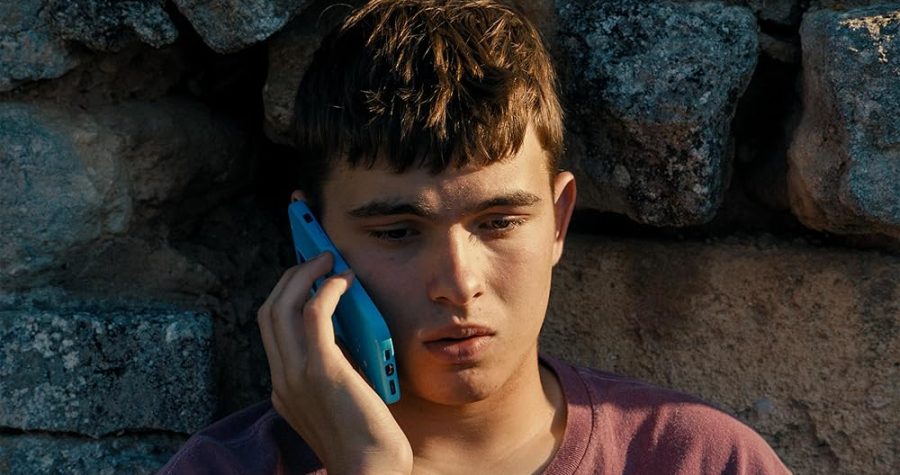
Festival de Cannes 2025 | “Enzo”: A Sunlit Reverie of Adolescence, Loss, and Longing
Robin Campillo’s Enzo, which opened this year’s Directors’ Fortnight at Cannes, is less a finished film than a luminous fragment of a life
Continue Reading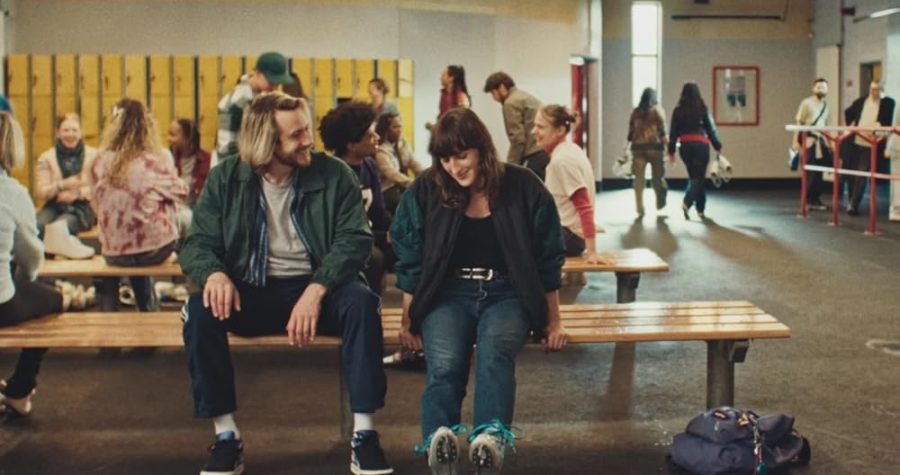
Festival de Cannes 2025 | Cannes’ opening musical shows the festival’s confidence
 By Arash Azizi
Leave One Day (Partir un jour), debut by Amelie Bonnin,is a humane musical comedy that is playing out of competition
Continue Reading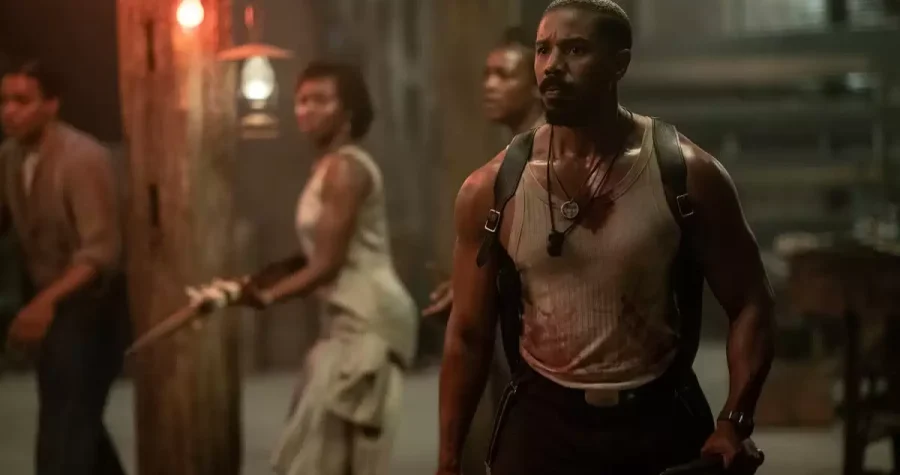
“Sinners”: Church, Guitar, and Vampires
 By UniversalCinema Magazine
“Sinners”, directed by Ryan Coogler, begins in a church and, as its title suggests, deals with sin. Here, two forces—good and evil, one being faith and religion, the other demonic entities turned vampires—are set to face off: the classic horror formula tied to churches and religion. But this time, not everything goes by the book.
What makes Sinners compelling is its deviation from the norm—both in theme and form. It refuses to fully submit to the usual good-vs-evil, religion-vs-devil dichotomy, and it doesn’t closely resemble its genre peers either. While it borrows elements from the worlds of George Romero and Sam Raimi, it owes more—much more—to the sensibilities of Quentin Tarantino and Robert Rodriguez.
Set in 1932 Mississippi, the film follows two Black twin brothers, both World War I veterans (both played by Michael B. Jordan), who dream of creating a safe haven for Black joy and leisure amid deeply entrenched racism. They’re joined by their cousin Sammie, a guitar player, who, early in the film, is warned by a priest about the demonic power of the guitar.
The first hour serves as a somewhat drawn-out setup that could’ve been trimmed. But once everyone gathers at this makeshift venue, the film catches fire and doesn’t let the audience breathe. Beneath the chaos and bursts of violence, a searing story about racism unfolds—one that resists preachiness while offering gripping insight into America’s untold histories. Everything starts with skin colour: people are divided into Black and white, set starkly against each other. Then enters an Irish-born vampire (a nod to many Americans’ Irish ancestry), who becomes enchanted by Sammie’s music and follows him with an offer—to turn him into a vampire. In a striking scene where he urges Sammie to accept the transformation, he claims that in the world of vampires, skin colour no longer matters. And this is where the film smartly distances itself from the usual clichés of good and evil, challenging the viewer to think: how can a world built on religion be so soaked in prejudice, while the world of “evil” vampires appears free of it?
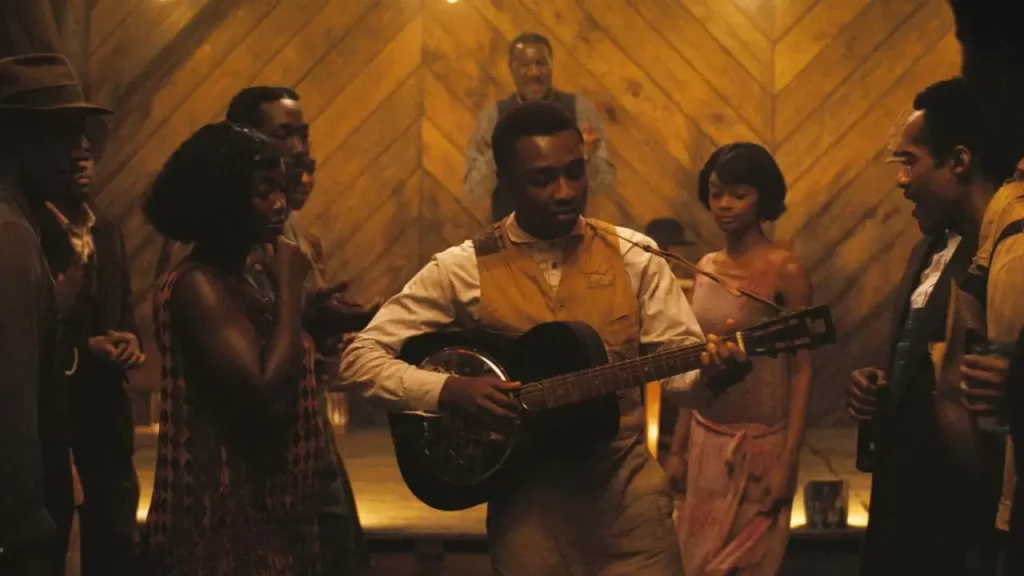
In the middle of all this, music becomes a core, driving force. The film is about music—it begins and ends with it. Music pulses through every moment of the film, intertwined with its soul, and deeply embedded in the life of the protagonist. In the opening scene, Sammie walks into the church carrying a broken guitar. The priest asks him to lay down his bloody guitar. By the end of the film, we return to that moment, only now we see that the very guitar the priest deemed demonic becomes Sammie’s salvation—he defeats the vampire with it. In the end, Sammie refuses the priest’s request and does not lay down his guitar.
After the credits begin to roll, the film continues for a few more minutes. Sixty years have passed. Sammie is now a celebrated musician, yet the vampire story lingers, as if to say the battle between good and evil is eternal. And in that eternal struggle, the film chooses not religion, but music—art—as the true path to redemption.
© 2020-2025. UniversalCinema Mag.

“No Beast. So Fierce”; Shakespeare, Women, and the world today
Borhan Ghorbani, in No Beast So Fierce, brings Shakespeare’s Richard III into present-day Berlin. Once again, Berlin — vast, intricate, and sprawling — emerges as one of the main characters in the first part of the film. Here, Shakespeare’s tale of the crown is replaced by a power struggle between two immigrant families who control Berlin’s mafia. This terrifying tension lasts from the very first moments of the film to its end, immersing the audience in an atmosphere of brutal and chilling violence. The film opens with murder and bloodshed between the two families, followed by a complex web of relationships involving two brothers and their sister, Rashida. These scenes, captured during a party with a camera that snakes through the characters, hint at an even darker conflict: Rashida intends to usurp power from her older brother. In fact, the tension within this family turns out to be more violent than their feud with the rival clan. From here, femininity becomes entangled with Rashida’s ruthless ambition, gradually escalating into overt violence that dominates the entire second half of the film. In this exclusive interview, Borhan Ghorbani speaks with Mo Abdi about the details of the film.

Past Due: About Maya and the Price of Inherited Guilt
 By Patrick Roy
About Maya is that rare micro-budget thriller whose very limitations sharpen its claws. Co-directors Nasim Naghavi and Amir Ganjavie strip the genre to its essentials—fear, secrecy, judgment—then push each element until it hums with unease. Their focal point is Maya herself, embodied by Avan Jamal with coiled vigilance and brittle grace. Born into privilege as the daughter of a deposed Middle-Eastern dictator, Maya has spent a decade in Toronto practicing the art of self-erasure: no accent, no photographs, no online footprint that might connect her to the old regime. Yet the past finds her when her Canadian husband is discovered dead in their condo. The police seize on motive; exiled activists sniff a chance to settle historic scores; journalists scent a scandal poised to go viral. From the first frame Maya is cornered, and the camera seems to breathe down her neck, making the audience feel every inch of that confinement.
At first the script teases a familiar mystery—who killed the husband?—only to tug that thread until it unravels an entire tapestry of generational guilt. Each revelation is not a solution but an aggravation, the narrative equivalent of peeling varnish to find older, darker layers beneath. These details don’t merely thicken the plot; they compound her moral debt, forcing her to confront the possibility that even her happiest memories were financed by corruption. The directors vowed to “start with a detective thriller and end with a tragedy,” and they succeed: by the final act, the whodunit is almost beside the point. What matters is whether Maya can live with the answer, whatever it is.
Jamal’s performance anchors that collapse. She wears her father’s sins like a weighted vest—every step measured, shoulders tightened, eyes always flicking toward exits. Her scene drafting and deleting an apology lasts barely a minute, yet crystallises the film’s essential dilemma: How do you apologise for blood that is in your veins rather than on your hands?
While the film never lapses into polemic, its political charge is unmistakable. The story interrogates the global appetite for easy justice. By making Maya both victim and emblem, the filmmakers pull the audience into a moral hall of mirrors. Is she scapegoated for crimes far above her station, or is she simply learning that privilege is a debt that eventually comes due? The genius of About Maya is that it refuses to pick a side, leaving viewers wrestling with the same impossible calculus that haunts its heroine: what, exactly, is enough to satisfy the ghosts of history?
Indie festivals thrive on discoveries like this—movies that arrive with no marketing muscle yet leave audiences buzzing about their moral audacity. About Maya’s power lies in reminding us that some stories don’t end so much as fester.
Rating: 4 / 5.
About Maya is scheduled to screen in Toronto on 3 May 2025 at Innis Town Hall and The Global Link.
Screening Details
📅 Date: May 03, 2025
📍Venue addresses:
– The Global Link (88 Doncaster Ave.Thornhill , L3T 1L3 ON)
– The Deluxe Room (Innis Town Hall, 2 Sussex Ave, Toronto, ON M5S 1J5, ON)
🎟 Tickets: Available at the venue and Phoenix website
© 2020-2025. UniversalCinema Mag.

Recent Comments