
 Mo Abdi
It Was Just an Accident (Jafar Panahi)
Palme d’Or Winner
A man accidentally traps his torturer, leading to a confrontation with other victims.
Panahi’s most politically charged and direct film to date, It Was Just an Accident serves as a cathartic release of his suppressed emotions. The film’s final scene, where sound takes centre stage, provides a fitting conclusion. However, certain dialogues, particularly the lengthy exchanges by the van, may come across as overtly didactic to Iranian audiences. Additionally, some performances feel exaggerated.
Sentimental Value (Joachim Trier)
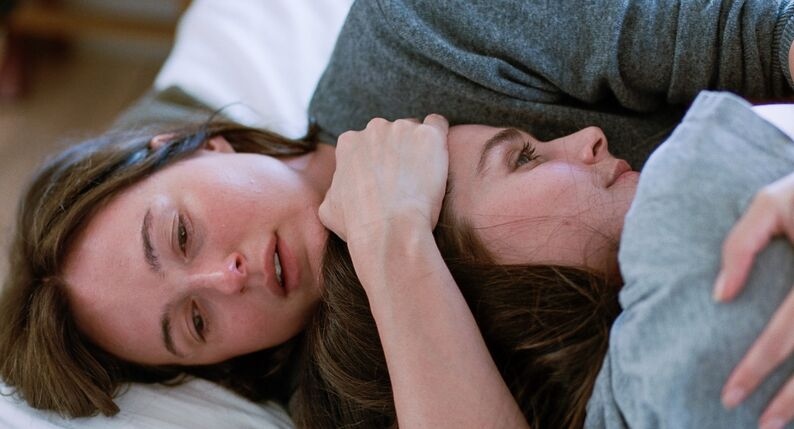
Grand Prix Winner
A theatre actress grapples with mental health issues and reconnects with her filmmaker father.
The festival’s standout film, Sentimental Value is a masterclass in acting and direction. Renate Reinsve delivers an exceptional performance, and Elle Fanning gives what could be considered the best performance of her career. The film delves into themes of women, cinema, and acting, subtly paying homage to Scandinavian cinema, especially Ingmar Bergman. The atmosphere and sibling dynamics echo Persona and Cries and Whispers.
Sound of Falling (Mascha Schilinski)
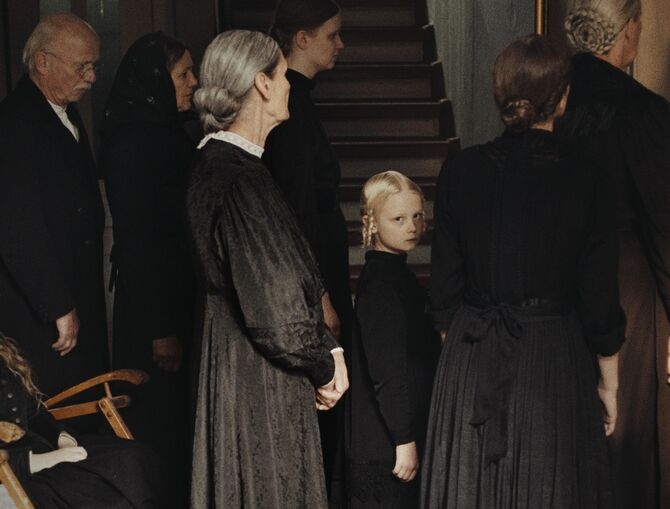
Jury Prize Winner (shared)
The lives of four girls from different generations in 20th-century Germany.
An intricate film that doesn’t shy away from ambiguity. While some narrative elements remain unclear, the director’s bold visual storytelling captivates the audience. The film’s focus on striking imagery over clarity is a testament to the filmmaker’s audacity.
Sirat (Oliver Laxe)
Jury Prize Winner (shared)
A father and his son arrive at a rave deep in the mountains of southern Morocco. They are searching for Mar- daughter and sister- who vanished months ago.
A film without a script, Sirât demands patience from its viewers. The first hour is filled with discordant music, leaving the audience questioning its purpose. The lack of character development adds to the film’s enigmatic nature.
Two Prosecutors (Sergei Loznitsa)
During Stalin’s era, a prosecutor travels to Moscow to report on the illegal torture by security forces in a local prison.
A film that expands a simple storyline without haste, immersing the patient viewer in the oppressive atmosphere of Stalin’s regime. While it doesn’t reach the brilliance of Loznitsa’s previous work, A Gentle Creature, it still offers a compelling narrative.
Eddington (Ari Aster)
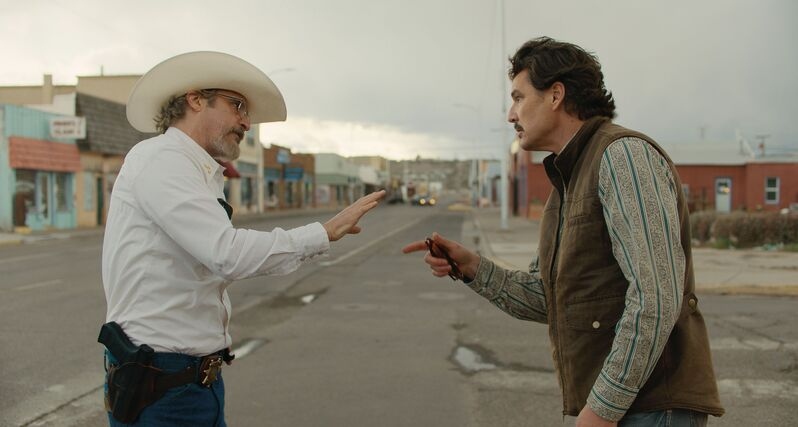
A marshal during the COVID era clashes with the mayor, setting off a fierce confrontation.
A strange film that didn’t sit well with many, but it’s an uncanny probe into the current state of America. It begins in the COVID era, with a marshal who wants to breathe freely and refuses to wear a mask—an act that sparks a descent into violence. The film mocks everything, from the death of George Floyd and the movement that followed, to the broader cultural fractures. Some might see it as an anti-left film, others as a deeply anti-right one, with clear jabs at Trump. But the filmmaker, in my view, cleverly keeps his distance, dragging both sides through the mud. It ends in a grim, harrowing place—yet still laced with dark humor.
Renoir (Chie Hayakawa)
An eleven-year-old girl in Tokyo in 1987 faces the impending loss of her sick father.
One of the most disappointing films in the competition, Renoir lacks a compelling narrative and striking visuals. The film’s aim seems unclear, raising the question of its place in the Cannes competition.
The Secret Agent (Kleber Mendonça Filho)
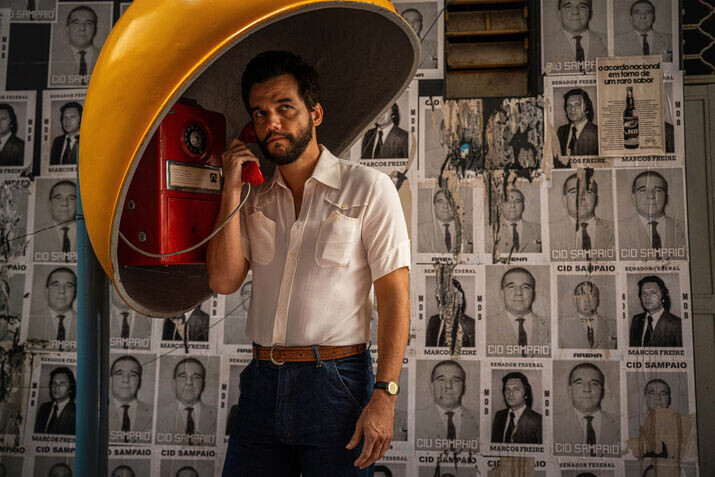
Winner of Best Director and Best Actor awards
A man in 1977 Brazil must flee to save his life…
An engaging film full of rich details and memorable scenes—including an extraordinary surreal moment where a severed leg attacks and kicks people. In many ways, it recalls Roman Polanski’s Chinatown but transported from Los Angeles to 1970s Brazil. Unfortunately, the film’s very long runtime (over two and a half hours, with some unnecessary scenes) detracts from the experience; otherwise, this could have been a masterpiece.
The Phoenician Scheme (Wes Anderson)
A father and daughter embark on a spy mission.
Unlike Roy Anderson, a marvellously inventive filmmaker whose every film contributes something new to the history of cinema, Wes Anderson is a hollow and pointlessly overinflated director. Once again, he’s in the Cannes competition with yet another disappointing film titled The Phoenician Map—full of silly, tasteless affectations that leave you unsure whether to laugh or question their very purpose. It’s loaded with soulless dialogue, which, in the absence of a coherent structure, feels more tedious than ever. As usual, the director indulges in his lavish budgets to produce cartoonish set designs that now lack any freshness or charm. After his initial experiments, it all feels painfully repetitive and ultimately fruitless.
Eagles of the Republic (Tarik Saleh)
A famous actor in Egypt is coerced into playing the role of the president in a film under threat and intimidation.
A gripping film about dictatorship and the concept of an artist selling out to the regime, this is a chilling exploration of a movie star’s fate under authoritarian power. The film probes layers of the actor’s personal life against the weight of authority, unfolding with a classic yet engaging narrative that pulls the viewer in and keeps them engaged throughout.
Young Mothers (Jean-Pierre and Luc Dardenne)
Winner of Best Screenplay
The story of five teenage girls who have become mothers and are now living in a shelter, searching for a better life.
Another repetition of the familiar structure and tone of the Dardennes’ previous films, offering little that’s new or evolved. Aside from a few compelling scenes, it lacks anything truly noteworthy. The film feels fragmented and fails to cohere into a consistent narrative. The screenplay award seems more like a gesture of respect for the filmmakers’ legacy than a recognition of this particular script’s merits.
New Wave (Richard Linklater)
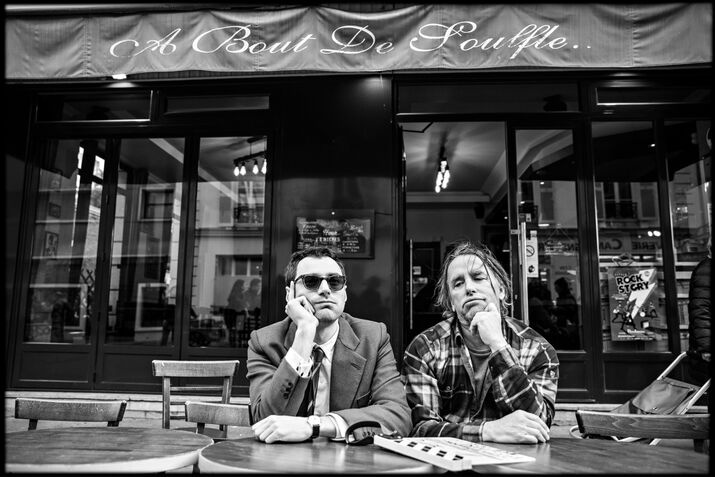
The story of the making of Breathless by Jean-Luc Godard in 1959.
A compact and enjoyable film that serves as a tribute to Jean-Luc Godard and the French New Wave—a gem that went unnoticed by the Cannes jury. A true cinephile will delight in seeing the editorial office of Cahiers du Cinéma and characters like Rivette, Chabrol, Truffaut, Rohmer, Melville, and even Rossellini come to life. This small black-and-white film is a joy to watch, especially as it centres on the creation of Breathless, with Godard’s signature madness and his behind-the-scenes clashes with Jean Seberg and the film’s producer becoming the main subject.
Woman and Child (Saeed Roustaee)
A mother with two children wants to marry a man, but something strange happens on the night of the proposal…
One of the weakest entries in the competition, its very inclusion is puzzling. A rehash of the flawed structures seen in Roustaee’s previous works, this time he attempts to explore women’s lives—a world he clearly doesn’t understand—and ends up making a film that is inadvertently anti-woman. Without realizing it, the filmmaker presents a passive, fragile female protagonist who absurdly accepts everything in the end. With melodramatic characters and events reminiscent of old Iranian popular cinema (Filmfarsi), this is yet another artificial film added to the director’s career.
The History of Sound (Oliver Hermanus)
The story of a singer from Kentucky who, in the early 20th century, moves to Boston and falls in love with another man.
A slow, drawn-out film that tells a rather unengaging story. Just when it seems to be shaping into a war drama set during World War I, it veers off course and instead indulges in a cold, detached portrayal of a relationship—peppered with an excessive number of musical performances that offer little appeal.
The Little Sister (Hafsia Herzi)
Winner of Best Actress Award
A young girl from an Algerian family in France begins to discover her homosexual desires.
A relatively compelling story about sex, love, and a teenage girl’s exploration of the world around her—and her inner desires, which clash with the expectations of her family and society. The film opens with harsh, explicit language against homosexuality (including a fight between the girl and a classmate when she’s called lesbian), but gradually moves toward a world that the filmmaker clearly knows won’t be accepted by the girl’s family. It ends with a reasonable—and not overly didactic—conclusion.
Fuori (Mario Martone)
A writer ends up in prison for theft and meets women who change his life.
Another tedious film that one wonders how it ended up in Cannes’ competition section; the film neither manages to approach the female world with any depth nor does it have the skill to craft striking mise-en-scènes or visuals. What remains is a fragmented, incoherent narrative that leaves the viewer wondering why they should care to follow it.
Resurrection (Bi Gan)
Winner of the Special Jury Prize
In a world where humans have lost the ability to dream, one being remains enchanted by the world of dreams…
A spectacular start that pays homage to silent cinema and tells its story through intertitles—borrowing Bernard Herrmann’s Vertigo score and referencing several iconic scenes from early cinema, including a Lumière Brothers film. But it later morphs into a long, disjointed piece that, while still visually captivating, loses the initial magic.
Case 137 (Dominik Moll)
A special investigator probes into police misconduct during the Yellow Vests protests.
A genre film that clings so tightly to its conventions that it becomes cliché: another woman facing socio-political events, this time from a supposedly fresh angle—but it ends up feeling like a repeat of countless similar French films in recent years, offering yet another disappointing entry from French cinema at Cannes.
The Mastermind (Kelly Reichardt)
A man, with the help of two criminals, steals four paintings from a museum.
A story that could have been far more engaging ends up tracing the tale of an ordinary man turning into a criminal without even realizing it. As he gradually loses everything, the film tries to focus on this slow descent—but the chosen narrative style renders it dull and monotonous.
Alpha (Julia Ducournau)
The story of a thirteen-year-old girl and her relationship with her mother, who is entangled in the troubles of her addicted, ill brother.
Alpha is different from the unbearable madness of Titane, but still dark, bitter, and unsettling—especially as it unfolds through the eyes of a thirteen-year-old girl. Her mother, played by Golshifteh Farahani (as a doctor from a Berber family with distinct beliefs), tries and fails to save her HIV-positive, drug-addicted brother—played with remarkable intensity by Tahar Rahim. At times, the film veers into horror; at others, it transforms into something almost apocalyptic. The presence of hallucinations, dreams, and the twists toward the end save it somewhat, though the overbearing and excessive use of music occasionally becomes grating.
Romería (Carla Simón)
Marina, an eighteen-year-old girl, must travel to obtain signatures from her paternal grandparents—whom she’s never met.
Another aimless film that puts all its faith in visuals while tagging along with a protagonist on a journey to find her roots and identity—a path we’ve seen countless times before.
Die, My Love (Lynne Ramsay)
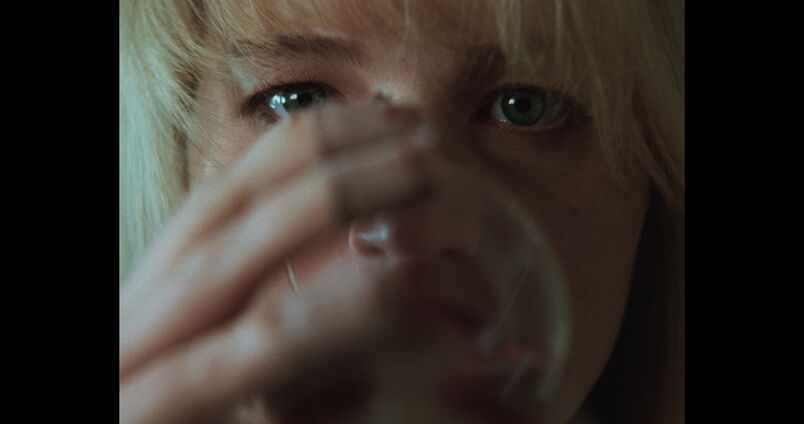
A new mother who develops postpartum depression and enters psychosis.
Lynne Ramsay’s best film—yet it went unnoticed. A strange and unflinching dive into the psyche of a woman struggling with complex mental issues. The filmmaker takes the viewer by the hand and leads them into a hellish space reminiscent of Darren Aronofsky’s Mother!—anchored by a stunning performance from Jennifer Lawrence, who fully deserved the Best Actress award.
