 By Mo Abdi
 By Amir Ganjavie
© 2020-2025. UniversalCinema Mag.


Can a shaman heal someone from a distance? This is the question posed by the documentary Supernatural, which follows a character who was healed remotely as a child by André Malby. Now, as an adult, she tries to contact Malby’s son to learn more about him, but the son does not believe in the supernatural.
The film crew travels to a location in Catalonia where children can read from any book while blindfolded. All of this is captured in a fascinating documentary directed by Ventura Durall, which was recently screened in the competition section of the 27th Thessaloniki Documentary Festival.
In this exclusive interview with Mo Abdi, Durall discusses the details of the film.
© 2020-2025. UniversalCinema Mag.

In its inaugural year, Montreal Critics’ Week has already made a name for itself by focusing on thoughtful curation and extensive discussions with filmmakers. Co-founded by film critic and programmer Mathieu Li-Goyette alongside collaborator Ariel Esteban Cahier, the festival showcases a diverse selection of titles without imposing competitive or thematic constraints. By creating a communal viewing experience—often featuring triple bills and long-form panels—Montreal Critics Week aims to spotlight lesser-seen cinema, nurture emerging voices, and foster rigorous debates about film and its cultural impact.
Amir Ganjavie, UniversalCinema Magazine (UM): Can you introduce yourself and tell me about your program, your role in your organization?
Mathieu Li-Goyette (MLG): Yes. So my name is Mathieu Li-Goyette. I’ve been a film critic now for eighteen years. I’m also a film programmer. I’ve curated numerous retrospectives at the Cinematheque Quebecoise in Montreal. Also in other festivals, I was a guest programmer at the Berlin Critics Week in 2018. And it’s basically where I encountered this formula of having double bills and triple bills and then panels of discussion and debates after the screenings. It had a very big influence on me.
Then after that, I came back to Berlin every year to attend the festival, but also to attend the critic’s week. And then finally last year, me and a very good friend of mine, Ariel Esteban Cahier, who was for more than ten years a programmer at the Fantasia Film Festival, we arrived at the point where my colleague, Ariel, lost his job at Fantasia. And we’ve been wanting to build a project together—a festival project—for a couple of years now. And then when that happened, we saw a good alignment to do something.
So we decided to create this Montreal Critics’ Week, which is very inspired by the Berlin Critics’ Week. We managed to get enough support, but mainly, we used the savings of our film magazine, Panorama Cinema, to build this first edition. Then we got the support of the Montreal Council for the Arts, and a couple of other sponsors and partners, like MUBI, came in and we managed to do the first edition.
(UM): How is the selection process in your festival? How do you pick up the movies? Is it through open submission? How do you get to know?
(MLG): For the first edition, we didn’t have open submissions. We wanted to do some scouting and find our own identity also. We were lucky because, as we’ve been in the cinema industry for a couple of years now, we’ve had good contacts and a good network to pull from—for example, people from the Berlin Critics Week, people who Ariel knew when he was working as a programmer at Fantasia. So throughout our contacts, and also other filmmakers that we’ve come to know throughout the years as film critics, we were finally able to have a list—a long list—of films for consideration.
Then, we assembled a programming committee composed of film critics, in partnership with the AQCC, which is the Association Québécoise des critiques de cinéma, the Quebec Film Critics Association. Through that association, we got two who were not in our team—Justine Smith, who writes for Cult Montreal, Little White Lies, and Rogerebert.com, and Mélopée B. Montminy, who wrote for another Quebec magazine called 24 images. The others were people from our magazine like Olivier Thibodeau from Panorama Cinema. It’s the five of us who saw the film and had discussions about them.
Our festival doesn’t have any sections. So basically, our entire team needs to agree on a film for us to program it. Also, what added a layer of complexity is that, obviously, most of the time when you program a festival, you program the films that you love. We do program films that we love, of course, but after that, we have to find some agency between the films—like, to be able to make triple bills or double bills through a thematic programming. So we really needed to find films that fit together, and also find films for which we could invite the filmmakers and have them in our discussion. It needed to be a good fit, you know?
Because I guess that one thing that is particular with our festival is that we do not sell tickets for individual films. We sell tickets for programs. So these are triple bills, most of the time—three films (shorts, mid-length, feature films, fiction, documentary, experimental). So it’s like three hours of screening. And then after, we do a sixty-minutes discussion. So, like, it begins at 7 PM and ends almost around midnight.
(UM): And how many films in total have you selected?
(MLG): We had 15 features and then four shorts, if I remember correctly.
(UM): And, most of them were Montreal premieres? How was that?
(MLG): We had a couple of world premieres, which we were really happy about—especially for the first edition, that some filmmakers were confident in giving us their world premiere. Lots of international premieres also, North American premieres, and Canadian premieres. I wouldn’t say that we’re that much into the premiere race thou, also because we’re non-competitive – and we want to remain like that. But at the same time, I guess it’s telling because the main motivation that we had to start this festival is that throughout the last years covering other festivals in other places in the world as film critics, we saw so many great films that never came to Montreal.
And in that, we are really lucky because in Montreal, we have lots of different film festivals that have different specializations. And, of course, those festivals cannot show everything—we really understand that. At the same time, I’d say we have this kind of problem: we don’t have a lot of art house cinema, so we don’t have a lot of local distributors. And then in return, I think that a lot of festivals locally put the pressure on themselves to be a “festival of festivals” and take in the big films that had prizes elsewhere—Cannes, Locarno, Berlin. So it leaves very little space for small films and new voices, new filmmakers. Again, it’s nothing against these other bigger festivals in Montreal, but we really felt there was a need—or at least a space—to create something different and more focused.
Because I think that what we want to create with our Montreal Critics’ Week is a space of concentration. You are always in the same theatre, a bit always with the same people. The filmmakers go on the panel, but they’re also coming back throughout the week. And on the panels, we have other people as well—moderated by film critics, but also featuring people from other walks of life. Like, we had novelists, professors, philosophers, I mean, writers of any kind, musicians, cartoonists—people who are not necessarily in the movie industry but that we think can add something interesting to the discussion. By having this concept, we really wanted to create a space that cared for the film and managed to put the filmmakers in the spotlight for a long time.
On our poster you see the filmmakers’ names on it. They really are the stars of the show. And one of the feedbacks we received from this first edition—from sometimes first-time filmmakers or people who are really at the beginning of their career—is how it never happens, basically, to have sixty minutes in front of an audience when you are at the start of your career. I mean, to learn to speak in front of an audience, to talk about your work, to interact with other artists—it’s not a given. Some people are very good at it. Others need practice. It’s normal, I think, but it’s hard to get experience on that front, also because most of the time, some filmmakers have lots and lots of exposure compared to others, so this gap is widening. I’d say that implicitly, it’s also one of the goals of our festival.
(UM): And considering the fact that it was the first edition, how was the reception, in terms of ticket sales or attendance?
(MLG): It went beyond our expectations. We had a 98% occupancy rate. It was sold out every day—completely sold out. I mean, there’s not a seat left in the house. Because, of course, as in any festival, you have some no-shows, some people are just not coming, but every day we had rush lines, and every day the theater was completely full. Except for one screening, I basically didn’t get the chance to sit at my own festival.
(UM): And what did you use for advertising even though it was the first time? Is it networking?
(MLG): We printed flyers, printed these programs that we distributed around town. We have a partnership that I’m very proud of with a local college, Maisonneuve College. They helped us to get some volunteers. And then the volunteers from the college helped us to get the word around and distribute the flyers and catalogs.
In exchange for that, in April, in a bit more than a month, we’ll do a redux version of the festival at the college with one night of our programming for the students. And we will do a panel of discussion after the screening, but this time the guests will be the students, and I will be the moderator. That’s something we really want to push forward for next year because I think it’s really important to build the next generation of audience and cinephile and to be assured they are not only influenced by Netflix and streaming platforms and the big hype stuff. And I think it’s something that needs to be passed on. When I say college, it’s Cégep in Quebec—it’s the first place where you can go into a cinema program. We want to start at that base, not wait for graduate students at the university. That more pedagogical way of catering to the public is very important for us.
(UM): And in terms of what you offer to filmmakers apart from inviting them to come and participate in the event, did you offer any kind of monetary awards?
(MLG): We don’t offer any prize. It’s noncompetitive. But obviously, we are trying to find the monetary means to make it possible for them to come to Montreal. And we were really happy because, in the first year, we had twelve filmmakers in attendance. So obviously, one of our next goals will be to have all the filmmakers here with us because it’s really based on discussion.
(UM): And in terms of selection, do you have a kind of quota in mind, or is it just mostly based on artistic merit?
(MLG): What do you mean by a quota?
(UM): Race quota, gender quota, nation quota.
(MLG): No. We don’t have a quota. We have goals. We want to be inclusive, of course. I mean, it’s a very natural domino effect, you know, because what’s important for us is to have good programs. And for us to have good programs, of course, we need good films. We also need interesting filmmakers, and through that also the need to have interesting discussions. So what is an interesting discussion in 2025 or 2026?
For us, it’s to have discussions on cinema and politics, on decolonization, on how you film poverty, how you address it, how you tell stories of migrations—contemporary subjects. So, of course, if we want to talk about these subjects, very naturally, we will have films that are both signed by men and women and by filmmakers from Asia or Europe or Latin America. We’ll have stories about Indigenous people, of course, because we’re in Canada. These subjects unfold themselves very naturally, because we want to speak about them. But we are not working from the get-go on a quota basis.
(UM): As a Canadian, I know one of the issues is that Canadian filmmakers do not have enough space to represent their works. Montreal’s situation is different compared to the rest of Canada, but I’m just curious if you have any special spotlight section of Canadian movies.
(MLG): We don’t have any kind of section, as we don’t want the festival to be competitive. We don’t want to compartmentalize the films. For example, we had two Palestinian movies in our lineup. And, of course, we discussed within our team: do we put them together and have a program on this, or do we separate them and make sure that the discussion on this— I mean, the occupation and genocide that is going on— we cannot dodge it. We need to address it. We don’t want to stick them together and do a thematic programming that would really corner the attention to one place or the other. That approach applies across our program. The same goes for Canadian filmmakers. They are spread across the program, and we don’t really make any distinctions. For us, it’s cinema, and it’s about artists that have something to say.
(UM): And in terms of the timing for the event, I see that it’s happening in January. Why did you pick this moment? Because I know it’s a very winter time, so I’m just curious.
(MLG): Thank you for that question. There’s a couple of arguments. The first is that, as we work in a sort of counter-programming stance toward the other big festivals in town, it’s easier for us to wait for their programming to be done, and then we can fill in the cracks. Because at the end of the day, we are not that much into a race of getting a premiere before the other big festivals in town. Our priority is for these films to be seen. So if a bigger festival shows it, we’re happy with that. It’s okay.
There’s that. Also, we love the idea of having this kind of “bookending” of the year. Adding the festival at the beginning of January, it’s easier for us to have a good view of what happened in the year before—what cinema was like the year before. So we like to think about it as a kind of portrait of the very important or very singular themes for us that went on through the films last year.
It’s also why, from one edition to the next, we never work with preconceived themes. We really wait to listen to the films. And while watching the films, some themes emerge. But I don’t know what will be the themes for the second edition; I don’t want to know in advance. I want to discover them. Also, we don’t really have any film festivals in Montreal during winter. I find it nice because Montreal and Quebec—it’s a winter country, and it’s nice to have films from abroad in winter. It’s a change of pace.
It’s easier also because the festival is so demanding on the public—the screenings are long, the discussions are long. There’s something cozy about having them in January. You’re kind of tucked in together in a theater in Downtown Montreal. It was a very beautiful first edition for us. People were hanging together throughout a winter storm, and it’s minus 25 outside, and you find a refuge in the cinema. I like that idea a lot.
(UM): And in terms of venue, because securing venues is not always easy for festivals, I’m just curious how the situation is in your festival.
(MLG): In fact, it was a bit hard to find our venues. As I said, we have lots of film festivals in town, so the venues are very in demand. And most venues, of course, have their own programming. So we were able to secure two theaters for that first edition: the Cinémathèque Québécoise and the Cinéma Moderne. It was only one venue at a time, and eventually, during the week, we switched to the Moderne, and then for the closing night, we switched back to the Cinémathèque.
It went very well. Of course, the vibes are different because they’re different venues—one is more institutional, the other is more of a micro cinema with a bar and stuff, so it’s different. We like them both. Obviously, in a perfect world, the festival would be in the same spot. But we are hopeful to find one for the second edition. We have some venues in mind, and we’re already working on that.
(UM): And my last question, what will be your goal for the second edition? Do you have any specific goals for the second edition or your ideal?
(MLG): I’d say to get more funding, of course. It’s always hard to start a festival. We were lucky because we have the magazine backing it up, but of course, the magazine took a toll because of that. We don’t want the festival to hurt the magazine, and we want to keep the magazine alive. So it’s kind of a balancing act. I guess that throughout the next year and the upcoming years, the more financing we can find just for the festival, the better it will be for keeping the magazine’s funds intact.
We’d also like to have even more filmmakers. We might have a bit fewer feature films and a bit more shorts or mid-length films, just because our evenings were very long. I think it was very interesting, and as I said, it was basically sold out every evening, and people kept coming back. What we saw was that people were really not accustomed to that kind of formula, at least in Montreal. So our first two days were sold out pretty quickly, and then after people saw the formula, they booked tickets for the rest of the week while the week was going on. It worked in that way. But at the same time, I’d say because the program was so long, we missed some time for discussion. I would love the discussions to be longer because they’re so interesting, and people are staying, and filmmakers are loving it.
So, yeah, I think we stretched it a bit for the first edition—maybe just to show that we could do it. But we’ll adjust and fine-tune some things. Even when I say that, it’s nothing drastic. We’re really happy and proud of what we did, especially with the kind of resources that we have.
© 2020-2025. UniversalCinema Mag.

In this conversation, Samuel Jamier, President and Executive Director of the New York Asian Film Festival and Foundation, offers insights into the festival’s origins, its focus on Asian cinema, and his personal take on programming criteria. He reflects on the influence of globalization and streaming services on film curation, discusses the challenges of staffing and funding in the U.S. festival landscape, and explains his vision for showcasing films in a city as diverse and demanding as New York.
Amir Ganjavie, UniversalCinema Magazine (UM): What’s your role in your organization?
Samuel Jamier (SJ): I’m Samuel Jamier. I’m the president and executive director of the New York Asian Film Festival and Foundation.
(UM): Can you tell me more about your festival? What kind of movies are you looking for? Is it for all the regions of Asia?
(SJ): So, it’s focused on the Asia region, which for us, because of its origin, started as a genre showcase of specifically Hong Kong films. Although we did show films from South Asia, that has come to decline a little bit, that part of the world for us. So we’re quite focused on East Asia.
What kind of films are we looking for? You know, I’m gonna give you a very American response. It’s the other way around. It’s, okay: great storytelling. I have my idea of really… I mean, cinema is a very impure art in a way. There’s a French philosopher who calls it the most impure art form. By that, you could say it’s hybrid. It’s just a combination of different arts, right? There’s drama in there, there’s literature in a sense, there’s photography and music. So, to me, that means you use all these elements, and you have an experience of, I don’t know, ninety minutes, two hours, and it takes you somewhere at the end of it, you know? It transforms you in a sense. So that’s the kind of film I’m looking for.
(UM): So, you are looking for movies with good stories, that are very good at combining different art forms and creating a unique experience.
(SJ): Yeah. Something unique and fun. I think I do believe in film as mass entertainment, something with broad appeal. Accessibility. You know, again, running a film festival in New York and America, that’s kind of central to the concept of cinema, right? It’s the largest commercial industry in the world—arguably, China is also massive, and India’s…
(UM): But you mentioned that you started with a genre of cinema. Genre cinema usually uses a kind of predefined format, and they’re trying to play with that format and not going too much out of the formula. So how does it fit with your current goal?
(SJ): Well, first of all, that was the beginning of the festival. It started quite differently. It was heavily focused on Hong Kong films because the founders—I’m not one of the founders—joined the festival at its midpoint, a halfway point now. I joined it in 2012, if I recall correctly, as a programmer of Japanese films and then Korean films. So, I joined to help out with the selection of films from Japan and Korea. And then later on, a year or two later, I took over the artistic direction.
Because of its DNA, the festival was started by a group of fanboys who loved kung fu films. The last Chinatown theatre in New York closed down in the early 2000s. So at the time, the idea was to try and preserve that film culture and continue to show it. So that’s where it’s coming from, and I try to maintain that and not completely drift too far from this point of origin. So it’s quite central to what we do.
Having said that, I mean, what does genre mean? I’m often asked to talk about it. You have a set of conventions, but you alluded to it yourself—I mean, you can do whatever you want with it, in a sense. You can do whatever you want with it. In a sense, you operate… What is not a genre? It’s easy to argue that arthouse film, which we tend to oppose to genre film, is also a form of genre film. It has tropes of long takes and a certain type of cinematography. So I’m looking for something that’s innovative within a certain number of conventions as well.
(UM): How do you define Asian cinema?
(SJ): I tend to follow what’s… to respect the legacy of what was created. Our definition of Asia—Asia, in a sense, doesn’t really exist. Asia is a definition from the outside. I mean, you know, when I lived in Japan—to give you an example, I lived in Japan between 1999 and 2001 roughly. I speak decent Japanese, I would say, without being 100%, but I can read, write, and so on. So when I lived there, you would sometimes find you would go eat—sometimes we would have “Asian restaurants.” So first of all, at the time, I discovered, to an extent, Japanese people, at least during that era, did not really see themselves as Asian. You know? So Asian restaurants were something exotic. You would walk into an Asian restaurant, it was indicated they would serve you Korean food, Vietnamese food, and Thai food.
I lived in the UK… at the time, and I believe that’s still the case largely, “Asians” meant South Asians. You know? The first time, there was a group called Asian Dub Foundation or something—they were all South Asians. Do you know what I mean? So I think it’s very much a definition from the outside.
I mean, you look at groups that have some similarities, a certain set of family values, and so on, which, you know, I tend to think some of them are pretty universal sets of values—just a view from the outside again. So you’re gonna have the South Asian block if you want, and then people who use Chinese characters, let’s say, broadly speaking, what people who don’t know anything like to call “Confucian values.” I hate the usage of the word. Usually, it’s completely off the mark.
To me, Asia is a constructed idea—a functional fiction that I work within. And due to the way the festival was started, to me, that means countries of East Asia. But we look everywhere, like Central Asia, South Asia. I would love to restore a place there, but you have also—I mean, you run a film festival. Right? To an extent, it’s an operation that’s run with money, with sponsors, and so on. So there’s a fair amount of practical considerations I have to take into account. That limits—I have limited space. I can’t show 200, 300 films, right? So that is one of the issues I’m facing now. But hopefully, I’ll be able to fix it as soon as I can.
But again, to me, the idea of Asia as a single, unified entity is largely an external construct. Different cultures within Asia don’t always identify with this broad label, and I think it’s important to challenge how the West categorizes Asian cinema
(UM): So in practical terms, for example, if there is a filmmaker from Asian descendants, do you consider him as an Asian filmmaker?
(SJ): It depends on what he has to say about where you’re coming from. It has to do with origin, your point of origin. I mean, you can be… Look at Chloe Zhao, right? She’s a Chinese-born director. I mean, oh, what happened to her? When you think about it, what is she doing? I didn’t track that very carefully. Look at Nomadland—I mean, I don’t know, what would you call that? That’s not really an Asian film in any sense, right? Mickey 17, I haven’t seen it, but I would argue that’s hardly an Asian movie. a film directed by an Asian director… To me, okay, it’s an open question, really. I’m not gonna say—I don’t wanna fall into the trap of telling people, “This is what you are.” I mean, that’s pretty much the disease of our age, like, “Who am I?” You know? In my view, in the programmer’s view, maybe they feel differently, but as far as I’m concerned, it’s supposed to be a question mark. And when there’s a question mark like this… yeah. But I don’t know any—yeah.
(UM): Because of globalization, festivals around the world are starting to look more and more alike. Do you see this as a potential challenge for a festival like yours?
(SJ): Absolutely. I agree. Well, I mean, you know, it’s also due to that there’s still a dominance of European standards —like, for example, .Many international festivals tend to favor a certain aesthetic when it comes to Asian films—often reflecting European tastes more than regional diversity. This is something I’m mindful of in our own programming, and we try to balance artistic innovation with broader representation
That explains we’re just talking about it, “fascination.” Fascination? There’s sometimes a preference for a certain type of Asian film—one that emphasizes slow pacing, visual poetry, and rural aesthetics. While these films have artistic value, it’s important to also showcase the full range of contemporary storytelling from the region.
Also, I mean, you know, there’s a category of filmmakers: they get trained at NYU, France. So they also adopt some of these standards. I’m not saying these films are not interesting, but you have to see who the people who make these films are and who the people who show them are, and you see a convergence. And that’s where you see sort of a global landscape with a similar type of films that goes everywhere.
I mean, okay, well, let me name one name that’s just so obvious: Hong Sang-soo. You know, that’s—it’s so obviously catering to certain types of clienteles. I mean—and that’s an enigma to me. Again, let me not—okay, don’t get me wrong. I’m not saying Hong Sang-soo is not a great filmmaker, but you have to take into account the fact that he’s mostly praised and exhibited, curated, by people with a heavy focus on European film, and usually who don’t actually speak a word of Korean, which is really puzzling to me, because these are films that are heavily reliant on dialogue. So that really raises some questions, you know? Again, I proceed—I’m not trying to find solutions to the enigma of world cinema, but I try to ask myself these questions constantly and redefine every year. What does that mean?
I end up showing some of these films. I mean, it’s true, some of these films make it into our program. Sometimes I’m like, “This raises interesting aesthetic questions, ethical questions. It has something to say about the country. So how come you have a certain type of middle-class, upper-middle-class filmmaker making this type of film?” There might be some value to showing that, right?
(UM): And you are mentioning Bong Joon-ho. Was there any kind of ‘parasite effect’ in your market?
(SJ): Oh, absolutely. Bong Joon-ho was sort of a landmark moment, for sure, around the world. I mean, it’s the first time—well, at the time, I was like, obviously, going to win the international… they used to call it the foreign film category, okay? The international film category, right? So that was pretty clear. The fact that he won the Oscar for Best Movie—I think it was a shock to everybody, including its filmmakers. it was a landmark moment. Very critical in introducing, in opening up European and—well, Western taste, right?
So all of a sudden, you have a film… you’re not anymore like the “global South,” they call it, I guess, or like “the rest.” The West and the rest. So as of now, you have an intrusion from the outside, and you see—being Korean-born, to me it was incredible to see that, a very moving moment. You know, I’ve been introducing Korean films since 2007. And I did this early-career retrospective of Bong Joon-ho in 2007. So that’s quite something, to see that on screen. I mean, at the time, in 2007, that was the year Magnolia released, the company Magnolia, The Host, right—that monster movie, genre movie. So that was definitely a defining moment, quite important.
But more important than Bong Joon-ho to me, in the sense of the Squid Game and the Korean TV drama phenomenon, because that is truly mainstream. Now, there’s sort of increasingly, I find, a divorce between the masses and film. There’s a crisis of commercial cinema, I believe.
(UM): This might be a bit tangential, but thinking about Bong Joon-ho’s success with Parasite—winning both the Palme d’Or at Cannes and the Oscar for Best Picture—makes me wonder if it marked a turning point for U.S. cinema. It feels like the same movies now sweep multiple major festivals, blurring the lines between independent and commercial films. Do you think this indicates a loss of unique identity for American cinema, or that Hollywood no longer values its own film culture after Parasite?”
(SJ): I don’t think Americans don’t believe in their films anymore, you know? There’s still, like—since we’re talking about Bong, like, the subtitle barrier, right? So a lot of the stuff gets dubbed on Netflix and so on, so there’s still—I do believe it’s opened the field to foreign-language films for sure.
I think the crisis is within American commercial cinema itself, namely Hollywood. I mean, there’s a narrative crisis, you know, we’ve been talking—I mean, it’s been beaten to death now. It’s, like, very popular to trash superhero movies. And I don’t think there’s much of a point in engaging in this because, I mean, it’s a fact. I mean,
What you’re describing, the fact that you’re seeing the same films everywhere, it’s a network. Like, everyone knows each other. I’ve been seeing the same folks for the past ten years, roughly speaking. It’s musical chairs. They go, in some cases, they move from company to company, but fundamentally the major players remain roughly the same. There’s a new generation emerging, but it’s pretty much the same. Like, for all this talk—well, now it’s being reversed—the talk about DEI, you know. I was at an industry event in Chinatown, and it struck me that despite working in film, many attendees had little familiarity with Asian culture. It was a stark reminder of how insular the industry can be, even in a diverse city like New York.
So you see the limitations. Despite all of this, America remains very inward-oriented, I mean politically and all that, it’s very visible. Extraordinarily inward-oriented.
So it’s opened some barriers, but I think it has some limits. And to go back to what you were describing, like, okay, you have this in China—these are people, they all know each other. At some point, you know, it’s the same for wrappers. Then they move. One guy programs for Berlin, and then next thing you know, it’s different, you know? So the same stuff gets shown.
(UM): And one of the major problems with many festivals is about securing the venue. So I’m just curious, how is the situation in your case? Do you have your own venue?
(SJ): My dream, my ultimate goal, is really to have our own venue. Of course, that would be fantastic. I think there’s enough space and appetite—well, it’s an appetite you have to create—but I would like to have a space dedicated to Asian cinema, again, whatever that means. And open it up, show films from the Middle East, from Central Asia—these are very rare films to see at festivals, right, let alone in theatres in general.
Well, we’ve been lucky enough. We’ve had a very strong partnership with Film at Lincoln Center. So in terms of the cost and the availability, I mean, it’s almost a given. Like, every year, I don’t have to ask myself the question. The festival as a whole, very clearly—there hasn’t been a doubt in my mind for years, like, that’s who we work with. We’re basically—it’s a client organization. There’s no hostility now, you know. So that comes into play. That’s not a huge preoccupation. We’re lucky enough that New Yorkers are very supportive of the arts. We’ve also expanded. We had an event at the SVA Theatre—excellent relations as well. The SVA’s theatre belongs to the School of Visual Arts, right? So there’s an educational value to it. We’re in a great place.
New York is good. I would like for New York to have better theatres. The art house theatres—I don’t know why you have to sit in these shitty seats. I don’t get it, you know? So I wish the standards would go up a little, and that’s why I wish I had our own venue. Having said that, we also use a small multiplex, Luxe Cinemas, a relatively new entity. Again, this is someone very supportive of the arts. The deal I’ve made with them is great, so I really can’t complain. It’s not like everything is rosy, but at least on the venue side, it’s not a huge issue.
(UM): Many festivals have just temporary people who are working for them. And this causes a kind of anxiety. They need to work for a few months, and they don’t know what they should do for the rest of their life. I wonder, what is the situation at your festival?
(SJ): So again, I’ve been quite lucky. I don’t know, maybe I have some kind of gold or something, but, like, people work with me and work with me for a long time. After that—on the programming side, it’s a pretty stable team. Well, all of them have a day job, I’ll be honest. I mean, I have one dedicated staffer in the programming as well as myself. They review films all year long. They seek films, like, twelve months a year. So in that sense, I’ve been lucky.
Having said that, I mean, I wish there were better ways of paying staff. I rely on a lot of volunteer labor, and that’s not great. I mean, ethically speaking, there are crazy questions, but I can’t make up money we don’t have. Do you know what I mean? So what I do sometimes comes at a personal cost to me as well nowadays. I’m like, it’s a lot of sacrifices. And that’s when America, in particular, has a serious problem. I think Americans don’t take culture very seriously. A lot of the funding—like, first of all, I mean, it’s not gonna get better, right? The funding from the state is ridiculous. I mean, it’s zero. There’s a reason why European film festivals tend to dominate. It’s just—I mean, they have state support. I mean, you have governments that care about the preservation of their culture, the prestige and the importance of culture in everyday life, and not just the fucking economy and money. Obviously, these operations have to be operated with funding.
So Americans… it’s hard for me to respect the big international film festivals in America. I don’t think those are great. I mean, none of them are particularly outstanding in my view. They’re very world-oriented, very American, you know, so that’s not good for me.
(UM): I sometimes feel that Us festivals become very politicized, and care not enough about film as an art from.
(SJ): Yeah. You’re 100% right. You’re 100% right. You are from Toronto, correct?
(UM): Yes, I’m from Toronto, right?
(SJ): You understand. So just to go back to your question one second: it’s significant to me, it’s significant in general, that the most important film festival in the Americas is not in the US, it’s in Canada. The Toronto International Film Festival, I would say, has a lot more prestige than any of the other American film festivals. I think a lot of industry people would argue it’s an interesting film festival. Their programmers are really quite good. A few of my friends work there—they do have really outstanding programmers, really great programming. I mean, I don’t always agree with their choices, and the idea that now it’s part of the Oscars race is pretty questionable to me. But having said that, I mean, it’s a great operation.
Just talking about, you see that it’s a country that cares about culture. You see it, sort of in a central position, as opposed to decluttering. So, in terms of, like, the move away from the story—yeah, 100%. I think a lot of it is, it’s associated with corporate, a sense of corporate responsibility. So, like, people from private equity firms find that you need to say something about this and that, but it’s ideology-driven. It’s not very well thought out. I mean, I think obviously, it has to do, of course, with course correction. You have a large number of ethnic groups, as well as people with different sexualities that are underrepresented, sure. That should be shown. Of course.
So there was, at some point, an attempt at course correction. I thought it was very poorly, if at all, thought out. So what does that mean? That means you have a bunch of ideas and criteria that are inserted into films without actual integration into the narrative. So you really try to fit—what’s the question?—a square peg in a round hole or a round peg in a square hole? It’s not a great fit. So you have stories that are very artificially designed to represent this or that minority group. I mean, for example, when it comes to historical dramas, you end up straying very far from the historical truth, and you’re telling a lie to yourself. You’re trying to reflect on the past with what’s in the present. And, I mean, we know, racism has been around for a long time. I come from an area where I was the only Asian person who grew up in my area, the only non-white person. And some Hollywood guy is gonna show up, make a movie about Brittany. So I grew up in Brittany, you know, northwestern France. It’s gonna be, okay, let’s have 20%… it’s a lie. That’s just not the way the region was. There were very few immigrants or, you know, people like me, and it doesn’t reflect the truth.
So, to go back to what you’re saying,absolutely, it’s just poorly thought-out collective sort of… — poorly thought-out course correction of social wrongs. When it’s done like that, I mean, you have a backlash, which we are facing now, for sure.
(UM): How do you think the push to appoint more diverse executives—who often operate within the same corporate, profit-driven system—has affected the quality and creativity of commercial filmmaking?
(SJ): Fundamentally, I was just describing to you the situation in New York. The major players haven’t changed fundamentally. There’s been an effort to appoint more executives of color, which is important. But unless the system itself changes, diverse leadership alone doesn’t automatically lead to more creative risk-taking or broader representation in storytelling. And they’re not necessarily creatives either. So that is a big problem. Right now, let’s say you work for Disney. You essentially work for a big bank, you know? That’s not the mentality. they impose a certain set of norms without thinking first, this is how you make a good story.
So that’s a huge issue, of course. I mean, there was a time when I actually enjoyed commercial films. You could see a film like Rain Man, because that used to be the definition of a commercial film, or, like, you know, not to say that I love Rain Man or something like Pretty Woman. These films would be hard to make and finance these days, right? If you don’t save the world, you know—if America doesn’t save the world, it’s not gonna get the budget you want, you know? At some point, there’s a sense, “Oh, we have to spend $200 million so we can make a billion.” So yeah, it’s not very narrative-driven, I would argue.
(UM): How was the impact of Netflix on your film festival or streamers? Did it change the population or the number of people who are coming to your festival?
(SJ): So, as I’m talking to you, I realize how lucky I’ve been, and maybe there’s a fair amount of luck too in what we’ve been doing, because I think it’s actually increased the interest of people in non-English language, perhaps foreign, you know? So that’s great.
Having said that, I mean, I think the advantage of running the festival, to an extent, you offer some choices, but it’s limited. You don’t have to scroll on an interface for hours not knowing what to do. I find that with streaming services, you spend a long time just choosing a film—if at all. It’s the equivalent of flipping four channels now. You just look at this, your recommendations. A lot of people just do something else while they watch Netflix now. It’s become, you know, people don’t really watch the films when they watch Netflix. I mean, what is it they’re watching when they’re watching Netflix? That’s what’s interesting. That’s what we say now: “Oh, what did you do yesterday?” “I watched Netflix.” You know? It’s not like you don’t really watch a movie—you spend some time on the platform. That’s a little bit worrisome.
So I think in a sense, we’ve benefited from the dominance of the streaming platform in that they offer a huge amount of accessibility. It’s “content,” right? That’s the big word we’ve been using for now, I don’t know, a decade or so, right? So it kind of flattens everything. So you’re like, one night you can watch a Norwegian—like, a Scandinavian crime drama, and then a Korean TV drama, and then animation. You watch, you know, like, an action film, all that. It’s kind of an indiscriminate sort of buffet of content without any sense of, okay, this is more important than that. Sort of, bam. This means you can watch anything you want.
Ultimately, I don’t think people like to use their liberty of choice. They like the illusion of choice, you know, not to go all Matrix on this. But when you have a selection of films at a film festival like ours—and others too, I mean, Berlin, I genuinely enjoy Berlin a lot too, the city and life in general, the culture—but, I mean, it’s programmed by a human being, you know? You watch a film, you’re not necessarily—so what I find interesting sometimes is the bad choices, like the lack of taste, because, you know, it’s not an algorithm. So, like, oh, this film, you know, it has problems there—like, the ending is sort of messy. Sometimes I love that. Like, I go see a film, l wonder if certain films were the right choices, but that’s part of what makes human curation valuable, the selection of it, you know, like, oh, fallible. Of course, I’d like to believe I have good critical judgment, as well as my team. But every now and then, I look at the program, and I don’t know if that was really the right film. But that’s what makes it human as well. And you have a finite selection. It’s not like you can program a million films, you know.
I disagree with the view that you have to expand forever. At some point or another—which is also why I have trouble right now rebalancing the different regions. It’s pretty complicated. It’s a very baggy region. It doesn’t make sense. It’s just, what is Asia? I mean, it sounds to me Asia is the majority of the world on the planet, in a very real sense. I mean, India alone, I mean, that should be—like, is it fair to include India in an Asian film festival? India is like this massive culture with I don’t know how many languages. You know, if you count the Telugu language production alone, it’s huge. I mean, I don’t know. It could have a festival of its own just focusing on that. I would need—I don’t know how many parameters I would need to have to make a decent selection of Indian films. What does that mean, you know?
I think that’s where we are. It’s an interesting moment because culture is becoming incredibly industrialized, and it’s impacted the film festival, the International Film Festival circuit, right? So, it’s tough times ahead. So far so good for me, but the challenges, particularly in the past few days, I’m like, this is gonna be a tough road ahead, for sure.
© 2020-2025. UniversalCinema Mag.

Denis Côté has long been known for his fascination with unconventional characters, often navigating the fringes of society and human desire. His latest film, For Paul, premiering in the Panorama section at Berlinale, is no exception. Inspired by a real-life encounter, the film follows Paul, a man whose lifestyle challenges mainstream perceptions of relationships, power dynamics, and personal agency. In this conversation, Côté discusses the fine line between judgment and observation in filmmaking, his resistance to over-intellectualizing sexuality, and his instinctive, fast-paced approach to cinema. He reflects on how For Paul evolved unexpectedly, revealing new anxieties about the relationship between identity and digital self-representation. We also explore his views on objectivity in documentary filmmaking, the evolving landscape of sexuality in the internet age, and his enduring appreciation for Iranian cinema. As always, Côté offers a refreshingly direct and self-reflective take, questioning both his own methods and the broader cinematic discourse surrounding desire, control, and the limits of non-judgmental storytelling.
© 2020-2025. UniversalCinema Mag.
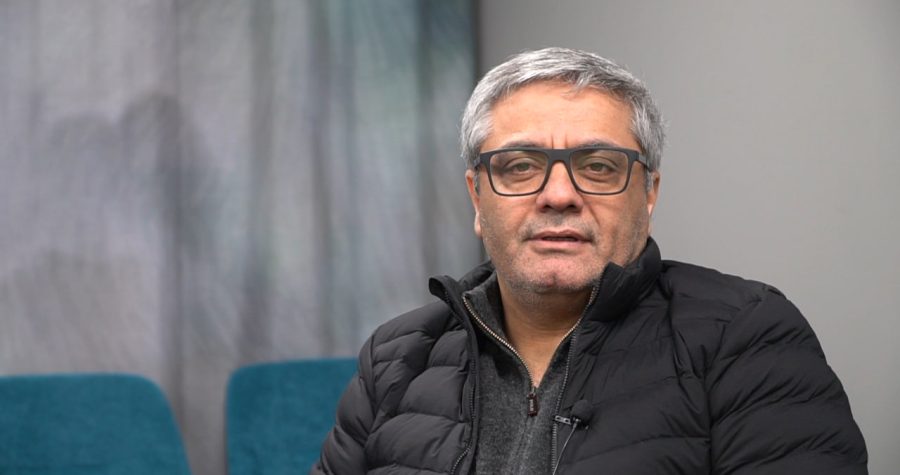
The Seed of the Sacred Fig, directed by Mohammad Rasoulof, is one of the contenders for the Best International Feature Film award at the 97th Academy Awards. In this exclusive interview with Mo Abdi, Rasoulof discusses the film’s nomination, his expectations regarding winning or losing, and the impact of this award on his future career abroad.
© 2020-2025. UniversalCinema Mag.

© 2020-2025. UniversalCinema Mag.
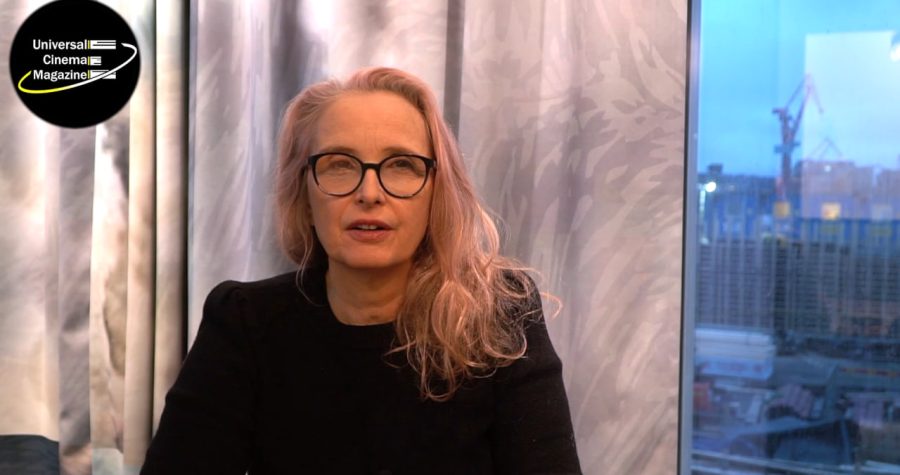
Julie Delpy, who began her career at the age of sixteen with Jean-Luc Godard, has been active for several decades as an actress, director, and screenwriter. She recently received the Honorary Dragon Award at the Göteborg International Film Festival.After working with renowned filmmakers such as Krzysztof Kieślowski and Agnieszka Holland, Delpy contributed to the creation of the unforgettable “Before” trilogy—Before Sunrise (1995), Before Sunset (2004), and Before Midnight (2013)—playing the role of Céline. She was also involved in writing the screenplays, incorporating parts of her personal diary into them.In this exclusive interview with Mo Abdi at the Göteborg Film Festival, she discusses the trilogy, her beginnings in cinema, her perspective on filmmaking as both an actress and director, and her latest film, Meet the Barbarians
© 2020-2025. UniversalCinema Mag.
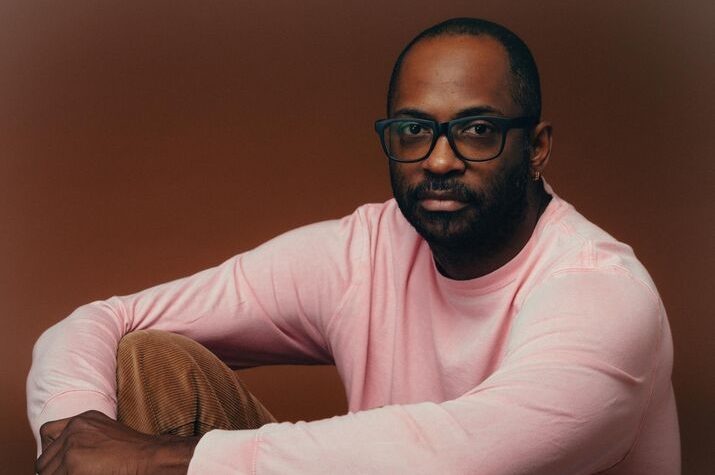
In this in-depth conversation, filmmaker RaMell Ross offers a behind-the-scenes look at his cinematic adaptation of Colson Whitehead’s powerful novel, The Nickel Boys. Ross delves into the creative choices that shaped the film’s emotional core—from his bold use of point-of-view shots to his collaborative process with actors. He also reflects on balancing authenticity with artistic freedom, illuminating how the haunting landscapes and the subtleties of performance underscore the story’s central themes of trauma, injustice, and survival. Here, he sits down with interviewer Amir to discuss the challenges and triumphs of bringing this urgent narrative to life.
Amir Ganjavie, UniversalCinema Magazine (UM): My first question is about adaptation. Adapting such a powerful novel to film can be challenging. What were some of the key decisions you had to make to ensure that the themes of trauma, injustice, and survival resonated in your adaptation?
RaMell Ross (RR): That’s a good question. I didn’t think too much about how the themes would resonate because Colson’s narrative is already so strong. All you really have to do is establish that framework, and people recognize the horror of a reform school in that era. The bigger challenge was not overemphasizing those themes. I wanted them to feel sinister in a quieter way, more as a disturbing undercurrent than something overtly dramatized.
(UM): Were there challenges in maintaining the authenticity of the novel while adapting it to the screen? Were there moments when you felt you needed to use artistic license to amplify the story’s emotional core?
(RR): Absolutely. In fact, my co-writer and I felt the novel was so powerful that we needed to step away from it—sort of stand beside it rather than live inside it. That way, we weren’t forced into constant comparisons. We wanted the film to do what cinema does best, rather than strictly follow every detail of the novel. We distilled the story down to its essence: a path of love moving through the characters. That guiding principle helped us stay true to what Colson wrote without feeling burdened by every detail.
(UM): The performances in the film are incredibly emotional. How did you work with the actors to bring out the depth and complexity of their characters, especially in scenes involving difficult topics like abuse or institutional racism?
(RR): I like to give actors a lot of freedom. They’re the ones who best know how to convey a character’s nuances. I have early conversations with them about the core traits of a character—Elwood’s resilience, optimism, and strong sense of self, for example—but then I step back and see how they interpret those traits. My role is to make sure they’re not veering in the wrong direction. If what they’re doing feels right to them, it will often feel authentic to the audience.
(UM): So you didn’t have specific, preconceived ideas about how each scene should be acted? You allowed the actors to discover that organically?
(RR): Exactly. I knew I wanted the performances to be subtle and restrained. For instance, I didn’t want Hattie to be a stereotypical, overly emotional grandmother who’s always wailing—she’s more measured. I also didn’t want the film to be overly conceptual; the characters could easily become archetypes if I imposed too much. You’ll notice the sound design is organic but also guided, and I like to bring that balance to all departments, including the actors.
(UM): The relationship between Elwood and Turner is central to the narrative. How did you work with the actors to highlight the nuances of their friendship and its evolution?
(RR): That was probably the toughest part. Brandon and Ethan—who play Elwood and Turner—have such great chemistry that sometimes we had to pull them back. We’d say, “Hey, guys, you just met. You should be skeptical of each other. Turner isn’t fully Elwood’s friend yet.” We had to remind them where their relationship stood in the story’s timeline. Otherwise, their natural chemistry was already there. They really looked at each other with care and love. That sort of connection can’t be directed or manufactured.
(UM): How did you decide they were right for the roles of Turner and Elwood? Was there a traditional audition process, or did your casting director propose them?
(RR): We had a lengthy audition process. We found Brandon (Elwood) quickly, and I had an initial idea of who Turner was from the novel. Then Ethan auditioned, and even though he wasn’t what I’d initially pictured, I knew right away he brought something special—he had this ease and adaptability, very much like Turner, who’s a survivor. Brandon, on the other hand, projected Elwood’s optimism and introspection effortlessly. Most importantly, neither tried to act like a “historical” character. They were simply themselves, delivering the lines naturally instead of adopting an accent or mimicking a stereotypical 1960s persona.
(UM): The film’s use of point-of-view shots is very striking. What motivated you to choose this perspective, and how does it enhance the emotional experience?
(RR): I’ve long wanted to make a POV film. It’s how we naturally see the world, yet cinema mostly uses a third-person perspective. With Colson’s novel, it felt right to put viewers inside the characters’ eyes. It was the best way to give life to the Dozier School boys and to Colson’s characters—there’s a spiritual reason to see through their eyes. It brings the audience into a more active, even complicit, relationship with what’s happening.
(UM): In some scenes, we break from that POV and see a more traditional shot. How did you decide when to use full POV and when to pull out of it?
(RR): The only characters who really have POV power are Elwood and Turner. They truly see each other in a way no one else does. The camera can be inside either of them. Then, at the end, when Elwood is shot, the perspective shifts out of Turner—he disassociates. He takes on Elwood’s name while on the run, and in those future scenes, the camera follows behind him because he’s not living as himself anymore; he’s living as Elwood. It visually represents his trauma.
(UM): Could you say more about collaborating with your Director of Photography to achieve that POV style?
(RR): We spent a lot of time defining how the camera should move like a human eye—focusing on attention rather than just framing. We wanted it to feel like the world already existed and the character was simply looking around, rather than the camera building the world for the viewer. We also worked on the small gestures—how someone might avert their gaze when uncomfortable or when hugging someone. We practiced a lot with a DSLR in the DOP’s Airbnb, figuring out details like how the camera should tilt to replicate a natural line of sight.
(UM): In many ways, the Nickel Academy itself feels like a character. How did you use the physical environment to reflect both the characters’ internal struggles and the larger societal issues?
(RR): We wanted it hot, bright, quiet—almost devoid of life except for lizards, ants, and little signs of nature. It’s beautiful yet menacing. You can run through a gorgeous field, but violence could strike at any moment. That Florida landscape is visually rich and carries a lot of historical trauma. We didn’t want to overemphasize the “Southernness,” but we wanted to give you that sense of heat, stillness, and the weight of its history.
(UM): Elwood’s belief in justice clashes with the brutal realities he faces. Do you see his journey as a meditation on the limits of idealism when confronting overwhelming injustice?
(RR): I love that question. Hope can be contradictory—it drives us forward but can also blind us to impossibility. This story grapples with different methods of protest and change: nonviolence, direct action, or something else entirely. Is there a “best” approach? The narrative doesn’t claim to have a definitive answer. It’s more about wrestling with the complexity of social problems and how people try to solve them.
(UM): The film balances hope and despair. Do you feel it suggests hope is essential for survival, or that it might be an illusion under such oppressive systems?
(RR): Hope and despair are both integral to the human experience. Every culture and individual has some capacity for hope, even if they’re dominated or oppressed. But despair also emerges because we recognize how things could be better. They’re complicated emotions that reflect not only societal issues but also the core of our personal desires and disappointments.
(UM): The notion of justice is central to the film. How do you think your portrayal of institutional injustice challenges viewers to reflect on justice in contemporary society?
(RR): I hope it shows that injustice isn’t always overt. Sometimes it’s wrapped in language about “reform” or “improvement,” especially in the U.S., where some of the harshest systems are described in optimistic terms. At Nickel Academy, the environment may seem benign at first glance, but we know the terrible history. That disconnect between surface appearance and underlying reality should make viewers think about how these same contradictions exist today.
© 2020-2025. UniversalCinema Mag.
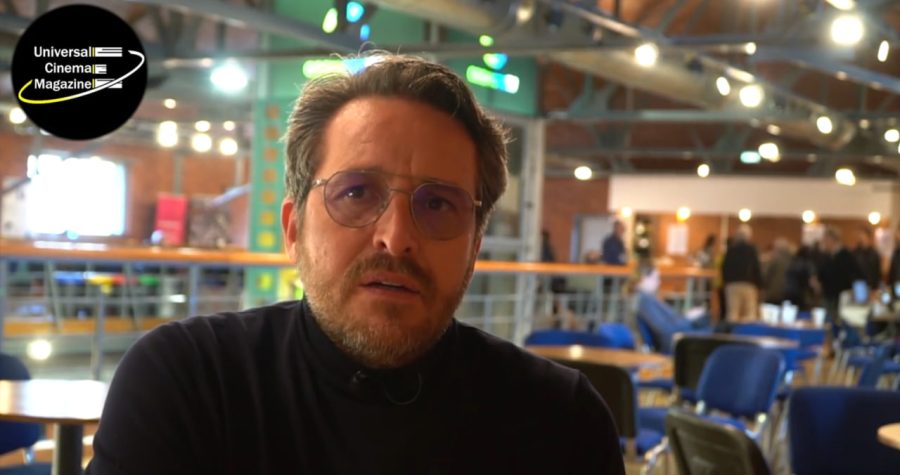
Three Kilometers to the End of the World by Emanuel Pârvu, began its festival journey in the competition section of the Cannes Film Festival. After traveling to various festivals, such as Thessaloniki, it has now reached the Göteborg Film Festival, where it will be screened in the international competition section. The film portrays the experiences of a gay individual in a remote Romanian village, exploring themes of homophobia.
In this exclusive interview with Mo Abdi, Pârvu delves into the nuances of the film and shares his thoughts on cinema.
© 2020-2025. UniversalCinema Mag.

In its 19th edition, the Canadian Film Fest (CFF) has established itself as a vital platform for celebrating Canadian stories and filmmakers. At the heart of this endeavor is Ashleigh Rains, the festival director and a passionate advocate for Canadian cinema. In this insightful interview, Rains delves into the festival’s unique mandate, its unwavering focus on showcasing exclusively Canadian films, and the strategies it employs to elevate local talent. From navigating challenges posed by the pandemic to fostering a sense of community among filmmakers, Rains shares how CFF continues to thrive as Toronto’s largest festival dedicated to Canadian storytelling.
Amir Ganjavie, UniversalCinema Magazine (UM): Could you please introduce yourself and share a bit about your role in the organization?
Ashleigh Rains (AR): Yeah. Hi, my name is Ashleigh Rains. I am the festival director and head of Canadian Film Fest. I’ve been with the film festival in various capacities for 10 years now.
(UM): Could you tell us a bit more about your festival and what sets it apart from other Canadian film festivals?
(AR): Yeah. So, Canadian Film Fest, we are celebrating our 19th edition this year, and it was founded by our executive director, Bern Euler. It was born from the need to see more Canadian films on screen. So, Toronto is a great culturally diverse city, but in terms of having exclusive Canadian content, in a festival setting, Bern saw a need for that. So, he founded the festival. Our festival is different because we are Toronto’s largest film festival exclusively dedicated to screening Canadian films. We screen feature films and short films and recently, we started screening digital series as well. We also have an industry series, and this is headed by our director of Industry, Jen Pogue. It’s really such a wonderful resource for the filmmaking community in Canada. It’s five days where filmmakers get to learn from, interact with, and also do practical work in support of their careers. We cover everything from financing in Canada to distribution, to current trends, as well as last year, for example, we did the Canadian Comedy Film Igniter Challenge with the Firecracker Department, and we had filmmakers actually go and make short films. We have diverse offerings in programming or film programming, but also in terms of our industry.
(UM): Just to clarify, does your festival focus exclusively on curating Canadian films, without including international films?
(AR): Only Canadian films. We ask that the e-creatives and specifically the director of the project be Canadian. Sometimes we get questions where people are like, “My film stars 20 Canadians. Would you consider it?” No. Our mandate is to support and elevate Canadian filmmakers as well as connect audiences across the country with Canadian filmmakers.
(UM): What inspired you to create this film festival? Was there a specific gap or need you identified that prompted its creation?
(AR): Yeah, so it was Bern Euler. He was working as an editor in the industry, and he had so many friends who were creating amazing films playing in Toronto. So, it was hard to get those Canadian films up on screens. First for the community, but then also for the general public. He literally was like, “I’m going to start a film festival.” So, he started doing the screening at the Royal, and it was so successful that it grew year to year to year, and that was really the need. There was such a response within the community, where like, yes, we need a film festival that shows Canadian films and only Canadian films, and it engages the industry, but also platforms this content for the general public. I can’t speak specifically, I don’t know the exact numbers, but Bern really grew the festival over 19 years. There were some years when the festival had to go dark because of sponsorship reasons, recessions, et cetera. But this year, we are celebrating our 19th edition and it’s really a testament because Bern saw a need in the market for this type of festival and here we are 19 years later.
(UM): The concept of nation is often highly politicized, and its definition can be quite ambiguous. For example, in some countries, when supporting French films, there’s an emphasis on highlighting certain aspects that define them as distinctly “French.” I’m curious—how does this apply in your case? Do you and your team ever engage in debates about what constitutes a “Canadian” film?
(AR): I don’t think I caught the word that you said at the beginning, but when we try and define what a Canadian film is, we say, “Is the director Canadian? Is it in the creative control of a Canadian?” So, that’s how we look at defining that piece. In terms of value associated with that, we don’t come in with that. We don’t come in with a set idea of, like, “This is Canadian,” because we all have our own personal POVs and our own lived experiences, but that doesn’t apply to everyone. So, we really like our programming team. We really, I think, look at the films on an individual basis and again, go back to, is it a good story? Was it compelling? Did it make me laugh? Did it make me cry? Was I scared? Do I want to keep watching? That’s really how we do our assessment of the films.
(UM): How many films are typically submitted to your festival, and how many of those are ultimately selected?
(AR): Last year, we had over 500 submissions, and I say that’s a great number, and it’s an encouraging number to know that Canadians are making that much content every year.
(UM): Does that include both feature films and short films?
(AR): Yeah. It’s for features and shorts. Last year, we programmed 11 feature films and about 40 short films.
(UM): Could you elaborate on your selection process? How do you go about choosing the films for the festival?
(AR): Yeah, so I have a great programming team and we’ve been working together for a handful of years now. We do open calls for submissions. So, we open them after TIFF and we keep them open until the end of the year. We’re really looking for films that represent the Canadian landscape. So what does that mean? First of all, we like to consider geography. We are the Canadian Film Fest, so we want films from all regions across the country. We program films in English, in French, and in other languages. Canada has many languages, so we’re interested in films. In all languages, we do request English subtitles. Then we look at basically our mandate, and this really comes from the heart of Bern, the founder of the festival, and we just carried it through 19 editions. It’s a good story. So, we’re looking for compelling stories. In that way, we’re open to all genres. So, it can be horror, it can be drama, it can be comedy, it can be Sci-fi, it can be a period piece. We really consider all genres of films as long as it has a really good story.
(UM): Could you clarify what you mean by a “good story”?
(AR): Yeah. So, that’s a great question. I think good story, like, it’s open to that kind of interpretation in the sense that compelling, does it hook us? Are we interested? Do we want to keep watching the movie? Do we think it’s going to resonate with an audience? Sometimes, also we look at what’s going on in the world and whether it speaks to current issues. And is it of the time? Will that resonate? Does it further a conversation? Does it further ideas about an issue or a topic? I would say, like, first and foremost though, compelling in that sense, and then from there, it could be those kinds of considerations. Like, what is it talking about? What’s it saying? What’s the messaging? How is the story told? Is it told in an innovative and interesting way? Is it a theme that has been explored in film before but from a unique POV?
We love films that take chances and risks too. So, if stories are told innovatively, that’s awesome. Last year, in our programming, we had some interesting feature films that came through and we love stories told in really like cool, in a sci-fi format or a thriller that was told in a Western format. We’re really open to how the stories are told. And we’re looking for that kind of diversity of content too. We don’t program for a theme. We’re not saying this year, it’s an environmental theme, or this year we are leaning into the genre, we’re really open in those considerations.
(UM): Do you invite films to the festival, or do you select them solely from submissions?
(AR): We do invite films. Our programming team is really plugged into what’s going on in Canadian film. Most of our team, I’m going to say like 95% of the Canadian Film Fest team are filmmakers. So, we are all working in the industry and have backgrounds as producers, writers, directors, television creators, and on-camera talent. So, we’re plugged into the industry we’re following. When we see a film or hear about a film that’s in production or recently wrapped, we will approach filmmakers or distributors for that content. We also have distributors pitch us content as well. We have wonderful relationships with many of the other awesome film festivals in Toronto that will suggest content to us. So, it’s really kind of diverse. We get a lot of applications through just a call for submissions as well.
(UM): Do you tend to select films that have already been recognized at other major festivals, or do you prioritize premieres?
(AR): We’re looking for films. We want Toronto premieres and we’d love Canadian premiers for our film. So, at minimum, we’ll take a Toronto premiere, but we are looking for a Canadian premiere for our films too. Sometimes, we do screen films that have had successful runs at other festivals. It’s really kind of a case-by-case consideration looking at what our slate is this year and what we’re programming.

(UM): Do you follow any specific ratios or quotas during the film selection process?
(AR): Well, we do mandate gender parity in our programming. That’s something that I started when I joined the festival, but that’s not a difficult position for us to meet. Every year, we have an amazing amount of submissions from all genders. We look at representation too in terms of gender as well as BIPOC representation and equity-seeking communities. We want to make sure that our programming reflects the diversity of Canada. So, we do consider that when we program too.
(UM): I’m curious—how do you approach handling films that might spark political controversy?
(AR): Yeah. In Canadian Film Fest, we don’t take political positions, but we do believe in the freedom of expression and free speech. As filmmakers and as citizens of the world, we are very aware of all of the challenges going on globally and the devastation to various communities, so we do consider that in terms of our films. But our mandate first is to support our film filmmakers and to platform their work.
(UM): Regarding venues, I know some Toronto festivals face challenges in securing locations. How is the situation for your festival? Where do your events typically take place?
(AR): Historically, we’ve screened at the Scotiabank Theater. We used to screen at the Royal College, which is an amazing independent theater. Our festival grew, so we had to move to a bigger venue to accommodate our audiences. We hope to be back at Scotiabank this year. In terms of the logistics of the festival though, it’s year to year. We don’t have a permanent space as some other festivals do, so we’re always looking for our venues. But we do have a wonderful relationship with Scotiabank and we’ve been there for several years.
(UM): One common challenge for film festivals is the lack of a consistent, year-round staff, as many team members work only for a few months, leading to potential instability. How does your festival handle this issue?
(AR): Our festival director, Bern Euler, and I can speak to this specifically, running a film festival is not a secure job and it’s not a guaranteed year to year. We really are dependent on government support as well as sponsorship, as well as engagement from the filmmaking community and the general audience to make sure the festival can run year to year. Bern and I, typically, work year-round. We really believe in the need for the festival and the space for the festival to exist in Canada. So, we are working year-round on it. Whether that means, it’s not a full-time job as well, because we also do work in the industry in various roles. I also work as a producer and a creator, so I do have other jobs. But this is something that Bern and I work on year-round. As soon as the festival ends, we take a few days off and then we’re into planning for the following year.
(UM): You mentioned that the Canadian government is one of your major supporters. Are there any specific policies or requirements you need to adhere to as a result of working with them?
(AR): Are you asking if they have certain mandates for us to meet?
(UM): Yeah.
(AR): Yeah. I think different government funds have different mandates, and we see their funding used. So, for some funds, they really want to support B2B within the industry. So, it’s creating those opportunities for filmmakers to meet with other filmmakers. Other funds might want to see a lot of community engagement. So, everyone has, I think. They have specifications about how they would like to see their money spent, and then we review that of course at the application stage and make sure that our programming on the industry side and on the film side, meets those mandates.
(UM): You mentioned that the festival includes five days of networking and other industry opportunities. Could you elaborate on this aspect of the event?
(AR): Yeah. As I said, our director of industry, her name is Jen Pogue, and she’s done such a wonderful job of developing the industry side of the festival. I think it’s such a necessary component of the festival. I can’t imagine CFF without it. What we do is, historically, we always have a masterclass. It’s a hands-on practical learning opportunity for filmmakers. We’ve had directing master classes. We’ve had pitching master classes. Like last year, we did pitching with Lauren MacKinlay, who’s an incredible talent and resource. We had Jeremy Lalonde[?] come in and do a director’s workshop with our filmmakers. We’ll have something like that. We’ll have panel discussions. Usually, I’ll say, like, we’ll do something on financing. We’ll invite all of the funders in Canada to come in and speak about their funds, how to access them, and what you need to do as filmmakers to prepare yourself for that process. We’ll have conversations on festival programming.
Canadian Film Fest, we have our specific mandate, but we know that the success of a filmmaker in Canada relies on having a successful festival run with other festivals. So, we’ll talk about that and how that can leverage a festival run for the next steps. We have the Making a Canadian Classic Series, which we started a few years ago, and the objective of this is to meet with established Canadian directors who started working in independent film and their one independent film kind of launched their career. For example, we’ve had Sudz Sutherland come on, we had Jasmin Mozaffari come on. Last year, we had Vincenzo Natali. They came in and talked about their early work and how, Cube, for example, helped launch Vincenzo’s career. And that’s hosted by Warren P. Sonoda, who’s the President Directors Guild in Canada. He’s a masterful moderator. So, they are really valuable, unique conversations.
Then we have our Cheers and Chats Series where we get filmmakers to come in and informally talk about their careers, in a really practical and candid way about how to be a writer in the industry, how to develop comedy in Canada, et cetera. Then we have networking opportunities as well. We have pitch competitions. Every day we have networking socials. So, filmmakers get together, they can meet other filmmakers, they can meet decision-makers, financiers. It’s really a comprehensive week. It’s fully packed, but it’s a great opportunity for filmmakers. And, I also like to participate because I’m always learning something in this series too.
(UM): One of the biggest challenges for Canadian filmmakers is distribution, as the market is often dominated by American and Hollywood films. Even prominent Canadian films struggle in this regard. How does your festival support filmmakers in terms of distribution? Do you assist with securing distribution deals?
(AR): Yeah. So, at the festival, we’ve had films come in that we invite distributors to come to the festival. We’ve actually historically had distributors pick up films from seeing them at the festival, which is great. When we work with distributors, part of that conversation is what the release strategy looks like for the feature film. So, then it’s how we can position the feature with the festival and help leverage the festival for the release of the film. Then when our filmmakers do release films in theaters across Canada, we encourage our followers, our audience, and our community to go out and see them. However, we can support it, it’s always like a multifaceted approach, but we try to have those conversations up front and continue those conversations after filmmakers leave us so that we’re encouraging audiences to see the films.
(UM): I see a big disparity between the French and English sides of Canada in terms of film. The French side is more powerful and they have a strong system of starships and it seems that it works better. I’m just curious how you are trying to help the English side. Do you have any kind of preference or any agenda? I’m just curious to know more.
(AR): Yeah. I think generally, our mandate is to platform and elevate Canadian filmmakers. A big part of our marketing at the festival is directly promoting the individual filmmakers who are screening with us. So, that includes traditional media, like print interviews, it includes some of the entertainment shows, and radio appearances. We work with a team that helps elevate our filmmakers and make some noise about their films. That’s really important to us. We really try to make a lot of noise for our programs, films, and film filmmakers so that we do get eyes on them and hopefully that those experiences and opportunities can be leveraged for the next steps in the film’s life or in their careers.
(UM): One of the challenges I’ve noticed, especially post-COVID, is getting audiences back into theaters. Many festivals have adopted various strategies to address this. How has your festival managed this situation?
(AR): Well, I don’t know if you know this, but when COVID hit, we were two weeks away from opening our festival. And it was in that kind of gray area where the government was like, “Just don’t shake hands and keep safe distances and use hand sanitizer.” We’re like, “Okay, we’ll do that.” And then it like slowly, not slowly, it actually quickly escalated to the point of a lockdown, and we had to close. And Bern will say this, we had no contingency plan in place because nobody was expecting this, so we thought we were going to go under. And then Super Channel in Canada, a broadcaster in Canada came in and said, “We love the festival. They’re Canadian. We support this mandate.” So, they transitioned the entire festival into a virtual edition so that audiences across Canada could experience the festival on their channel. They actually formatted it like the in-person event with screenings, Q&As, introductions, networking events, and industry series. They were so generous and kind and we worked with them for, I believe, three years online.
Then when, in this kind of what we’re calling a post-pandemic world, theaters opened again and we went back to theaters and we weren’t sure, we had no idea. We’re like, “Will our community come? Will audiences come?” We had no expectations, only hope that we would be successful. The first year we were back, we had a great response, and the second year, like last year was just a banner year for the festival. We had the most people ever attend, sold-out screenings, and high engagement. It was really successful. So, I think that speaks to the needs of the festival and the legacy of the festival. We’re really pleased that we’re still engaging our community and also engaging audiences who want to come and see Canadian films.
© 2020-2025. UniversalCinema Mag.

Recent Comments