 By Ester Bovard
 By Mo Abdi
© 2020-2025. UniversalCinema Mag.

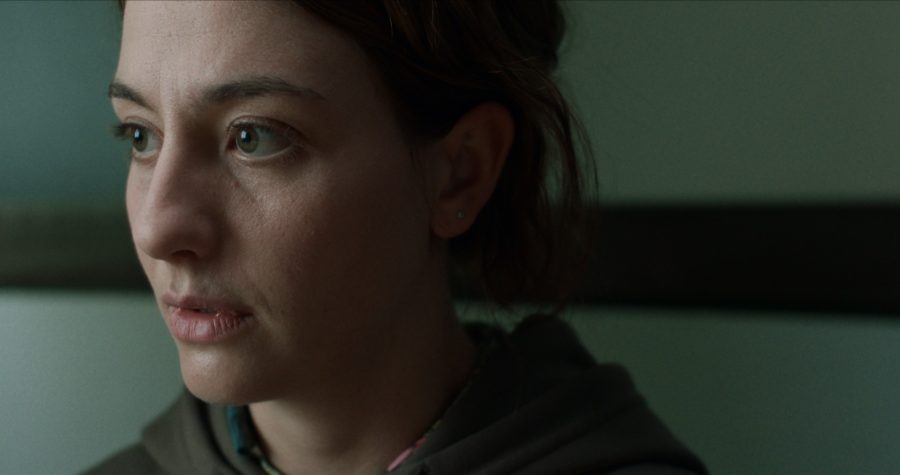
Does unconditional love have limits? Does forgiveness? As women navigating a predatory world where should our loyalties lie? At what cost to our own personal sense of right and wrong? Director Sarah Miro Fischer grapples with all of these questions and more in her intimate and compelling debut feature, The Good Sister.
At first glance, Rose (Marie Bloching) appears every inch the flakey but lovable younger sibling.
Thrown out by her girlfriend in the middle of the night, she shows up at her brother Sam’s door in what is clearly a familiar ritual. The pair share an easy and intimate bond, hewn over a lifetime of shared experiences. As they move about the world, interacting with family and friends, their well-established dynamic is on clear display. Sam (Anton Weil) comfortably inhabits his role as gentle but protective older brother, the golden child always looking out for his beloved but fragile little sister.
Late one night, as Rose struggles to sleep on his sofa, she hears him stumble through the door and into the bedroom. He’s not alone, and good sister that she is, Rose does her best to ignore the sounds drifting through the thin walls of the apartment. When she gets up for a drink of water, she makes eye contact with her brother’s companion as she exits. The woman is not Sam’s girlfriend, but Rose – loyal to the core – would never betray his secret.
When Sam is accused of rape, however, that simple gesture of familial loyalty threatens to drag Rose down a far darker path than she ever could have imagined. Called upon to testify against him, Rose instinctively goes into protection mode, buying into any and all of Sam’s rationalizations, refusing to believe that her brother could be anything but the sweet and stalwart protector she has always known him to be.
Ignoring the nagging tug of her conscience and determined to protect her family, Rose lies to the police about what she witnessed that night. But when she’s confronted with the details of his accuser’s testimony, she can no longer ignore the truth. Bloching’s performance in these moments is heartbreaking, and the scene as a whole is meticulously realized, with every subtle element – the relentless ticking of the clock, the aggressive clicking of the stenographer’s keyboard – ramping up the tension and drawing the viewer deeper into Rose’s internal world.
As the details stack up, and Sam himself begins to unravel, it becomes clear that the question at the centre of this tale is not whether or not he did what he stands accused of (he very clearly did), but what Rose is going to do about it. Bloching’s performance is beautifully vulnerable and complex as Rose flutters between light and darkness, begging the people she loves most to do the right thing so she isn’t forced to betray them. Watching her navigate this impossible situation, the viewer can’t help but wonder what they might do in the same position.
Thanks to Fischer’s extended rehearsal process, and impressively realized performances from every actor who appears in the film, the comfort and intimacy between the characters feels lived in and entirely genuine. We can almost understand why Sam’s mother refuses to doubt him, why his girlfriend chooses to forgive him, even how Rose continues to love him so deeply, despite what she knows him to have done. As we recognize flashes of ourselves in these characters, in their devotion to each other, it becomes much more difficult to simply dismiss or vilify them.
In discussing her motivations for making this film, Fischer has pointed to the fact that while most everyone seems to know at least one victim of sexual violence, few would admit to knowing a perpetrator. Confronting this impossibility, she compels us to reexamine our own deep-seated perceptions and self-deceptions. Powerfully, by choosing to focus on the perspective of neither victim nor perpetrator, Fischer Illuminates the far-reaching complexity of such matters for each and every one of us, daring us to interrogate ourselves as to what choices we would make if put into the same situation.
The Good Sister premiered in the Panorama programme of the 75th Berlin International Film Festival.
© 2020-2025. UniversalCinema Mag.
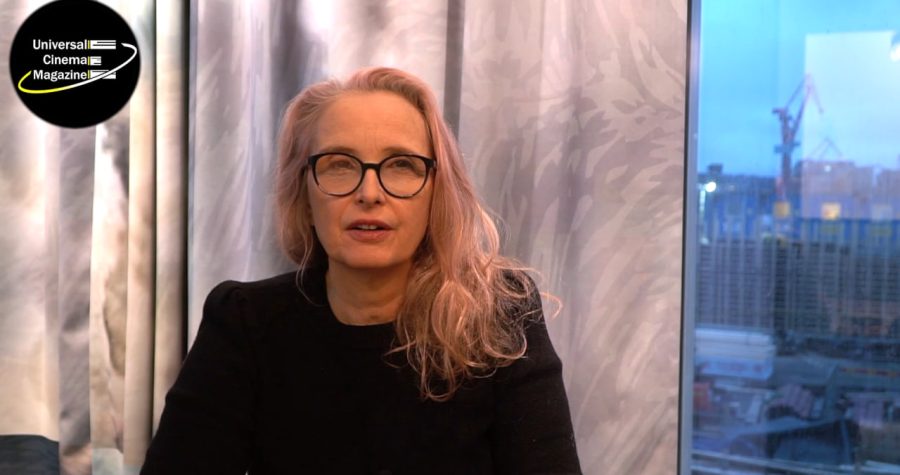
Julie Delpy, who began her career at the age of sixteen with Jean-Luc Godard, has been active for several decades as an actress, director, and screenwriter. She recently received the Honorary Dragon Award at the Göteborg International Film Festival.After working with renowned filmmakers such as Krzysztof Kieślowski and Agnieszka Holland, Delpy contributed to the creation of the unforgettable “Before” trilogy—Before Sunrise (1995), Before Sunset (2004), and Before Midnight (2013)—playing the role of Céline. She was also involved in writing the screenplays, incorporating parts of her personal diary into them.In this exclusive interview with Mo Abdi at the Göteborg Film Festival, she discusses the trilogy, her beginnings in cinema, her perspective on filmmaking as both an actress and director, and her latest film, Meet the Barbarians
© 2020-2025. UniversalCinema Mag.
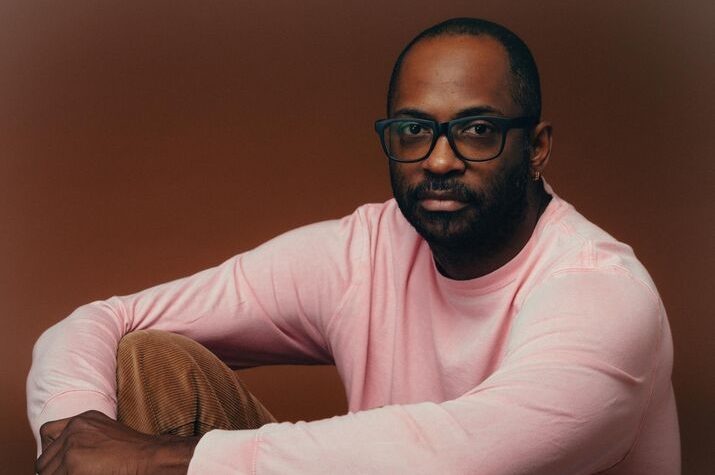
In this in-depth conversation, filmmaker RaMell Ross offers a behind-the-scenes look at his cinematic adaptation of Colson Whitehead’s powerful novel, The Nickel Boys. Ross delves into the creative choices that shaped the film’s emotional core—from his bold use of point-of-view shots to his collaborative process with actors. He also reflects on balancing authenticity with artistic freedom, illuminating how the haunting landscapes and the subtleties of performance underscore the story’s central themes of trauma, injustice, and survival. Here, he sits down with interviewer Amir to discuss the challenges and triumphs of bringing this urgent narrative to life.
Amir Ganjavie, UniversalCinema Magazine (UM): My first question is about adaptation. Adapting such a powerful novel to film can be challenging. What were some of the key decisions you had to make to ensure that the themes of trauma, injustice, and survival resonated in your adaptation?
RaMell Ross (RR): That’s a good question. I didn’t think too much about how the themes would resonate because Colson’s narrative is already so strong. All you really have to do is establish that framework, and people recognize the horror of a reform school in that era. The bigger challenge was not overemphasizing those themes. I wanted them to feel sinister in a quieter way, more as a disturbing undercurrent than something overtly dramatized.
(UM): Were there challenges in maintaining the authenticity of the novel while adapting it to the screen? Were there moments when you felt you needed to use artistic license to amplify the story’s emotional core?
(RR): Absolutely. In fact, my co-writer and I felt the novel was so powerful that we needed to step away from it—sort of stand beside it rather than live inside it. That way, we weren’t forced into constant comparisons. We wanted the film to do what cinema does best, rather than strictly follow every detail of the novel. We distilled the story down to its essence: a path of love moving through the characters. That guiding principle helped us stay true to what Colson wrote without feeling burdened by every detail.
(UM): The performances in the film are incredibly emotional. How did you work with the actors to bring out the depth and complexity of their characters, especially in scenes involving difficult topics like abuse or institutional racism?
(RR): I like to give actors a lot of freedom. They’re the ones who best know how to convey a character’s nuances. I have early conversations with them about the core traits of a character—Elwood’s resilience, optimism, and strong sense of self, for example—but then I step back and see how they interpret those traits. My role is to make sure they’re not veering in the wrong direction. If what they’re doing feels right to them, it will often feel authentic to the audience.
(UM): So you didn’t have specific, preconceived ideas about how each scene should be acted? You allowed the actors to discover that organically?
(RR): Exactly. I knew I wanted the performances to be subtle and restrained. For instance, I didn’t want Hattie to be a stereotypical, overly emotional grandmother who’s always wailing—she’s more measured. I also didn’t want the film to be overly conceptual; the characters could easily become archetypes if I imposed too much. You’ll notice the sound design is organic but also guided, and I like to bring that balance to all departments, including the actors.
(UM): The relationship between Elwood and Turner is central to the narrative. How did you work with the actors to highlight the nuances of their friendship and its evolution?
(RR): That was probably the toughest part. Brandon and Ethan—who play Elwood and Turner—have such great chemistry that sometimes we had to pull them back. We’d say, “Hey, guys, you just met. You should be skeptical of each other. Turner isn’t fully Elwood’s friend yet.” We had to remind them where their relationship stood in the story’s timeline. Otherwise, their natural chemistry was already there. They really looked at each other with care and love. That sort of connection can’t be directed or manufactured.
(UM): How did you decide they were right for the roles of Turner and Elwood? Was there a traditional audition process, or did your casting director propose them?
(RR): We had a lengthy audition process. We found Brandon (Elwood) quickly, and I had an initial idea of who Turner was from the novel. Then Ethan auditioned, and even though he wasn’t what I’d initially pictured, I knew right away he brought something special—he had this ease and adaptability, very much like Turner, who’s a survivor. Brandon, on the other hand, projected Elwood’s optimism and introspection effortlessly. Most importantly, neither tried to act like a “historical” character. They were simply themselves, delivering the lines naturally instead of adopting an accent or mimicking a stereotypical 1960s persona.
(UM): The film’s use of point-of-view shots is very striking. What motivated you to choose this perspective, and how does it enhance the emotional experience?
(RR): I’ve long wanted to make a POV film. It’s how we naturally see the world, yet cinema mostly uses a third-person perspective. With Colson’s novel, it felt right to put viewers inside the characters’ eyes. It was the best way to give life to the Dozier School boys and to Colson’s characters—there’s a spiritual reason to see through their eyes. It brings the audience into a more active, even complicit, relationship with what’s happening.
(UM): In some scenes, we break from that POV and see a more traditional shot. How did you decide when to use full POV and when to pull out of it?
(RR): The only characters who really have POV power are Elwood and Turner. They truly see each other in a way no one else does. The camera can be inside either of them. Then, at the end, when Elwood is shot, the perspective shifts out of Turner—he disassociates. He takes on Elwood’s name while on the run, and in those future scenes, the camera follows behind him because he’s not living as himself anymore; he’s living as Elwood. It visually represents his trauma.
(UM): Could you say more about collaborating with your Director of Photography to achieve that POV style?
(RR): We spent a lot of time defining how the camera should move like a human eye—focusing on attention rather than just framing. We wanted it to feel like the world already existed and the character was simply looking around, rather than the camera building the world for the viewer. We also worked on the small gestures—how someone might avert their gaze when uncomfortable or when hugging someone. We practiced a lot with a DSLR in the DOP’s Airbnb, figuring out details like how the camera should tilt to replicate a natural line of sight.
(UM): In many ways, the Nickel Academy itself feels like a character. How did you use the physical environment to reflect both the characters’ internal struggles and the larger societal issues?
(RR): We wanted it hot, bright, quiet—almost devoid of life except for lizards, ants, and little signs of nature. It’s beautiful yet menacing. You can run through a gorgeous field, but violence could strike at any moment. That Florida landscape is visually rich and carries a lot of historical trauma. We didn’t want to overemphasize the “Southernness,” but we wanted to give you that sense of heat, stillness, and the weight of its history.
(UM): Elwood’s belief in justice clashes with the brutal realities he faces. Do you see his journey as a meditation on the limits of idealism when confronting overwhelming injustice?
(RR): I love that question. Hope can be contradictory—it drives us forward but can also blind us to impossibility. This story grapples with different methods of protest and change: nonviolence, direct action, or something else entirely. Is there a “best” approach? The narrative doesn’t claim to have a definitive answer. It’s more about wrestling with the complexity of social problems and how people try to solve them.
(UM): The film balances hope and despair. Do you feel it suggests hope is essential for survival, or that it might be an illusion under such oppressive systems?
(RR): Hope and despair are both integral to the human experience. Every culture and individual has some capacity for hope, even if they’re dominated or oppressed. But despair also emerges because we recognize how things could be better. They’re complicated emotions that reflect not only societal issues but also the core of our personal desires and disappointments.
(UM): The notion of justice is central to the film. How do you think your portrayal of institutional injustice challenges viewers to reflect on justice in contemporary society?
(RR): I hope it shows that injustice isn’t always overt. Sometimes it’s wrapped in language about “reform” or “improvement,” especially in the U.S., where some of the harshest systems are described in optimistic terms. At Nickel Academy, the environment may seem benign at first glance, but we know the terrible history. That disconnect between surface appearance and underlying reality should make viewers think about how these same contradictions exist today.
© 2020-2025. UniversalCinema Mag.
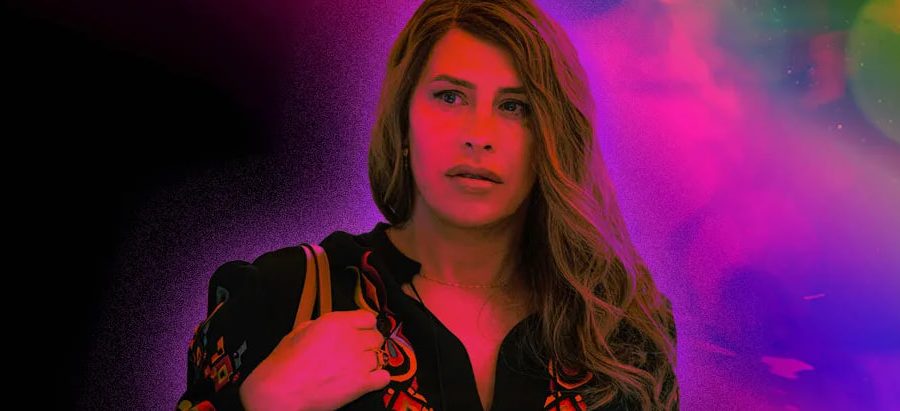
“Emilia Pérez,” the controversial musical-crime film by Jacques Audiard, exploded like a bomb in Hollywood: it tells the story of a Mexican cartel boss who stages his own death and undergoes gender transition, suddenly becoming a champion for those who have gone missing in the drug war. Despite 13 Oscar nominations and Netflix’s multi-million-dollar investment, “Emilia Pérez” has earned the lowest audience rating on IMDb among Best Picture nominees since 1935. On Rotten Tomatoes, its score also plummeted from 75% to 23%—a drop partly attributed to “review bombing” and partly to the outrage of Mexican viewers.
Nevertheless, an examination of public opinion reveals that the main problem is the film itself: from patchwork dialogue and clumsy translations—resulting in a comical mixture of English, Spanish, and French—to the awkward accents of actors such as Karla Sofía Gascón and Selena Gomez, which have angered some Mexican audiences. Gascón, who was born in Madrid, can’t always hide her Spanish accent; Gomez, playing Emilia’s wife sounds robotic when speaking Spanish and suddenly slips into English mid-sentence. Meanwhile, Adriana Paz, the only main Mexican cast member playing Emilia’s love interest, appears on-screen for less than 12 minutes.
Even more shocking is that transgender advocacy groups have called “Emilia Pérez” “clichéd and regressive,” arguing that the film merely exploits gender diversity to appeal to Hollywood, turning a criminal trafficker into a so-called champion for a minority group. Although the Oscars have always adored displays of diversity, it appears viewers aren’t exactly fond of this “trans-cartel fever.”
Ultimately, the story of “Emilia Pérez” shows that while Hollywood may be eager to showcase diversity and tackle sensational topics—and may even hope to send a pointed message against Trump’s conservative administration by spotlighting a transgender-themed work—merely including a transgender character and pouring millions of dollars into Netflix advertising does not guarantee success with audiences. This gap between the Academy’s attention and critics’ praise, versus the cold reception from the general public, once again proves that a purely superficial take on social issues—without strong storytelling and execution—cannot achieve lasting success for a film.
© 2020-2025. UniversalCinema Mag.

Sundance announced its Short Film Program Award winners on Tuesday, January 28th. If you’ve scrolled the IMDb pages of most feature directors, you would probably find they got their start cutting their teeth in short films. And if you are lucky enough to watch these early works, you will see the makings of the filmmakers they become. That is why the short programs at festivals are not something to dismiss and are a great way to spend your time. Especially as often there are a half dozen or more stories in any set. And, you can still choose between fiction, nonfiction, or even animation.
This year’s Sundance Short Film Grand Jury Prize went to Theo Panagopoulos for The Flowers Stand Silently, Witnessing (U.K.), an international nonfiction short film about a filmmaker of Palestinian descent based in Scotland who unearths a rarely seen film archive of Palestinian wildflowers and decides to reclaim the footage.
The Short Film Jury Award: U.S. Fiction was awarded to Jazmin Garcia for Trokas Duras, a film that goes into the world of the protagonist’s dreams and his waking reality in Los Angeles and what it looks like for those who serve others as they strive for their own elevation of body and spirit.
The Short Film Jury Award: International Fiction was awarded to Chheangkea for Grandma Nai Who Played Favorites (Cambodia, France), a film about where during her family’s Qingming visit, dead Grandma Nai sneaks away from her peaceful afterlife after overhearing that her Queer grandson is about to get engaged to a woman. The film uses humour to explore self and familial acceptance.
The Short Film Jury Award: Nonfiction was awarded to Christopher Radcliff for We Were the Scenery (USA), about how in 1975, Hoa Thi Le and Hue Nguyen Che fled from Vietnam by boat and docked in the Philippines, and then were utilized as background extras during the filming of Apocalypse Now.
The Short Film Jury Award: Animation was awarded to Natalia León for Como si la tierra se las hubiera tragado (France), about a young woman living abroad who returns home to Mexico hoping to reconnect with her past.
The Short Film Special Jury Award for Animation Directing was awarded to May Kindred-Boothby for The Eating of an Orange (U.K.). Fruit comes to the fore in this exploration of convention and sexuality.
And, the Short Film Special Jury Award for Directing was awarded to Loren Waters for Tiger (U.S.A.), a film about the award-winning, internationally acclaimed Indigenous artist and elder Dana Tiger, her family, and the resurgence of the iconic Tiger T-shirt company.
The jury only awarded seven of the 57 short films curated for the festival from over 11,000 submissions, here are a couple more of this year’s selected shorts.
Don Josephus Raphael Eblahan, the Sundance Short Film Grand Jury Prize winner in 2022 for The Headhunter’s Daughter, returned to the festival with Vox Humana. This short film, set shortly after a natural disaster against the stunning backdrop of the Cordilleran mountains in the Philippines, imagines a human embodiment of the disaster that can be confronted if someone speaks his language to gain answers. Enter a zoologist. The disaster depicted is an earthquake, and one of the other characters is a sound recordist, who we meet lost in the sounds of nature, a potential message of the film becomes evident: to listen for the signs and turn the volume up to 11 if you hope to avoid or mitigate future disasters. An interesting metaphor about vinyl records about earthquakes in the film supports this. The cinematography is breathtaking, particularly the shots of nature and wildlife, from the opening view of a worm, which isn’t in nature but moves across what seems to be something rusty, to the saliva dripping from the close-up of a horse’s muzzle, to the final shots in the lush vegetation.
The Reality of Hope (United Kingdom/Sweden), a documentary short, was picked up by Asteria and Documentary+ before the festival began. The film follows a Stockholm-based virtual reality creator who needs a kidney transplant. He’s set to get a transplant from a New York-based friend, but the twist is, that they’ve only ever seen each other in an online VR community where they each have a “furry” avatar. The film is vibrant in a world of VR, in spaces partially created by the main protagonist of the project, Hiyu. The film showcases the meaningful relationships people make in these VR worlds, while also shedding awareness on dialysis and how it affects those across ages and globes, real and virtual.
The full list of the shorts selected this year can be found on Sundance.
© 2020-2025. UniversalCinema Mag.
Three Kilometers to the End of the World by Emanuel Pârvu, began its festival journey in the competition section of the Cannes Film Festival. After traveling to various festivals, such as Thessaloniki, it has now reached the Göteborg Film Festival, where it will be screened in the international competition section. The film portrays the experiences of a gay individual in a remote Romanian village, exploring themes of homophobia.
In this exclusive interview with Mo Abdi, Pârvu delves into the nuances of the film and shares his thoughts on cinema.
© 2020-2025. UniversalCinema Mag.

At times, a subject can be so vast, so all-encompassing, that it would be challenging to contain it within the bounds of traditional narrative storytelling. In such cases, non-narrative filmmaking can offer a powerful vehicle by which to explore themes that feel too monumental to be absorbed in a linear intellectual fashion, relying more deeply on the viewer’s visceral emotional connection with the work. It can be a tricky form to master, but as filmmakers such as Godfrey Reggio (Koyaanisqatsi); Ron Fricke (Baraka); and Massimo D’Anolfi and Martina Parenti (Bestiari, Erbari, Lapidari) have demonstrated, the genre has the potential to communicate with the audience on a profoundly complex level difficult to attain from within the confines of more traditional documentary filmmaking.
Given the genre’s lack of reliance on familiar touchstones like plot or character, it is an extremely challenging form to master, rendering the achievement of large format photographer (now filmmaker) Leonard Alecu’s first foray into the moving image all the more impressive. Ice Breath, filmed between 2015 and 2023 off the eastern coast of Greenland, is a truly stunning addition to the field of experimental documentary, and more than deserving of the many accolades it has received over the past year.
Billed as “an existential journey from genesis to extinction,” the film documents the slow decay of the monumental icebergs that dominate the arctic landscape. Set to the hypnotic tune of John Luther Adams’ award-winning classical composition Become Ocean, it stands as a poetic mediation on the existential fragility of the human condition in the face of the majestic forces of nature. Recalling the artistic collaboration between Koyaanisqatsi director Godfrey Reggio and composer Philip Glass, Ice Breath draws power from its more singular focus. By compelling the audience into a deep consideration of the deceptively simple juxtaposition of sky, ice, and water, Alecu somehow evokes a feeling of eons passing in a matter of just a few scant minutes.
Putting his photographic background to excellent use, Alecu (choosing to shoot in black and white) paints his subjects in a stark palette of white tones that is shockingly rich and textured. His images are a pleasure to behold, transforming these natural formations into sculptural compositions recalling the works of Henry Moore, illuminated by otherworldly shafts of sunlight reminiscent of the arctic works of painter Lawren Harris.
As the film unfurls, the comfort of nature’s rhythms begins to dissipate, and the viewer somehow feels the temperature rising as the menacing black water lapping at the icebergs’ shores increasingly dominates the frame. What once appeared irrevocably connected breaks apart, scattering across the widening expanse of an increasingly choppy sea. As the icy meat drops from their surface, bony, skeletal formations emerge, and fissures appear like scars across their skins. All the while, a relentless and unsettling sun beats down, dissolving their cold sharpness and leaving only the softness of total devolution, and a feeling of palpable grief for what has been lost.
A worthy companion piece to the super-sized Bestiari, Erbari, Lapidari – also released in 2024 –Ice Breath similarly evokes the insignificance of humanity in the grander scheme of terrestrial history. And like D’Anolfi and Parenti, Alecu is preternaturally talented at presenting his natural subjects in all their deserved drama and grandeur. If nothing else, he has produced a set of breathtakingly primal images of icebergs that are now already likely gone forever. More than freezing a moment in time, he casts his gaze into an uncertain future, compelling the audience to contemplate the fate of our less considered terrestrial companions alongside our very own.
Luckily for us, this piece does not spell the end of Alecu’s audiovisual experimentation. Become Ocean, as it happens, forms just one part of a musical trilogy diving into the essential mysteries of nature (alongside companion works Become Desert and Become River). Taking these on as further inspiration, Alecu is currently at work on a companion piece set to John Luther Adams’ Become Desert, to be shot in the deserts of Namibia. If the work approaches the achievement of this first effort, we are surely in for something special. I can’t wait.
Ice Breath was awarded Best Documentary Feature at the 2024 New Renaissance Film Festival.
© 2020-2025. UniversalCinema Mag.

Marianne Jean-Baptiste gave one of, if not the best performance, of the year that few people will see in Hard Truths as its current US theatrical count of 121 is likely the widest release it will receive having missed out on receiving any Academy Award nominations despite Jean-Baptiste amassing major critical Best Actress wins from NYFCC, LAFCA, and NSFC and nominations for BAFTA Film Awards and the Critics’ Choice Awards, both of whose results are still be determined. Academy Award nominations are critical for independent films to receive a wider audience, the so-called Oscar bump, so missing out on a nomination will most likely impact the film’s reach. But if you are reading this, do yourself a favour, and seek the film out.
Mike Leigh wrote and directed the film, reuniting with Jean-Baptiste and Michele Austin (who plays Chantelle), who also starred in his film Secrets & Lies, for which Leigh and Jean-Baptiste were nominated for Academy Awards in their respective categories. At the beginning of the film, after establishing the neighbourhood of identical townhouses where the rest of them have lush hedges/trees in the front, but the house where Pansy (played by Jean-Baptiste) and her family live only has a cold brick fence, we meet Pansy who has a similarly cold defense with barbed words flung about her son, her neighbours and everyone that crosses her path. She attacks first, as you are watching the film progress, you can see she is someone with a lot of anxiety and fear, and you can see that manifest through anger. In one scene at Chantelle’s salon, the Covid lockdowns are mentioned. Covid is so rarely addressed in films that its reference seems especially purposeful and as something that perhaps exasperated Pansy feelings, anxiety, and behaviour all before the film began, because of the prolonged isolation from her family and lack of interaction with people. However, the full root is revealed when the sisters visit their mother’s grave, and her unresolved grief is laid bare, stemming from the type of relationship she had with her mother and how it affected her life and the choices she made. Particularly staying with Curtley (played by David Webber), the father of her son. Not to mention finding her dead body.
If you’ve ever worked in customer service, you’ve probably encountered someone who reminds you of Pansy; someone who attacks first. But this film pushes the audience to look past the surface and deeper. It also doesn’t provide an easy ending. The ending is a little ambiguous and left for interpretation. I think the breath at the end was Pansy taking a step forward and healing a little, as someone who struggled to help herself throughout the film, she might not have been ready to help Curtley, but she was taking a breath – and that was a start.
I was captured by the film’s score, the lyricism that lifted and carried the quieter moments and emotions forward. However, the absence of the music was just as powerful, particularly the ending, which in some ways bookended the opening, re-establishing the house and the people in it with an exhale of breath in the silence.
While Jean-Baptiste, Austin, and Webber carry the bulk of the film’s emotional weight, it would be remiss to leave out the quiet but resonate performance of Tuwaine Barrett as Moses, Pansy and Curtley’s son. Rounding out the cast are Sophia Brown as Aleisha and Ani Nelson as Kayla, who play Chantelle’s daughters, their warm relationship with their mother provides further contrast for relationships fostered by Pansy due to her grief and pain.
Hard Truths is currently in theatres.
© 2020-2025. UniversalCinema Mag.

Leading up to this week, Sebastian Stan seemed like a shoo-in to get nominated for his first Academy Award for A Different Man, as it was getting significant award buzz and critical reception. However, he was nominated for his other project last year, The Apprentice. Perhaps this was a result of the recent election or Sebastian Stan being excluded from Variety’s Actors on Actors because other actors didn’t want to talk about Trump, either way, A Different Man left the Academy Awards nominations receiving only a nomination for Best Makeup and Hairstyling. However, anyone who has seen the film knows the layered performance Sebastian Stan gave as Edward Adam Pearson as his well-meaning antagonist Oswald.
A Different Man, written and directed by Aaron Schimberg, centers Stan’s Edward, who is a struggling actor with neurofibromatosis who undergoes a painful experiment treatment that promises to cure him and give him a new face. His desire for this treatment is predicated by his insecurity about how others perceive him. This is exasperated by the only role he was able to book was in an instructional video that was about teaching people to treat people like him like people, which is dehumanizing in itself, and his inability to get close with his neighbour Ingrid (played by Renate Reinsve). So, when the surgery is a success, he kills Edward and takes on the identity of Guy believing that everything will work now.
He finds success in work, getting his face on the billboards and cardboard cutouts, and having casual relationships with women in his new, cold apartment. It’s everything he wanted, except that while playing the role of Guy, he is still not living his dream of acting, and then he discovers that Ingrid lived up to her promise and wrote a play with a role for him. Well, for Edward. Guy eventually convinces her to hire him to play Edward (wearing a mask) as she can’t find anyone else who fills her vision of Edward that came in – but then in walks Oswald, who has neurofibromatosis like Edward had before his surgery.
What makes Oswald a great antagonist is you can read his character in two ways. The first is genuine, that he genuinely likes Guy and his acting and is just hanging around because he’s excited and invited. The other, is that he is manipulating the situation from the start to push Guy out. Regardless of your read of the character his presence and confidence in life drive Guy insane because Oswald is getting all the attention, love, and opportunities Edward/Guy felt he couldn’t achieve without the surgery and now is losing again despite his transformation.
What’s interesting about the film is that the characters are all messy. It leans into the concept that the grass is always greener on the other side; Edward sees Oswald living the life he only dreamed of before his surgery and getting everything he wanted, including Ingrid’s love. But you can’t discount the events that transpired to lead to this, going back to before Edward chose to “kill” Edward and become Guy. Ingrid pulled away and fled Edward’s apartment when he grabbed her hand, the closest he got to showing his affection was more than friendly. She was not present during his painful transformation. It was perhaps only because of his “death” that she was driven to revise their relationship in the play. Paving the way for Oswald, who greets the world with confidence to let her tread those paths not traveled, and he has the confidence to pursue.
The film’s message is clearly about self-acceptance. Edward’s transformation was only skin-deep; Oswald embraced who he was, while Edward never found comfort in his skin.
A Different Man is available on Max in the US and Digital Rental in Canada.
© 2020-2025. UniversalCinema Mag.

In her debut feature, experimental film director Seayoon Jeong takes a deep dive into the mind of one woman suffering the debilitating effects of nyctophobia – fear of the dark. Deftly making creative use of animation and visual effects to enhance the fantastical and at times harrowing dreamscape of her central character’s mind, Jeong proves herself an original and innovative filmmaker adding an excitingly fresh perspective to the cinematic landscape.
Based loosely on her own experiences, Jeong adopts an experimental, non-linear framework in an attempt to communicate the irrational and illogical reality of being afflicted with these types of debilitating anxiety disorders. Opening with a series of unsettling animations, she immediately drops the viewer into the swirling vortex of fear and anxiety inside her protagonist’s mind. Deftly expressing the dichotomy between perception and fact fostered by irrational anxiety, she then abruptly cuts to the objectively peaceful reality of her actual surroundings.
Liz (Olivia Clari Nice) lies in a brightly lit bedroom, attempting to will herself to sleep. Clearly fearful of some unseen dark force, she talks herself down in a familiar ritual, coercing herself to sink into a tenuous unconsciousness. Meandering about the eerily desaturated dreamscape of her own mind, Liz encounters a number of unsettling images: bleeding flowers, abandoned carousels, labyrinthine hallways full of locked doors – the kinds of familiar yet illogical images that populate so many of our dreams, begging for deeper interpretation. She soon finds herself strolling along a beach peppered with bright blue sparkling gems. Modestly evoking the wild hallucinatory landscapes of films like The Fall, sequences such as these beg the viewer to wonder what a fertile mind like Jeong’s could achieve with even greater resources at her fingertips.
In much the same way as our own minds work, grasping subconsciously at the cultural touchstones ingrained in our individual experience, the film is rife with pointed cinematic references. From It to Wayne’s World to Sucker Punch, Jeong wears her influences on her sleeve. The first and most pervasive of these references is to Stephen King’s murderous clown Pennywise, with Liz stalked by not one, but several masked figures throughout her journey. At first subtle shadows lurking in the darkness, the threat they pose soon becomes more and more overt as they multiply, representations of the intensifying fears manifested from within herself.
The film kicks into high gear as Liz finds herself drawn further into the maze of a crumbling and labyrinthine industrial space. Considering her scant resources and experimental approach, Jeong is impressively targeted in her creative choices, making deft use of mannequins to up the creep factor, and utilizing a wall of analog television screens to great effect. Rather than simply relegate the device to the status of static set piece, she makes clever use of visual effects to coax the snow on the screens beyond their frames, infecting doorways, walls, and even – at times – Liz herself. The device is dynamic and evocative, indicative of Jeong’s confident grasp of the visual world at the centre of the film.
As she sinks deeper into her own subconscious, Liz takes on a series of alter egos: jazz singer, schoolgirl, disco diva, flashing in and out of self-awareness throughout. To be sure, Nice does some impressively heavy lifting here, effortlessly telegraphing her ever-changing internal states and convincingly delivering on a series of varied dance performances. Following along the natural ebbs and flows of peace and distress familiar to so many who suffer from debilitating anxiety, Jeong’s narrative (such as it is) eventually leads the viewer through her protagonist’s inevitably dramatic confrontation with the demons of her own making, seeing them vanquished just in time for her to drift off into a deep and relatively peaceful sleep.
Visualizing this moment as Liz sinking slowly into a vast sea, bathed in cool sunlight, the mood of the film slowly quiets along with her mind as she slips deeper into peaceful slumber. It is an arresting image (and the most beautiful moment contained in the film), but the tranquility it evokes is all too brief as morning soon arrives to rouse our heroine from her hard-earned idyll.
Nyctophobia premiered at the 2024 San Francisco Independent Film Festival.
© 2020-2025. UniversalCinema Mag.

 By Amir Ganjavie
 By Patrick Roy
 By Cara-Lynn Branch
Recent Comments