 By Cara-Lynn Branch
© 2020-2025. UniversalCinema Mag.

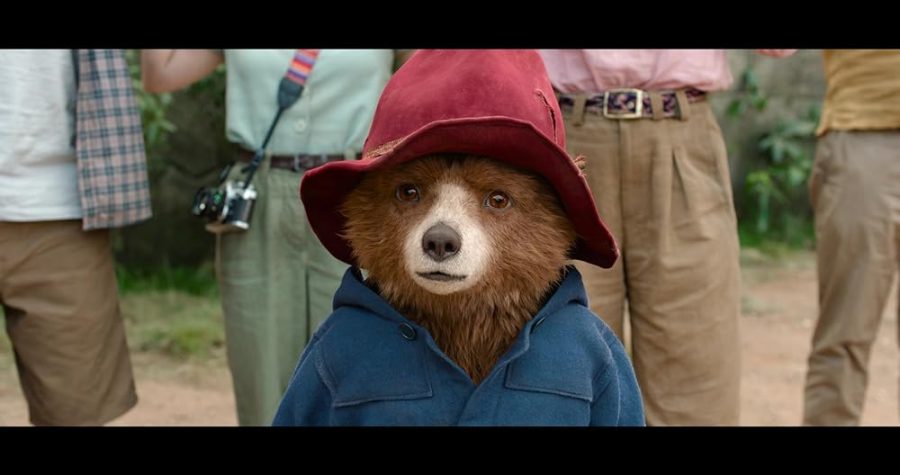
Paddington in Peru is the third installment in the Paddington film series and the first to occur most predominantly outside of England. The Paddington series follows the great animation history of blending live action with animation, blurring the lines of fantasy and reality, and creating a magical world where anything is possible and acts of kindness and a marmalade sandwich can move mountains.
The first film finds Paddington setting off for London when his Aunt Lucy moves into a Home for Retired Bears. She sends him off with a tag around his neck like the children being sent in the trains from the Blitz, reading “please look after this bear, thank you.” Mary Brown (played by Sally Hawkins in Paddington and Paddington 2 and taken over by Emily Mortimer in Paddington in Peru) sees him at the station and is the one to bring him into their family and give him his name after the station. Paddington in Peru begins with Paddington (voiced by Ben Whishaw) being summoned back to Peru because Aunt Lucy (voiced by Imelda Staunton) isn’t doing well. The entire Brown family, and Mrs. Bird (played by Julie Walters) goes with him, setting up the promise of his new family meeting the one that raised him. Only the audience is already aware that the Reverend Mother (played by Olivia Colman) at the Home for Retired Bears is up to something. So, it comes as no surprise that when the Brown’s arrive in Peru, Aunt Lucy is nowhere to be found and Paddington and company must go on a dangerous mission to find her.
There is a lot of kindness and forgiveness in the Paddington films. When push comes to shove, Paddington will give a “hard stare,” but if a character shows even an inkling of repentance, he is more than willing to bury the hatchet. That is shown in multiple instances in Paddington in Peru, like when he offers Hunter Cabot (played by Antonio Banderas) entrance to something after just running from him to keep him out after Hunter makes a change, and then the post-credit scene with Phoenix Buchanan (played by Hugh Grant).
The first Paddington film did a good job of balancing the family dynamic between all the different Browns and Paddington and letting each one have a moment with him to form a familial bond – BUT that first scene with Mary and subsequent scenes created the core relationship, the heart. Sally Hawkins did a wonderful job of creating a connection between Paddington and the Brown family, so it was going to be challenging for another actor to step into the role. One that Emily Mortimer took up with aplomb. She slipped into the role of Mary in a film that relied on her and her character to tie the emotional weight back to that early moment from the first film. Her performance is not the same as Sally Hawkins, and I would not want her to mimic it, but it feels like they are leading the characters from the same underlying warmth and that made the transition relatively seamless.
Each Paddington film has been a little more musical than the last, the first film had a diegetic song performed by street musicians that played over the montage of Paddington discovering the city and some non-diegetic needle drops. Paddington 2 had a full musical number for the end credits performed by Hugh Grant’s Phoenix Buchanan and other inmates. While it is completely over the top, it still felt grounded in the established Paddington world. Paddington in Peru has a musical number in the film itself performed by Olivia Colman’s Reverend Mother when she receives news that Paddington is coming to Peru. I love a musical, I come from music theatre, but I liked the musical rules that had felt established in Paddington, and this felt like it broke them because if characters could always break out into song, it feels like there are plenty of other characters that would have done so before. I can give it the benefit of the doubt as she was maybe doing her interpretation of a nun re: The Sound of Music and thus her musical number. To know for certain if this was a character choice or a change in direction, we’ll have to wait for further Paddington adventures.
It’s unclear, should there be future Paddington films, if the cast would remain the same. While this film cemented the familial bond between Paddington and the Browns, the cast change from Hawkins to Mortimer showed that as long as the heart of the story remains true, the films can bear cast changes. It is well known that Colin Firth was originally cast to voice Paddington but could not find the voice for the bear and stepped back, which is how the role eventually went to Whishaw.
Paddington in Peru is currently in theatres.
© 2020-2025. UniversalCinema Mag.
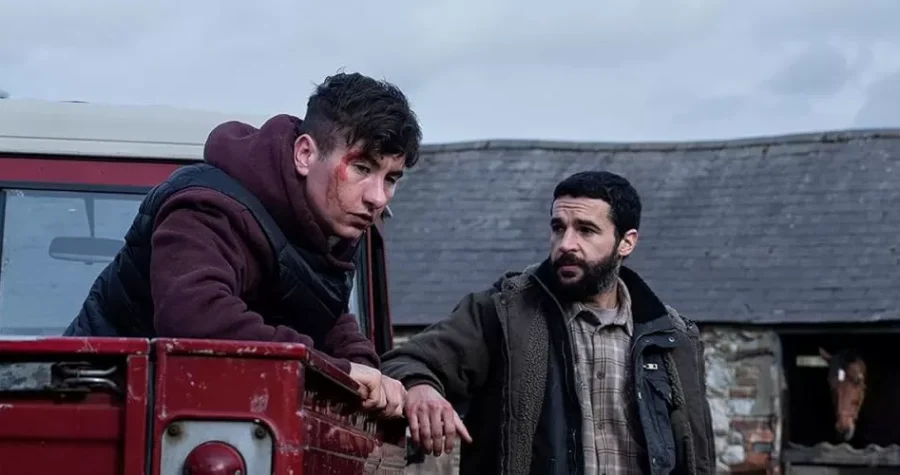
Every so often, a film will be released that is essentially a collection of short films. In film school, we only watched Martin Scorcese’s “Life Lessons” from New York Stories. Sometimes, these anthology projects will have a little story overlap, a character or thread that connects them. While not a short film anthology collection, Krzysztof Kieślowski’s Three Colours trilogy notably does this with minor background characters/action in Blue and White, but in Red, you see the convergence of the characters from all the films. However, the films can still be watched independently without missing context. Freaky Tales weaves a little closer with its interlocking stories, and while the first three stories can be enjoyed individually, the fourth builds on the knowledge of the previous tales.
All the Freaky Tales are interwoven, and you get this sense as soon as you tap into the second track of the mix tape, and the entry point is the same place as the first, only from a new character’s perspective. It is very pulpy and has the style of the late 80s and early 90s TV (think Tales of From the Crypt, Are You Afraid of the Dark?, and Goosebumps) fitting of its 1987 setting in Oakland, California. The first short centers on a bunch of punks who are targeted by some neo-Nazi skinheads and are going to fight back. It’s a simple punching Nazis story with budding romance at its heart (between two of the punks, not across enemy lines), the second short involves two female rappers (Barbie played by Dominique Thorne, and Entice played by Normani) who get offered the chance to rap battle Too $hort (played by DeMario Symba Driver but, the real Too $hort is a producer on the film which derives its name from his album, he also narrates), and after overcoming a little imposture syndrome and introducing a concept that comes up later, they tear it up on the stage. These first two tales end well for our protagonists. They don’t suffer significant losses and they get their desires. When we enter the third track, most audience members will be keenly aware they already caught a glimpse of this protagonist in the first track, as he’s played by Pedro Pascal. Pascal plays Clint, an enforcer for a boss, who is revealed to be the sleazy cop (played by Ben Mendelsohn) who harassed Barbie, but he’s supposed to be out on his last job. And then someone from his past comes back and, while threatening him, accidentally kills his pregnant wife. With nothing to lose, Clint wants out. But his daughter survives by a miracle, Mendelsohn’s character tries to use it against him, but Clint holds strong as we go into the final track, which is the wildest track of all.
The final track centers on the main character in Oakland’s history on the night in question when the film’s main events happen, May 10, 1987. On this night, Eric “Sleepy” Floyd set an NBA record by scoring 29 points in one quarter and 51 points in the game to help the Warriors take Game 4 in the playoff series against the Showtime Lakers. But while he is winning the game, his house and many of his teammates’ houses are being robbed. While Floyd was a hero to Oakland that day, the rest of the track is pure fiction. His house was not robbed, and so no one in his family was hurt as a result. So, while Floyd was a hero in Oakland for what he did on the court that night, he was not the sword-wielding, justice-dispensing badass that wraps up the tales. But links like Sleepy Floyd and Too $hort are the things that that ground this film in Oakland and give it a distinct sense of time and place despite the supernatural or fantastical elements.
In his limited screen time, Tom Hanks makes a memorable impression as the video store guy trying to recommend the top five underdog movies of all time to Clint. Though, in classic cinema style, he only teases Clint and the audience with number one, the filmmakers (writers and directors Ryan Fleck & Anna Boden) leave it up to audiences to do the leg work to get the answer.
Freaky Tales is in cinemas now.
© 2020-2025. UniversalCinema Mag.

The Seed of the Sacred Fig, directed by Mohammad Rasoulof, is one of the contenders for the Best International Feature Film award at the 97th Academy Awards. In this exclusive interview with Mo Abdi, Rasoulof discusses the film’s nomination, his expectations regarding winning or losing, and the impact of this award on his future career abroad.
© 2020-2025. UniversalCinema Mag.

 By Elias Bovard
 By Mo Abdi
Recent Comments